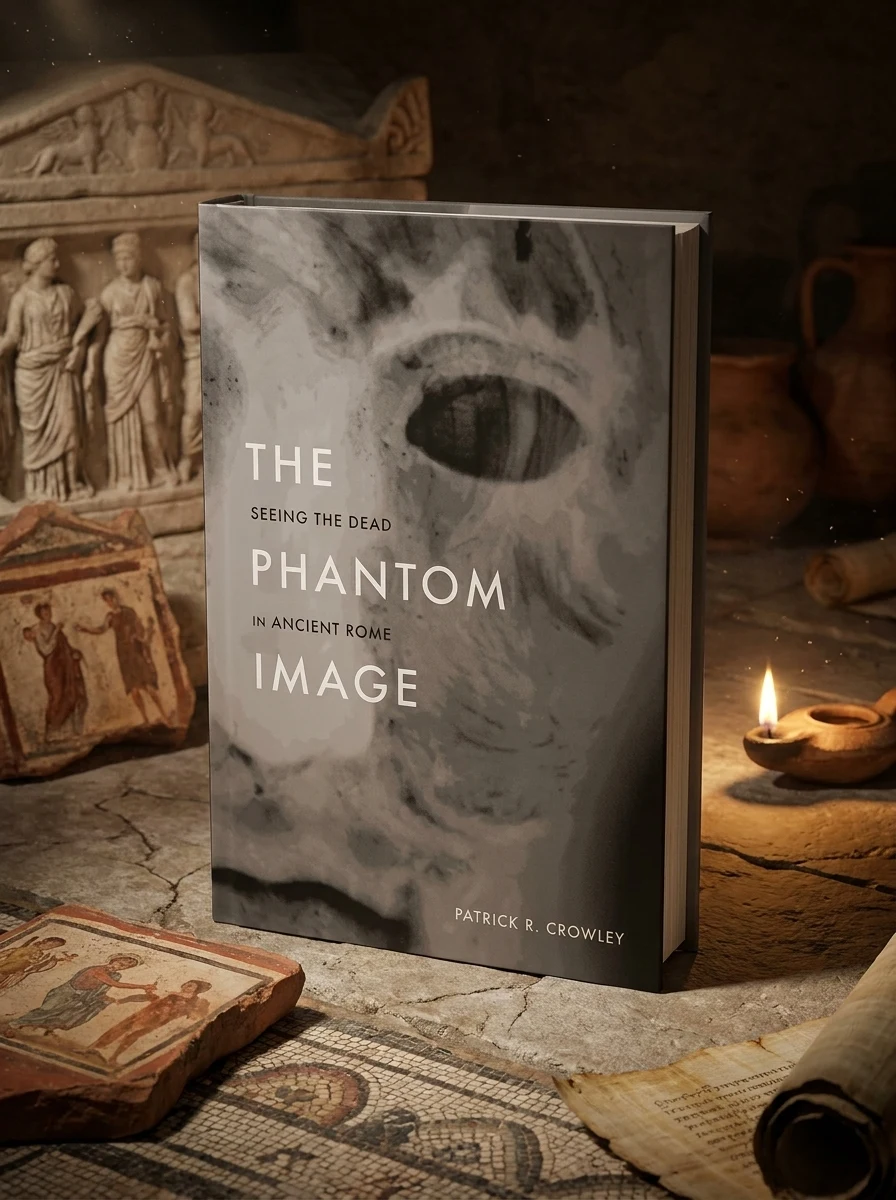
The Phantom Image: Seeing the Dead in Ancient Rome
This edition can be ordered. No arrival date is confirmed.
Uncover how ancient Romans gave spectral presence a tangible, artistic form.
Patrick R. Crowley invites readers to explore the fascinating intersection of art and the ethereal in ancient Rome. Delving into a rich tapestry of funerary art, including intricate sarcophagi, vibrant tomb paintings, and detailed floor mosaics, this work meticulously examines the ingenious methods employed by Roman artisans. It illuminates how something as inherently insubstantial as a ghost, a phantom image from the realm of the departed, was skillfully rendered visible and comprehensible through the enduring mediums of stone and pigment. This fresh perspective offers profound insights into Roman spiritual beliefs and their material expression.
This work situates itself within the scholarly study of ancient Roman funerary practices and the material culture of the afterlife. It bridges the gap between classical archaeology and esoteric interpretations of how the Romans conceptualized spiritual presence through tangible art.


📝 Description: The Phantom Image: Seeing the Dead in Ancient Rome
💎 Expert review
📖 Why choose it
Why this book is worth reading
Readers fascinated by the tangible manifestations of the spiritual world will find this book deeply rewarding. It appeals to those interested in how abstract beliefs about death and the afterlife were translated into concrete artistic forms like sarcophagi and mosaics. If you enjoy exploring the intersection of archaeology, art history, and esoteric thought, this text offers a unique lens on Roman spirituality. It is perfect for scholars or enthusiasts who want to understand not just what Romans believed, but how they visually constructed those beliefs for the living to see and interact with.
⭐ Reader reviews
Reader rating
Crowley’s analysis provides a fresh perspective on Roman funerary art, moving beyond mere aesthetic appreciation to examine spiritual intent. However, readers seeking a narrative-driven history or practical magical instruction will be disappointed. The text is analytical and dense, focusing heavily on material evidence rather than storytelling. It is not suitable for those who prefer light, accessible pop-history or those uninterested in the technicalities of Roman artistic techniques. While intellectually stimulating for specialists, it may feel dry to casual readers looking for ghostly anecdotes rather than scholarly dissection.
❓ Frequently asked questions
📖 Who should read this
If you're drawn to the mysteries of the ancient world, the power of art to express the ineffable, or the subtle ways cultures grapple with death, this book will illuminate new pathways of understanding for you. Prepare to see Roman art through a uniquely spectral lens.
🎯 Key themes and symbolism
Visualizing the Invisible
This book explores the ancient Roman paradox of making the unseen seen. It meticulously details how artists grappled with representing spirits and the departed, employing various visual strategies to bridge the gap between the ephemeral nature of ghosts and their tangible artistic manifestations, thus providing a window into Roman perceptions of the afterlife.
Roman Beliefs & Afterlife
Delve into the complex Roman understanding of death, memory, and the spirit world. Crowley analyzes how artistic depictions of the deceased and spectral figures reflect deeply held cultural beliefs about the transition from life to death, ancestor veneration, and the enduring presence of those who have passed beyond the veil in the collective consciousness.
Material Culture as Medium
Discover how everyday objects and monumental art became canvases for the spectral. The work examines sarcophagi, wall paintings, and mosaics not merely as decorative items, but as crucial conduits through which Romans communicated and interacted with their dead, transforming stone and paint into powerful instruments for spiritual connection and remembrance.
💬 Quotes from the book
“The very act of rendering a ghostly presence in stone or paint was an alchemical process, transforming the intangible fear or reverence of the unseen into a collective, visible narrative.”
“Beyond mere decoration, these funerary images served as potent conduits, mediating the anxieties and hopes of a society deeply intertwined with its ancestors and the elusive realm of the dead.”
📜 Historical context
📚 Glossary
- Sarcophagi
- Phantom Image
- Material Culture
📔 Questions to reflect on
- Consider a contemporary piece of art that attempts to depict the unseen or spiritual. How does it compare to the Roman methods described by Crowley?
- Reflect on how your own culture represents death or the afterlife. What materials or symbols are most commonly used, and what do they convey?
- If you were an ancient Roman artist tasked with portraying a 'phantom image,' what artistic choices would you make to convey both its presence and its ethereal nature?
🏛 Books from this publisher University of Chicago Press
All books from this publisher →
 86
86


You might also like
See more → 90
90