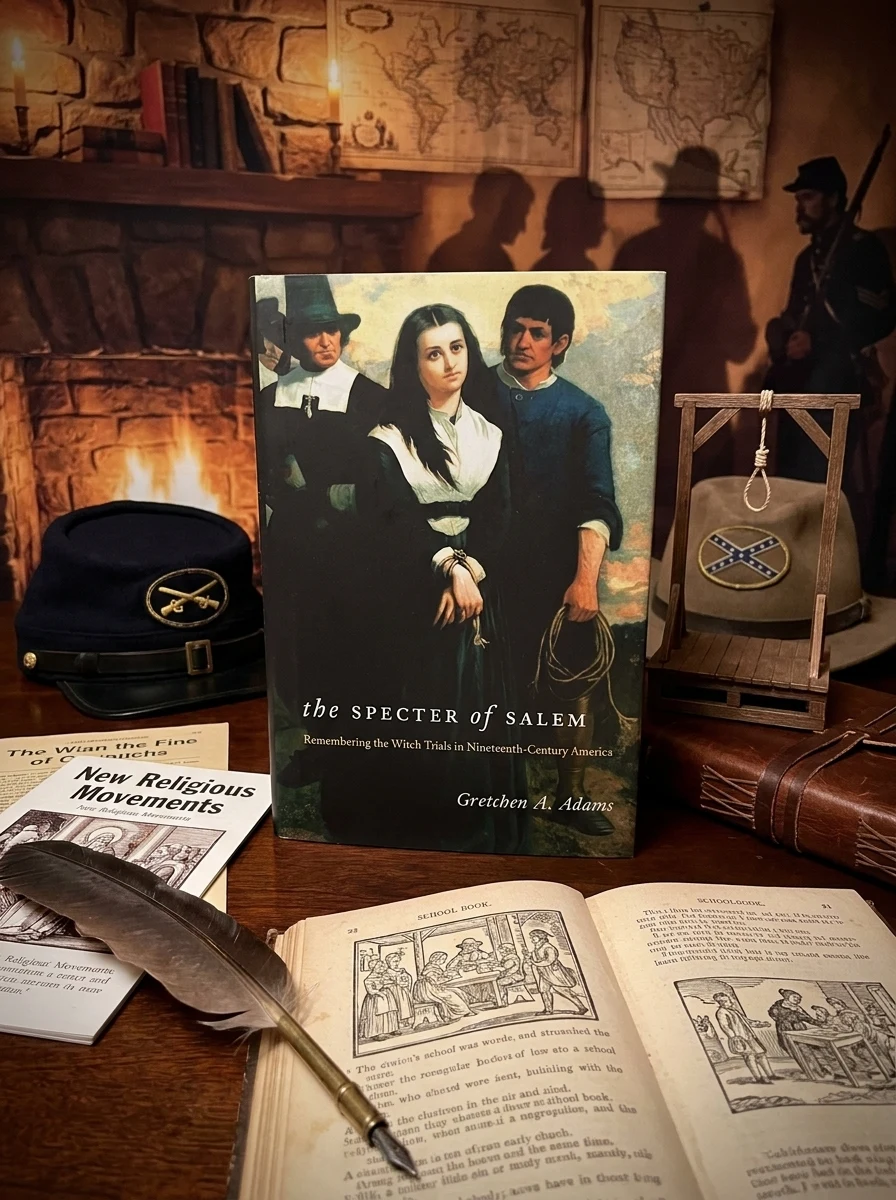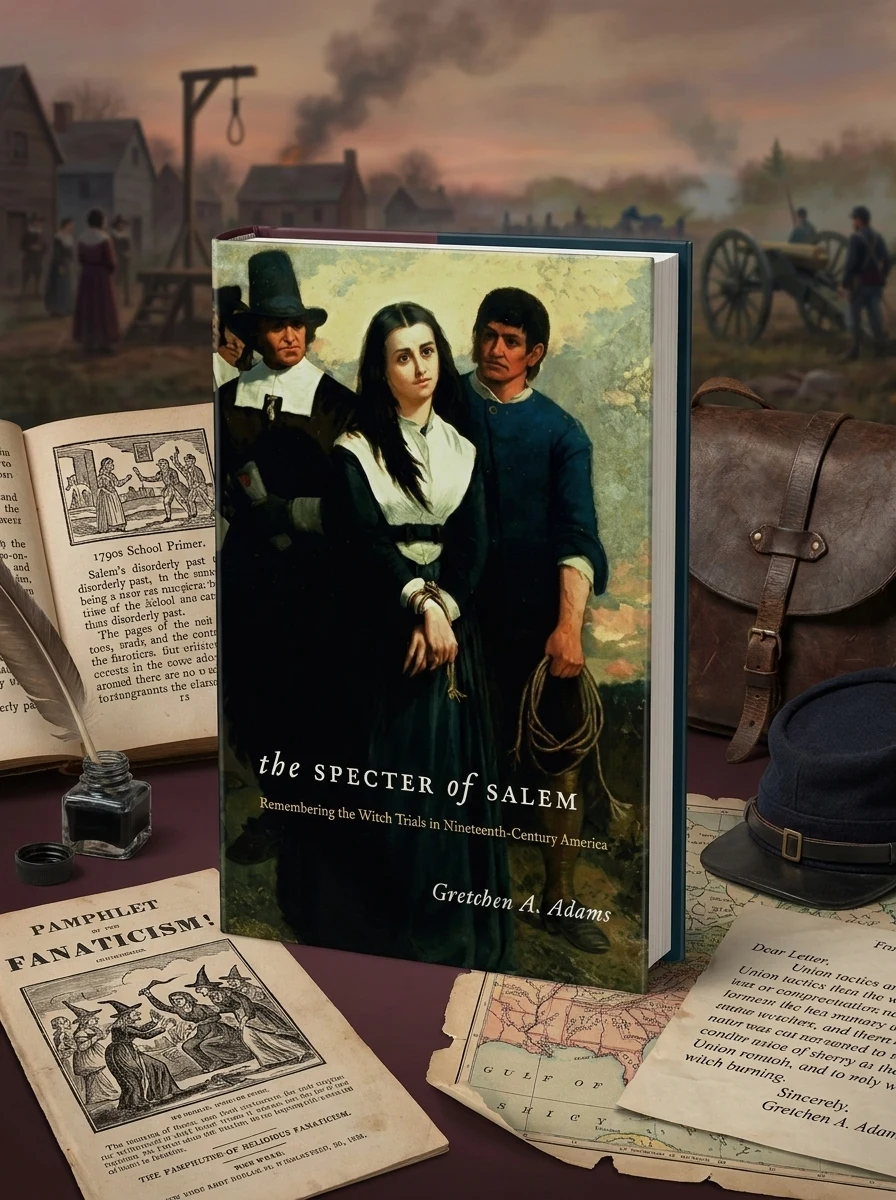

The Specter of Salem: Remembering the Witch Trials in Nineteenth-Century America
Adams, Gretchen AStock reported in the catalog; fulfillment is confirmed with your request.
Salem’s ghost haunted nineteenth-century America, shaping politics, religion, and national identity for decades.
Adams explores how the Salem witch trials served as a potent cultural symbol long after the executions ended. From schoolbooks illustrating progress to political weapons in the Civil War era, the specter of Salem was constantly reshaped to serve contemporary needs. This work traces that evolution, revealing how collective memory is actively constructed and deployed. It is not a trial account, but a study of memory’s power to define a nation’s moral and political boundaries across generations.
This volume situates the Salem witch trials within the broader tradition of American cultural memory studies, examining how historical trauma is repurposed to shape national identity in the nineteenth century.


📝 Description: The Specter of Salem: Remembering the Witch Trials in Nineteenth-Century America
💎 Expert review
📖 Why choose it
Why this book is worth reading
Scholars of collective memory and cultural historians will find this work indispensable for understanding how past atrocities are actively constructed to serve contemporary political and moral needs. Adams reveals the dynamic nature of history, showing how the Salem specter evolved from educational tool to political weapon during the Civil War era. Readers interested in the intersection of religion, politics, and national identity will gain a profound appreciation for how societies use shared trauma to define their boundaries. It offers a nuanced perspective on how memory is not static but a living force that shapes the American conscience across generations.
⭐ Reader reviews
Reader rating
Was skeptical at first. The material is presented clearly and the structure makes it easy to revisit key passages. It's become a regular reference in my practice. Delivery took a bit longer than quoted. Happy enough with the purchase.
Long-time student of the esoteric here. Plenty of passages worth underlining; my copy is already full of margin notes. The historical context alone makes it worth the price. Deserves a place on any esoteric bookshelf.
I keep coming back to this one. The language takes some getting used to, but it becomes part of the charm. The historical context alone makes it worth the price.
This has been on my wishlist for months. Plenty of passages worth underlining; my copy is already full of margin notes. I'd have loved an index, but that's on the original text. Still worth having on the shelf.
I've read excerpts online before, but having the full text is different. The print is clean and easy on the eyes for long sessions. I found myself reading passages aloud just to sit with them. Great value for what you get.
Grabbed this during a weekend order. It pairs well with more modern commentaries on the same tradition. The language takes some getting used to, but it becomes part of the charm. Some archaic spellings slow things down. Solid, if not essential.
First purchase from this shop. I found myself reading passages aloud just to sit with them. A few pages arrived with light corner wear, though nothing serious. Happy enough with the purchase.
Adams provides a rigorous academic analysis of Salem’s lingering cultural impact, making it essential for those studying historical memory and nineteenth-century American identity. However, readers seeking a gripping narrative of the actual witch trials or sensationalist accounts of supernatural events will find this text dry and abstract. It is strictly a study of perception and utility, not a dramatization of the events themselves. Consequently, casual history enthusiasts might struggle with its theoretical framework, as it demands attention to subtle shifts in cultural symbolism rather than plot-driven storytelling.
❓ Frequently asked questions
📖 Who should read this
Readers interested in the intersection of history, memory, and politics will find this compelling. It is ideal for those studying how past traumas influence present identities, particularly in American religious and cultural history.
🎯 Key themes and symbolism
Memory as Political Tool
Adams shows how the Salem narrative was weaponized by different factions. Politicians and reformers invoked the trials to condemn opponents, framing them as witch-like fanatics or brutal oppressors to justify their own agendas and shape public opinion.
Constructing National Identity
The book analyzes how Americans used Salem to define themselves. Early republicans highlighted their rationality compared to the past, while later generations grappled with the trauma of division, using the memory of Salem to process national crises and moral failures.
Religious Anxiety and Control
Adams details how religious critics used Salem to police orthodoxy. New movements were labeled as dangerous revivals of witchcraft, demonstrating how the fear of spiritual disorder was used to maintain social control and define the boundaries of acceptable belief in America.
💬 Quotes from the book
“The Salem trials were not just a historical event but a living symbol.”
“Memory serves the needs of the present.”
📜 Historical context
📚 Glossary
- Collective Memory
- Public Historiography
- Specter
📔 Questions to reflect on
- How does your community use historical events to define its current values?
- When have you seen the past invoked to solve a modern problem?
- What historical 'specters' do you think still haunt American culture today?
✍️ More books by this author Adams, Gretchen A
All books by this author →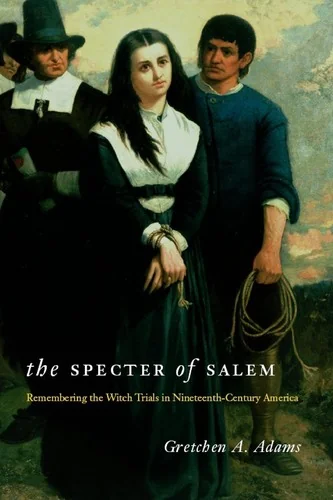
🏛 Books from this publisher University of Chicago Press
All books from this publisher →
 86
86



You might also like
See more →