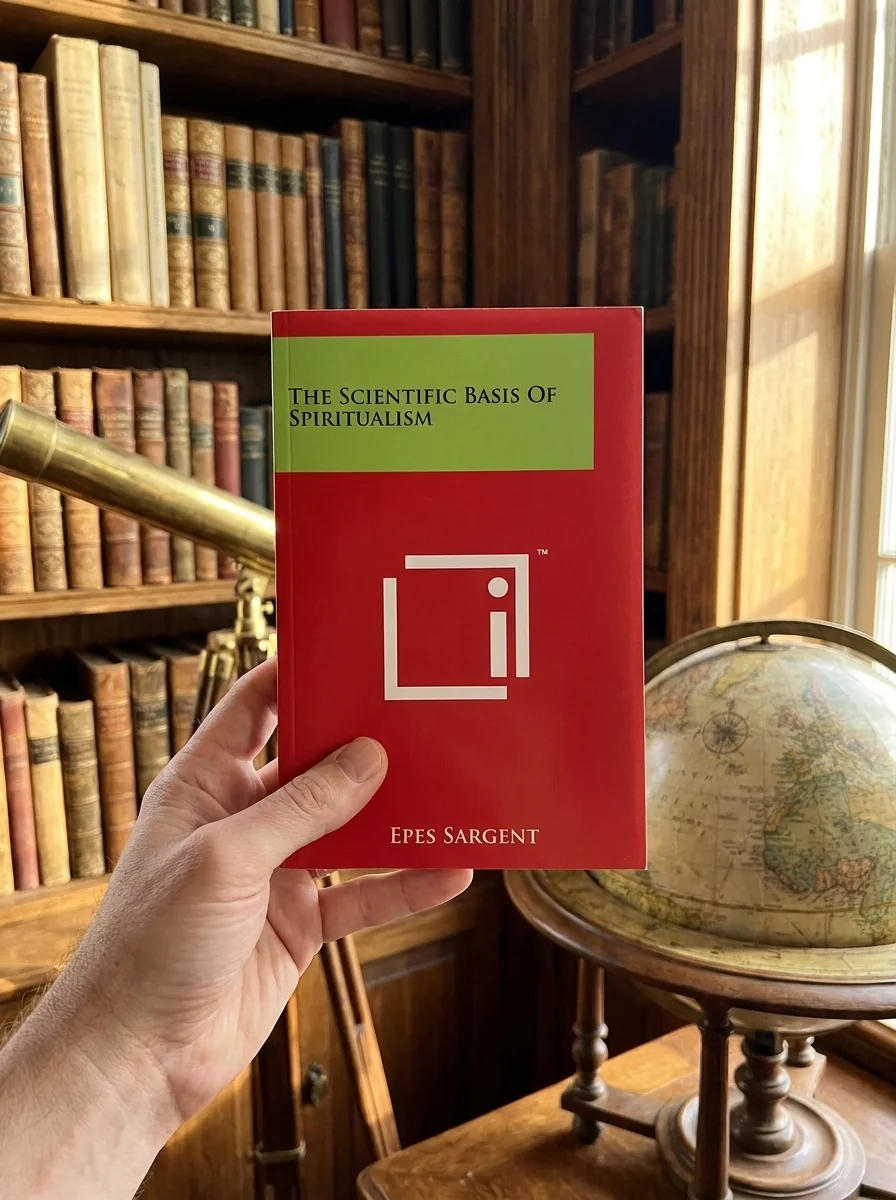
The Scientific Basis of Spiritualism
✍️ Sargent, EpesEpes Sargent's seminal 1881 work meticulously examines the claims of Spiritualism through the lens of scientific inquiry. Rather than dismissing psychic phenomena out of hand, Sargent diligently compiles evidence, anecdotes, and observations from a variety of sources, striving to establish a rational foundation for understanding communication with the spirit world. He challenges the skepticism prevalent in his era, advocating for an open-minded approach that seeks empirical validation for experiences often relegated to the realm of superstition, presenting a compelling argument for the systematic study of the unseen.


📝 Description: The Scientific Basis of Spiritualism
💎 Expert review
📖 Why choose it
Why this book is worth reading
Readers fascinated by the historical intersection of science and spirituality will find profound value in this text. It appeals to those who appreciate rigorous intellectual inquiry into paranormal claims without accepting dogmatic conclusions. Enthusiasts of Victorian esoteric history will enjoy Sargent’s dedication to compiling evidence rather than dismissing phenomena outright. The book offers a unique perspective for anyone seeking to understand how past thinkers attempted to validate the unseen through rational frameworks, providing a window into a time when empirical validation was crucial for spiritual legitimacy.
⭐ Reader reviews
Reader rating
Sargent’s 1881 volume serves as a fascinating artifact of Victorian intellectual history, documenting a serious attempt to ground Spiritualism in scientific rigor. While it lacks modern statistical analysis, its earnest compilation of anecdotes and observations provides a compelling look at the era's epistemological struggles. However, readers seeking contemporary peer-reviewed research or definitive proofs will be disappointed. It is not suited for those with rigid materialist worldviews who reject the premise entirely, nor for casual readers expecting easy entertainment. It demands patience and an open mind to appreciate its historical significance over its evidentiary weight.
❓ Frequently asked questions
📖 Who should read this
If you're drawn to the intellectual history of the esoteric, or curious about how Spiritualism sought validation in an age of scientific awakening, this book offers profound insight. It's for those who appreciate detailed investigations into the paranormal, seeking to understand the historical attempts to bridge science and the unseen.
🎯 Key themes and symbolism
Scientific Inquiry into Spirit
This book champions a rigorous, evidence-based approach to investigating spiritualist claims. Sargent endeavors to apply the scientific method—observation, documentation, and analysis—to phenomena like mediumship and apparitions, arguing that such manifestations, though extraordinary, are subject to natural laws and warrant serious study rather than immediate dismissal.
Psychic Manifestations Explored
Sargent delves into a wide array of psychic occurrences, from materializations and levitations to automatic writing and mental telepathy. He categorizes and describes these events, often relying on eyewitness accounts and detailed reports, attempting to discern patterns and underlying principles that could explain their operation beyond mere trickery or delusion.
Spiritualism's Intellectual Foundations
Beyond mere description, the work seeks to build a philosophical and intellectual framework for Spiritualism, positioning it not as a fringe belief but as a coherent system of thought with profound implications for understanding consciousness, life after death, and the universe. Sargent aims to elevate the discourse surrounding these phenomena.
📜 Historical context
📚 Glossary
- Spiritualism
- Mediumship
- Psychic Phenomena
📔 Questions to reflect on
- How do contemporary scientific attitudes toward unexplained phenomena compare to Sargent's approach in the late 19th century?
- Consider the ethical implications of attempting to 'scientifically' prove spiritual or metaphysical concepts. What are the potential benefits and pitfalls?
- Reflect on a personal experience that challenged your understanding of reality. How might Sargent's methods have approached such an event?