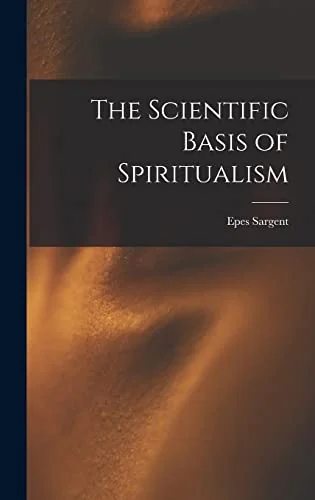
The Scientific Basis of Spiritualism
✍️ Sargent, EpesEpes Sargent's seminal work delves into the intriguing intersection of empirical inquiry and spiritual phenomena. Published during a period of intense public fascination with the unseen, this volume meticulously examines claims of communication with spirits, psychic abilities, and the existence of a non-physical realm. Sargent endeavors to provide a reasoned, evidence-based framework for understanding experiences often relegated to superstition, inviting readers to consider spiritualism not as mere belief, but as a subject amenable to scientific investigation and intellectual scrutiny.


📝 Description: The Scientific Basis of Spiritualism
💎 Expert review
📖 Why choose it
Why this book is worth reading
Readers interested in the historical intersection of science and spirituality will find this book particularly rewarding. Sargent offers a reasoned framework for understanding spiritual phenomena without resorting to mere superstition. Those who appreciate intellectual rigor applied to metaphysical topics will enjoy the evidence-based approach. It is ideal for skeptics willing to explore, as well as believers seeking logical support. The work invites consideration of spiritualism as a subject amenable to scientific investigation. Readers seeking a bridge between empirical inquiry and the unseen realm will gain valuable insights here. It serves those who wish to examine claims of psychic abilities with critical yet open minds.
⭐ Reader reviews
Reader rating
Sargent’s work appeals primarily to those interested in the historical context of spiritualism and its attempt at scientific validation. However, it does not suit readers seeking definitive proof of the afterlife or those strictly adhering to modern materialist science. Skeptics expecting a debunking may find the premise frustrating, while believers might desire more concrete evidence than this text provides. It is best suited for historians of ideas and those studying the early psychological approaches to paranormal claims. The rigorous tone may alienate casual readers looking for inspirational ghost stories or easy answers. This is a niche volume for academic or serious hobbyist study rather than general entertainment.
❓ Frequently asked questions
📖 Who should read this
For seekers drawn to the historical origins of spiritualism, or those who appreciate a rigorous intellectual defense of psychic phenomena, this book offers a fascinating journey. If you question conventional boundaries between science and spirituality, Sargent provides a foundational text for exploration.
🎯 Key themes and symbolism
Scientific Inquiry into Spirit
Sargent rigorously applies the principles of observation and deduction to phenomena associated with spiritualism. He challenges the prevailing skepticism of his era by gathering anecdotal evidence, witness testimonies, and philosophical arguments, attempting to construct a coherent, rational explanation for experiences like mediumship and apparitions, treating them as subjects for empirical study.
Mind-Body-Spirit Connection
The book explores the intricate relationship between consciousness, the physical form, and the ethereal. Sargent speculates on how the mind might transcend the material brain, examining cases of telepathy, clairvoyance, and spirit influence. He posits that these phenomena suggest a deeper, interconnected reality where the spiritual directly impacts and is influenced by the physical.
Validating Psychic Phenomena
At its core, Sargent's work is an earnest attempt to legitimize what was often dismissed as fraud or delusion. He systematically presents arguments and accounts designed to convince a skeptical audience of the genuine nature of psychic abilities and communication with the deceased. The book seeks to elevate these experiences from fringe belief to a credible area of human experience.
📜 Historical context
📚 Glossary
- Spiritualism
- Psychic Phenomena
- Mediumship
📔 Questions to reflect on
- How might modern scientific methodologies approach the spiritual phenomena discussed by Sargent, and what limitations would they face?
- In what ways do you think societal skepticism influences our willingness to explore non-material explanations for observed events?
- Reflect on the historical tension between scientific materialism and spiritual belief. How has this dynamic evolved, and where do you see its current manifestations?