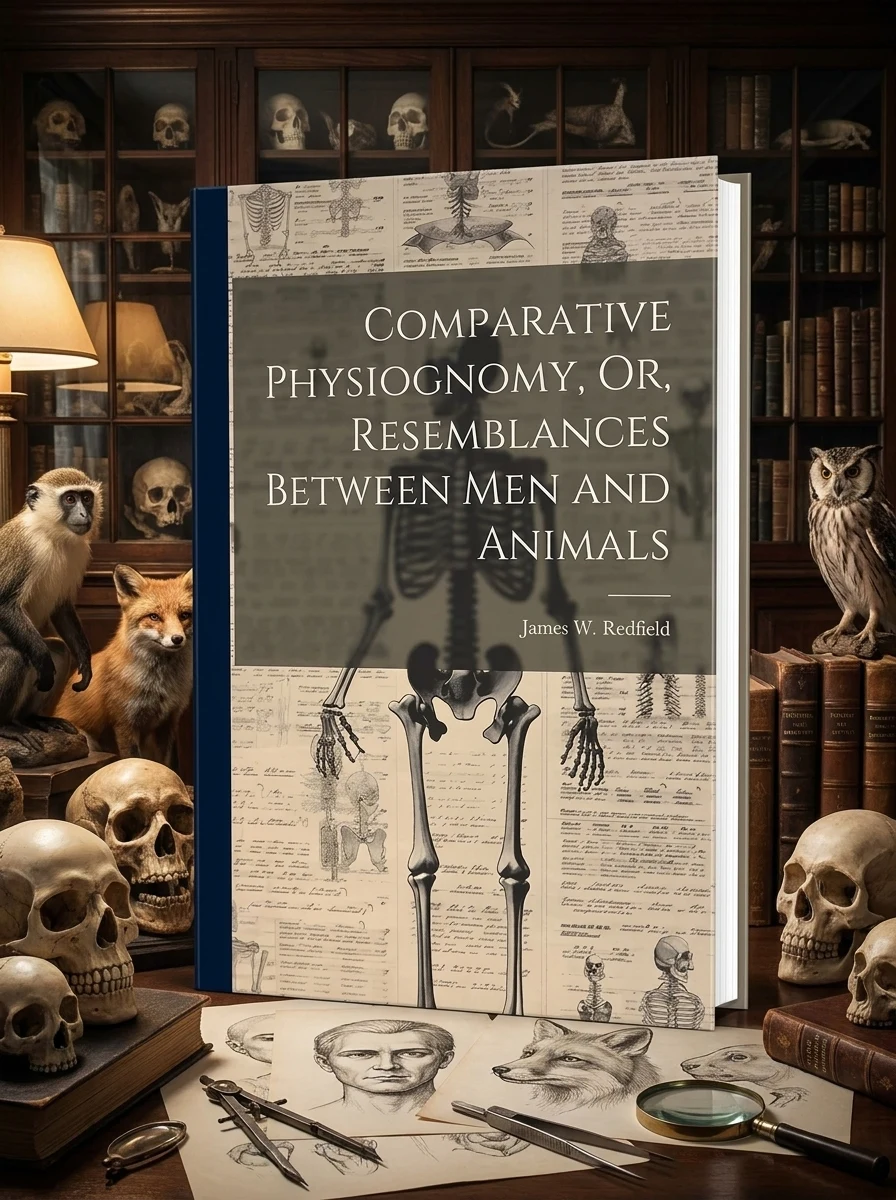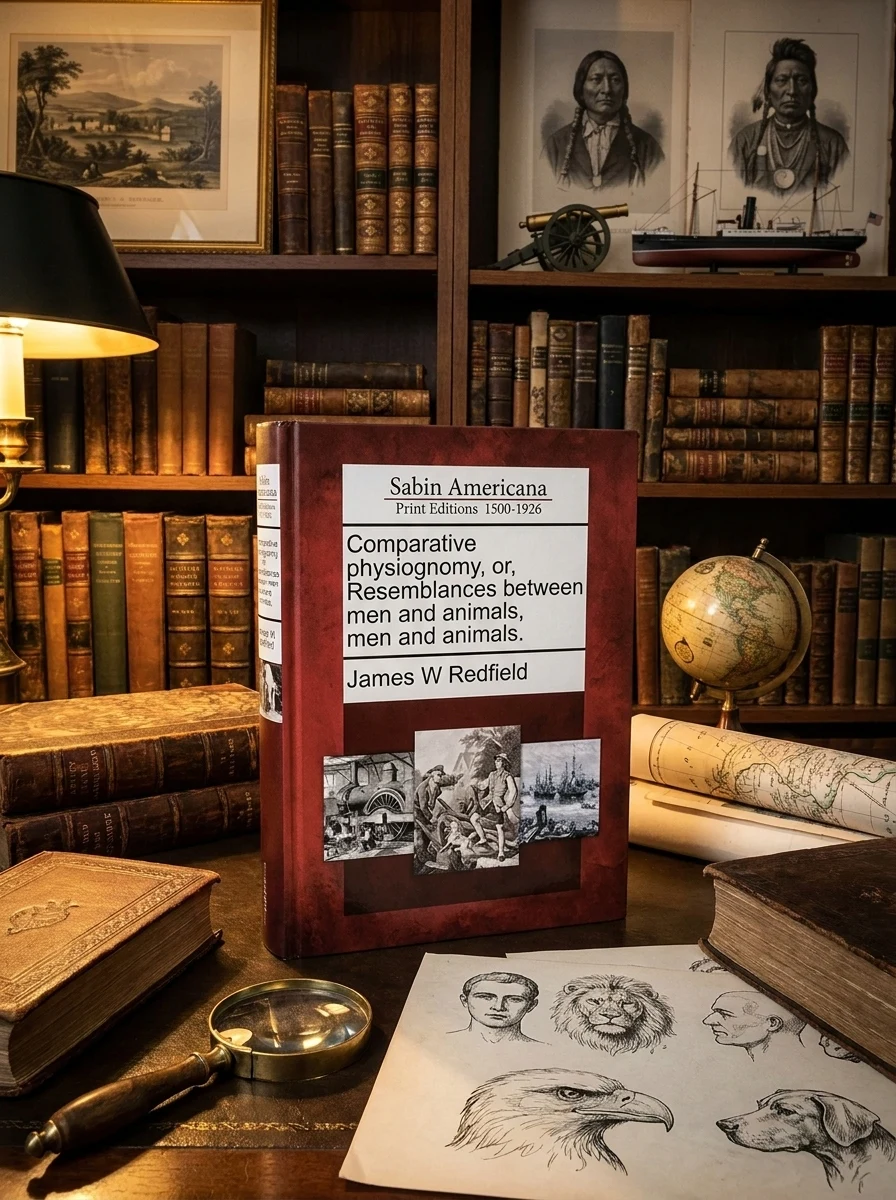
Comparative Physiognomy, Or, Resemblances Between Men and Animals
✍️ Redfield, James WAn exploration of physical resemblances between human facial features and animal forms.
Comparative Physiognomy, Or, Resemblances Between Men and Animals offers an exploration of the structural similarities between human facial features and animal faces. Written by James W. Redfield, the work presents a perspective on the historical science of physiognomy. The volume examines physical forms, facial structures, and visual analogies connecting human countenances to various species across the animal kingdom. Across 342 pages, the text traces these physical resemblances to illustrate how early scientific traditions interpreted human character and temperament through physical attributes.
This work belongs to the history of science and medicine in the United States and the Americas, reflecting historical perspectives on the mind, body, and spirit.


📝 Description: Comparative Physiognomy, Or, Resemblances Between Men and Animals
💎 Expert review
📖 Why choose it
Why this book is worth reading
Readers fascinated by the historical intersection of science, superstition, and the occult will find this volume particularly rewarding. It serves as a unique window into the nineteenth-century mindset, where the boundary between biological observation and mystical interpretation was far blurrier than it is today. Those interested in the evolution of character assessment methods or the esoteric arts of discerning personality from form will appreciate Redfield’s meticulous, if unconventional, approach. It is an essential resource for understanding how past societies attempted to decode human behavior through the lens of animal resemblance, offering a compelling glimpse into forgotten scientific pursuits that challenged modern understandings of human-animal connections.
⭐ Reader reviews
Reader rating
This work is a fascinating historical artifact but requires careful navigation by the modern reader. While Redfield’s detailed examination of resemblances between human countenances and animals offers a singular perspective on nineteenth-century thought, it relies entirely on discredited premises. It does not suit readers seeking empirically valid psychological insights or those who are sensitive to outdated biological determinism. The text is best approached as a curiosity of esoteric history rather than a practical guide. Scholars of occult philosophy will appreciate its context, but casual readers expecting contemporary scientific accuracy may find the content archaic and potentially offensive. It remains valuable primarily for its documentation of a specific cultural moment in the study of form and character.
❓ Frequently asked questions
📖 Who should read this
For seekers of forgotten knowledge, historians of fringe sciences, or anyone fascinated by the intricate dance between human and animal forms, this volume offers a profound and peculiar journey. If you ponder how facial structure might reveal inner truths, or appreciate historical attempts at character analysis, this book awaits.
🎯 Key themes and symbolism
The Art of Visage
Explores the belief that one's inner character and destiny are reflected in facial features, specifically drawing parallels between human faces and animal forms. Redfield's detailed observations invite readers to reconsider how outward appearance was once interpreted as a window to the soul, albeit through a distinctly animalistic lens.
Echoes in the Wild
This work vividly illustrates a historical perspective on humanity's connection to the animal kingdom, not just biologically, but temperamentally and aesthetically. It challenges the conventional separation by suggesting that our deepest traits, and even our expressions, find echoes in the creatures we share the planet with.
A Bygone Science
Redfield's treatise stands as a significant artifact in the history of scientific inquiry, representing an era when the lines between empirical observation and speculative philosophy were blurred. It provides invaluable context for understanding the evolution of biological and psychological thought, showcasing methods and conclusions now largely dismissed but historically influential.
📜 Historical context
📚 Glossary
- Physiognomy
- Pseudoscience
- Characterology
📔 Questions to reflect on
- After reading Redfield's observations, how do you instinctively categorize people based on their physical appearance, and what animals come to mind?
- In what ways might the historical pursuit of physiognomy reflect deeper human desires to understand and predict behavior through visible signs?
- Consider a person you know well. If you were to apply Redfield's comparative method, which animal's features or demeanor would you associate with them, and why?