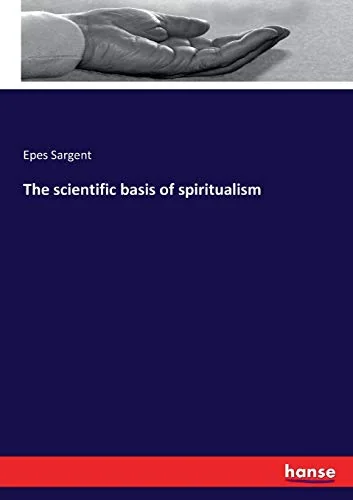
The scientific basis of spiritualism
✍️ Sargent, EpesStep back to 1881 with Epes Sargent's seminal work, a compelling attempt to bridge the seemingly disparate realms of empirical science and spiritual phenomena. This volume meticulously presents arguments and observations, aiming to demonstrate that spiritualism is not mere superstition, but a verifiable aspect of reality awaiting proper scientific acknowledgment. Sargent endeavors to dismantle skepticism by proposing a framework where spiritual manifestations can be understood through rigorous, albeit unconventional, investigation. It's a fascinating historical document reflecting a pivotal moment in the exploration of the unseen.


📝 Description: The scientific basis of spiritualism
💎 Expert review
📖 Why choose it
Why this book is worth reading
Readers fascinated by the historical intersection of science and mysticism will find this volume indispensable. It offers a unique window into the 19th-century quest to validate spiritualism through empirical methods, appealing to those who enjoy intellectual history and the evolution of thought regarding the unseen. Sargent’s meticulous arguments provide a compelling framework for understanding how skeptics were challenged by unconventional investigations. If you appreciate works that dismantle established views through rigorous observation, this book serves as an engaging guide to a time when the boundaries between the material and spiritual worlds were actively being redefined and questioned.
⭐ Reader reviews
Reader rating
This text serves as a fascinating historical artifact for those interested in the origins of psychical research and the scientific attempts to categorize spiritual phenomena. However, readers seeking modern neuroscientific explanations or contemporary metaphysical practices will likely find its 1881 perspective dated and overly reliant on period-specific logic. It is not suited for those who dismiss the entire field of spiritualism as mere superstition without historical context. While the attempt to bridge science and spirit is ambitious, the content remains firmly rooted in its specific era, making it more valuable as a study of intellectual history than as a practical guide for current spiritual seekers or hardline materialists.
❓ Frequently asked questions
📖 Who should read this
If you're fascinated by the history of spiritualism, the Victorian era's engagement with the paranormal, or the enduring tension between science and belief, this book offers a unique historical perspective. It's for those who appreciate intellectual arguments for the unseen.
🎯 Key themes and symbolism
Science Meets Spirit
Sargent boldly argues that spiritualist phenomena, often dismissed as charlatanry or delusion, can be understood and validated through systematic observation and a broadened scientific perspective. He challenges the rigid materialism of his era, advocating for an empirical approach to the unseen, suggesting that what is currently inexplicable merely awaits a more comprehensive scientific understanding.
Defense of Spiritualism
This book serves as a robust intellectual defense of spiritualism, offering a counter-narrative to prevailing skepticism. Sargent meticulously compiles evidence and theoretical arguments to support the authenticity of spirit communication and other paranormal events. It's an earnest plea for intellectual honesty and open-minded inquiry into experiences that defy conventional explanation, positioning spiritualism as a legitimate field of study.
Mind-Body Connection
The work implicitly, and at times explicitly, delves into the profound relationship between consciousness, physical reality, and the potential for interaction with non-physical entities. Sargent explores how the human mind might serve as a conduit for spiritual forces, blurring the lines between internal experience and external manifestation. This exploration predates much modern psychological and parapsychological research.
📜 Historical context
📚 Glossary
- Spiritualism
- Esoteric
- Occult
📔 Questions to reflect on
- How has the relationship between science and spirituality evolved since 1881, and where do you see the primary points of convergence or divergence today?
- Reflect on a personal experience or observed phenomenon that challenged your conventional understanding of reality. How might Sargent's approach help frame such an event?
- In an age dominated by empirical evidence, what role do you believe personal testimony and subjective experience should play in our understanding of 'truth'?