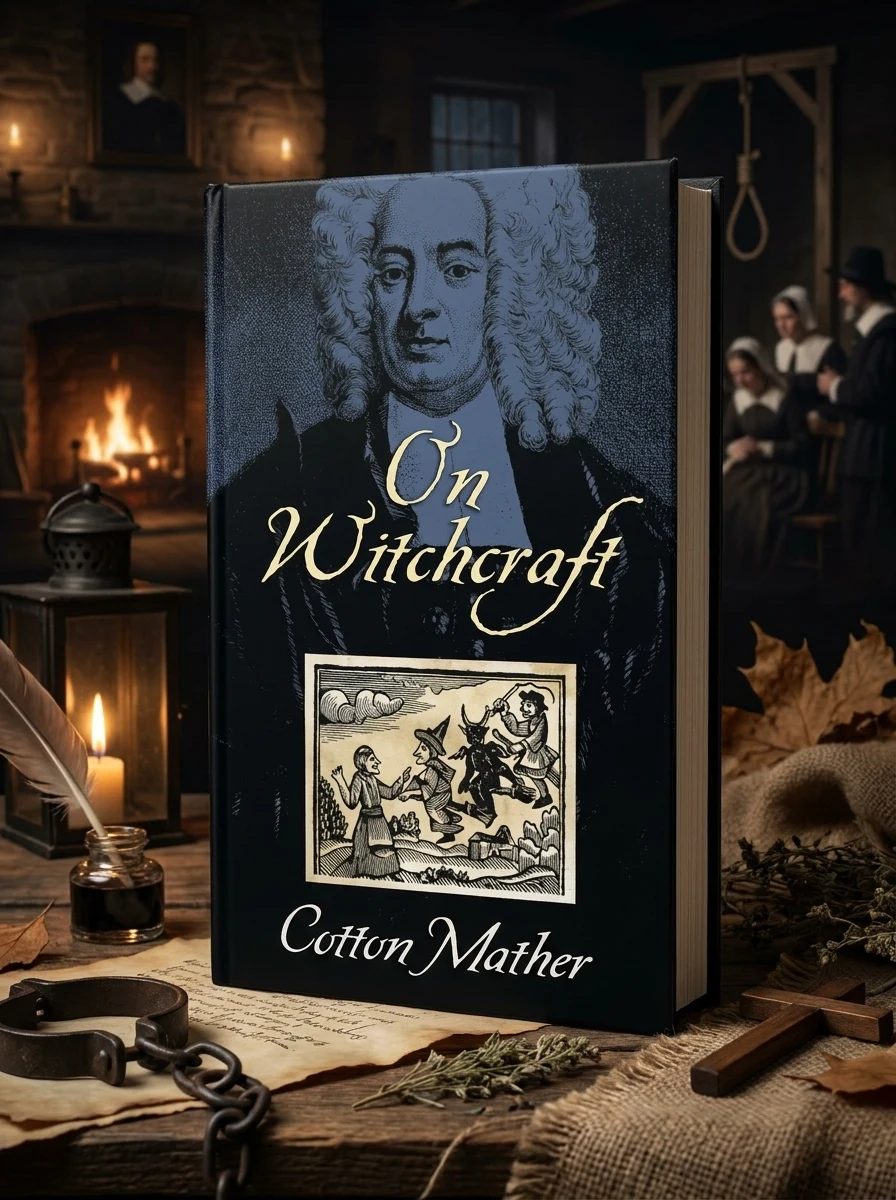
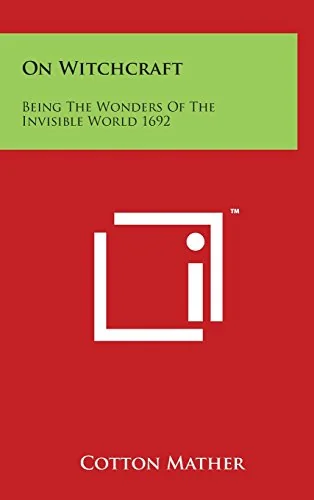
On Witchcraft: Being The Wonders Of The Invisible World 1692
✍️ Mather, CottonA colonial minister records trial accounts and religious views on witchcraft in Salem.
This edition reproduces Cotton Mather's primary writings regarding the Salem witch trials of 1692. Mather used his authority as a prominent Puritan minister to document courtroom proceedings, examine the nature of the devil, and establish methods for detecting witches. The text serves as an authentic historical document showing how religious conviction shaped colonial American legal actions. Readers seeking historical insight into Puritan culture will find an exact reprint of the old original publication.
Written in colonial America following the 1692 Salem witch trials, this text reflects the intense religious convictions and supernatural beliefs of the Puritan faith during that historical period.


📝 Description: On Witchcraft: Being The Wonders Of The Invisible World 1692
💎 Expert review
📖 Why choose it
Why this book is worth reading
Scholars and enthusiasts of American colonial history will find this volume indispensable for understanding the mindset behind one of the nation's most haunting episodes. By examining Cotton Mather’s theological framework, readers gain insight into the tangible reality of the Devil as perceived by ardent accusers of the era. This text is essential for those wishing to unearth the chilling fervor and spiritual anxieties that defined the period, offering a direct window into the minds of those who shaped the legal and religious response to alleged witchcraft in 1692.
⭐ Reader reviews
Reader rating
This compilation serves as a vital historical artifact, meticulously detailing Puritan perspectives on the Salem witch trials through sermons and essays. However, it is not suited for readers seeking modern occult practices or sympathetic portrayals of the accused; rather, it documents the perspective of an ardent accuser. Those expecting literary fiction or contemporary Wiccan theology will likely find the dense theological arguments and historical context dry or troubling. It remains a crucial, albeit difficult, resource for understanding the cultural climate that culminated in these tragic events.
❓ Frequently asked questions
📖 Who should read this
If you are drawn to the darker currents of history, the intersection of fervent faith and societal panic, or the origins of American occult lore, this volume is indispensable. It's a challenging, yet rewarding read for anyone seeking to understand the mindset that fueled the Salem tragedy.
🎯 Key themes and symbolism
Puritan Theology & Evil
Mather's work deeply explores the Puritan worldview, where the Devil and his minions are ever-present threats. He meticulously outlines the theological underpinnings of witchcraft, presenting it not merely as superstition but as a very real, insidious attack on God's chosen people, requiring vigilant identification and severe retribution.
Salem Trials Documentation
Beyond theological discourse, the book offers unique insights into the Salem witch trials themselves. Mather includes accounts and observations from the proceedings, filtered through his own interpretative lens. It's a crucial, albeit biased, historical record of the events, providing a contemporary perspective on the accusations and the ensuing legal processes.
Identifying & Punishing Witches
A significant portion of Mather's writing is dedicated to the perceived nature of witches and methods for their discovery and judgment. He delves into what constituted evidence of witchcraft within the Puritan framework, advocating for strict adherence to religious law to cleanse the community of what he viewed as demonic infestation.
📜 Historical context
📚 Glossary
- Puritanism
- Spectral Evidence
- Colonial America
📔 Questions to reflect on
- How did the fervent religious beliefs of the Puritans shape their understanding of justice and evil, particularly in the context of witchcraft?
- Consider the power of collective fear and authoritative voices, like Mather's, in influencing public perception and legal outcomes during periods of crisis.
- Reflect on how this historical account challenges or confirms your own understanding of spirituality, justice, and the occult throughout history.