The Romance of Sorcery
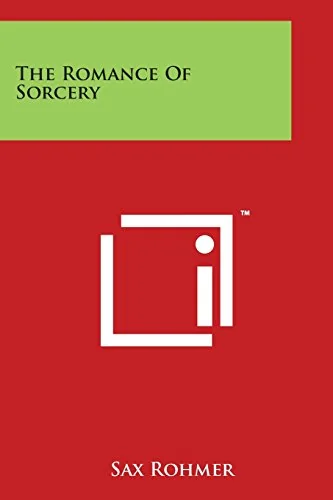
✍️ Rohmer, SaxSax Rohmer, renowned for his tales of intrigue, here turns his discerning eye to the enigmatic history of magic itself. Published in 1914, *The Romance of Sorcery* offers a panoramic survey of mystical traditions, ancient rituals, and the figures who wielded hidden powers throughout the ages. From the earliest whispers of witchcraft to the shadowy practices of cults, Rohmer explores the human fascination with the supernatural, presenting a captivating narrative that blends historical inquiry with the allure of the arcane. It's a foundational text for understanding early 20th-century perspectives on occult studies.


📝 Description: The Romance of Sorcery
💎 Expert review
📖 Why choose it
Why this book is worth reading
Readers drawn to the shadowy intersections of history and magic will find immense value in this panoramic survey. Sax Rohmer guides us through ancient rituals and the figures who wielded hidden powers, satisfying a deep curiosity about humanity's enduring fascination with the supernatural. It serves as an essential window into how early twentieth-century minds perceived witchcraft and cults, offering a captivating narrative that bridges historical fact with the allure of the arcane. If you appreciate understanding the roots of modern occult thought through a foundational lens, this text provides a unique and necessary perspective on the enigmatic history of sorcery.
⭐ Reader reviews
Reader rating
This book offers a distinct snapshot of 1914 occultism, capturing the era's specific tone regarding mystical traditions. Rohmer’s background in intrigue lends a compelling narrative structure to his exploration of ancient rituals and historical figures. However, it is strictly a product of its time; modern scholars seeking rigorous academic citation or contemporary witchcraft practices will find little relevance here. It does not suit readers looking for definitive historical records rather than a period-specific literary interpretation. Those expecting dry academia may be disappointed by its narrative flair, while those seeking practical magical instruction will find it entirely devoid of utility, serving purely as a cultural artifact of early esoteric fascination.
❓ Frequently asked questions
📖 Who should read this
If you're drawn to the historical and cultural impact of magic, or seek to understand how early 20th-century authors interpreted ancient occult traditions, this book is for you. It offers a unique window into the enduring human fascination with the mysterious and the unseen.
🎯 Key themes and symbolism
Historical Arc of Magic
This volume meticulously traces the evolution of magical thought and practice across millennia. Rohmer delves into ancient civilizations, the medieval period, and up to his own era, chronicling how societies perceived and engaged with the unseen forces of the universe, examining both folk beliefs and formalized magical systems.
The Sorcerer's Persona
Rohmer meticulously details the lives and legends of notorious sorcerers, alchemists, and witches. The book scrutinizes how these figures, from legendary figures to historical personalities, were perceived by their contemporaries, often oscillating between reverence and fear, and how their actions influenced the course of occult history and popular imagination.
Cultural Impact of Belief
Beyond individual practitioners, the book explores how magical and cultic beliefs permeated societal structures and cultural norms. It investigates the interplay between religion, superstition, and state power, revealing how the "supernatural" influenced law, art, and daily life, shaping the very fabric of human civilization.
📜 Historical context
📚 Glossary
- Sorcery
- Necromancy
- Esotericism
📔 Questions to reflect on
- How has our understanding of "sorcery" evolved from the early 20th century, as presented by Rohmer, to contemporary views on magic and the occult?
- Reflect on the historical figures of sorcerers or witches mentioned in the book. Do you see them as charlatans, mystics, or early scientists, and why?
- Consider the "romance" aspect of sorcery. What makes the idea of hidden powers and ancient rituals so enduringly captivating for humanity?