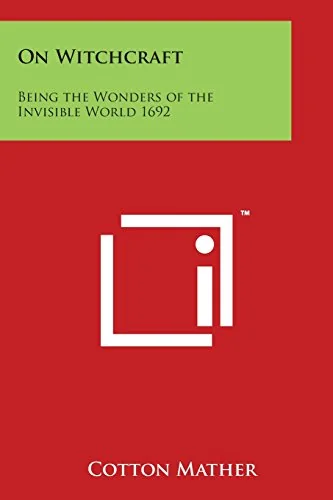
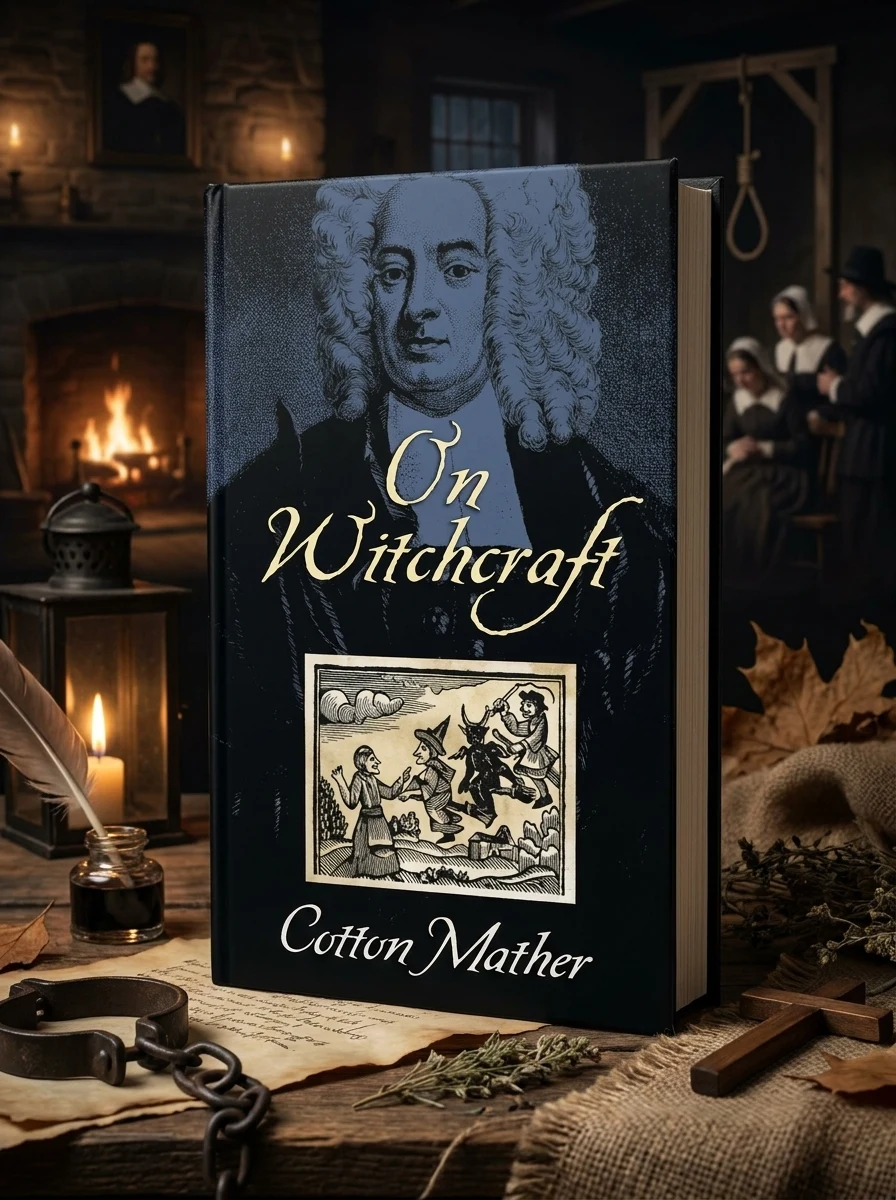
On Witchcraft: Being the Wonders of the Invisible World 1692
✍️ Mather, CottonA 174-page reprint of Cotton Mather's 1692 account of colonial witchcraft events.
This volume provides direct access to Cotton Mather's observations on the invisible world during the late seventeenth century. The text focuses on the specific historical period of colonial America, particularly the years leading up to and including 1692. It addresses themes of mind, body, spirit, and magick studies as understood by the author. The work is categorized under occultism and general literary collections. It offers no commentary from modern scholars but presents the original narrative. The physical book contains 174 pages. It weighs 0.24 kilograms. The dimensions are 0.94 cm by 22.91 cm by 15.19 cm. This edition is published by Literary Licensing, LLC. It targets readers interested in the history of witchcraft and wicca within the United States colonial period. It does not provide contemporary spiritual advice or modern magical theory.
This text originates from the United States colonial period between 1600 and 1775. It reflects the spiritual and social climate of the late seventeenth century, specifically focusing on the year 1692. The work documents the intersection of religious belief and perceived supernatural events during that era.


📝 Description: On Witchcraft: Being the Wonders of the Invisible World 1692
💎 Expert review
📖 Why choose it
Why this book is worth reading
This volume is essential for those seeking to understand the dark side of societal fabric in early America. Readers interested in the intersection of theology, law, and mass hysteria will find profound value in Mather’s meticulous cataloging of accusations and justifications. It offers a direct window into the fervent anxieties that gripped colonial society, making it indispensable for scholars of religious history and those exploring the tragic judicial errors of the past. By examining these chilling arguments, one gains insight into how intellectual frameworks can fuel persecution, providing a critical perspective on fear-based societal structures.
⭐ Reader reviews
Reader rating
While this faithful reproduction provides an invaluable primary source for understanding the ideological drivers behind the Salem witch trials, it is not for casual readers seeking entertainment or modern spiritual practice. The text’s dense theological justifications and historical context may alienate those uninterested in colonial religious history or uncomfortable with its supportive role in persecution. It is a rigorous academic resource rather than a readable narrative. Those looking for contemporary Wiccan guidance or sympathetic portrayals of accused witches will find this work cold, controversial, and potentially distressing due to its endorsement of the very fears it documents.
❓ Frequently asked questions
📖 Who should read this
If you are fascinated by the darker currents of history, the origins of American religious fervor, or the legacy of the Salem witch trials, this book is indispensable. It offers a raw, unfiltered look, challenging readers to confront the roots of mass hysteria and persecution.
🎯 Key themes and symbolism
Witchcraft in Colonial America
Explore the deeply ingrained Puritanical interpretations of spiritual warfare and diabolical influence that permeated early American society. Mather’s work illuminates how these beliefs shaped public perception, legal proceedings, and the collective fear of the unseen, providing insight into the cultural anxieties of the period.
Theological Justifications for Persecution
This text dissects the intricate theological arguments Mather employed to validate the existence of witchcraft and the necessity of its eradication. It reveals how scripture and contemporary religious doctrines were manipulated to support the accusations and subsequent trials, offering a stark look at religious authority's power.
Primary Historical Account
As a direct reprint of the 1692 original, this book serves as an unparalleled primary source for understanding the Salem witch trials. It provides unvarnished insight into the mindset of a key figure who influenced the tragic events, making it indispensable for historians and scholars of American colonial history.
📜 Historical context
📚 Glossary
- Puritanism
- Demonology
- Spectral Evidence
📔 Questions to reflect on
- How do Mather's arguments reflect the societal anxieties and religious doctrines of his time, and what parallels, if any, can be drawn to modern forms of mass hysteria or persecution?
- Considering the historical context, how might Mather's work have been perceived by different segments of colonial society (e.g., accusers, accused, authorities, common folk)?
- In what ways does this primary source challenge or confirm your understanding of the Salem witch trials and the broader history of witchcraft beliefs?
📖 Read on the blog
✍️ More books by this author Mather, Cotton
All books by this author →


🏛 Books from this publisher Literary Licensing, LLC
All books from this publisher →

You might also like
See more →
Have a question about this item?
Ask about the edition, condition, delivery or anything else — we reply by email or phone, usually within a day.
