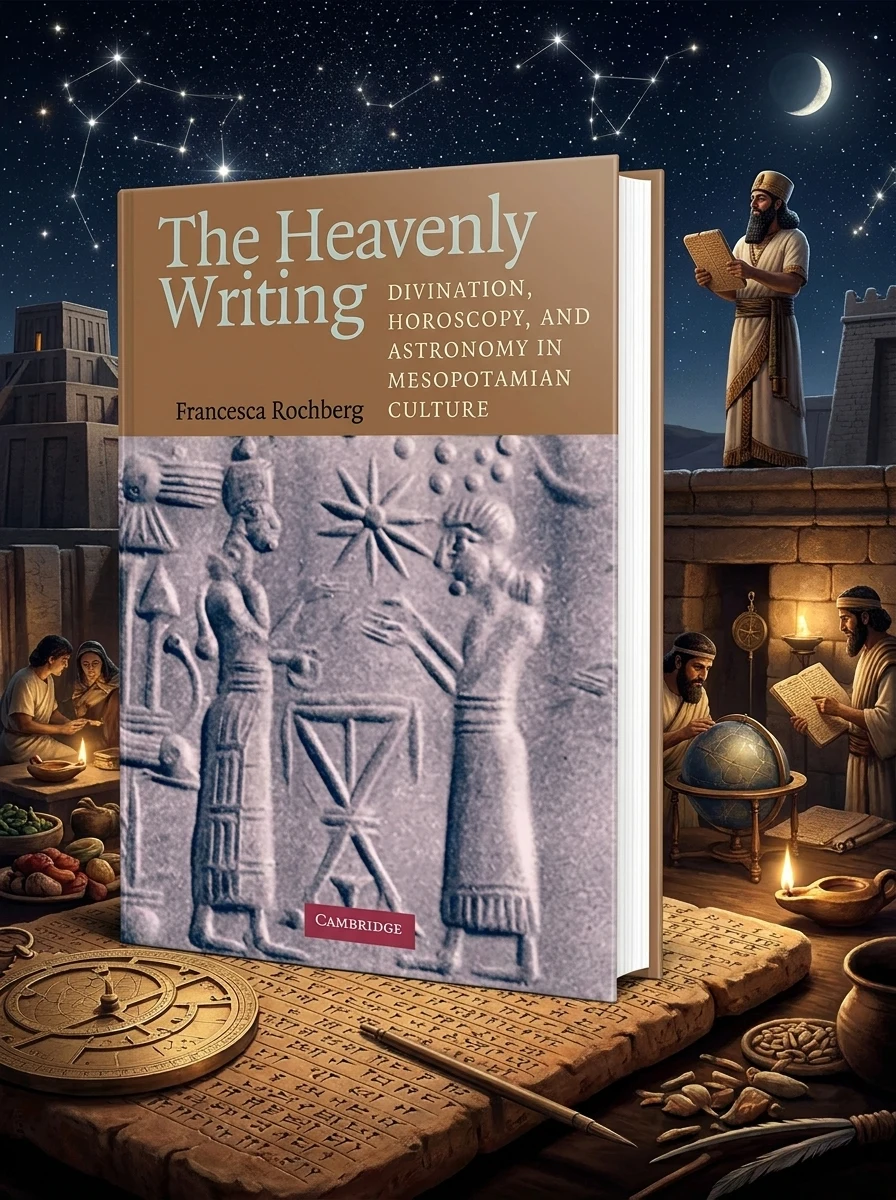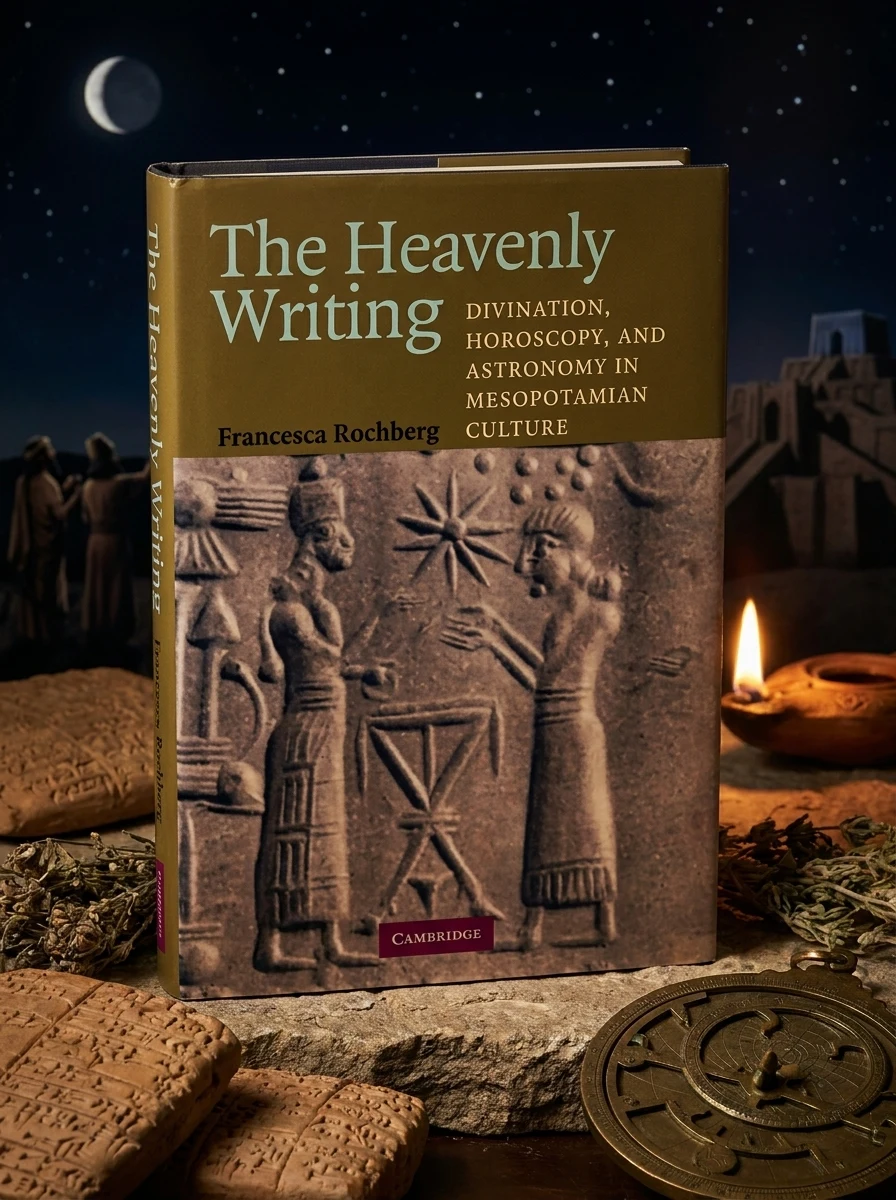
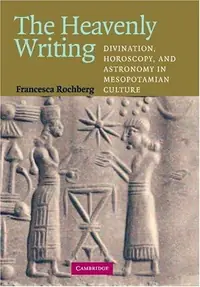
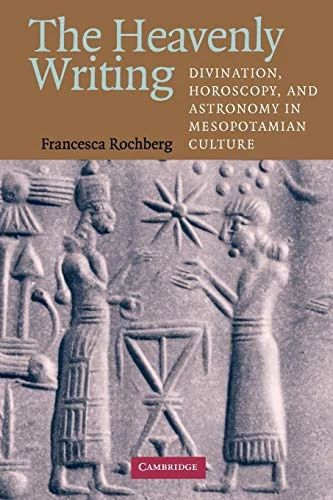
The Heavenly Writing: Divination, Horoscopy, and Astronomy in Mesopotamian Culture
Rochberg, Francesca 84
84
 Editorial score
How we rate
Editorial score
How we rate
Stock reported in the catalog; fulfillment is confirmed with your request.
Unlock the cosmic secrets of ancient Mesopotamia, where stars whispered divine destinies.
This profound study delves into the ancient Mesopotamian understanding of the cosmos, revealing how celestial events were perceived as both divine messages and observable natural occurrences. Francesca Rochberg meticulously explores the intricate relationship between heavenly signs and human destiny, tracing the sophisticated development of divinatory practices from general omens to the personalized horoscopy that laid the groundwork for astrology as we know it. It illuminates a civilization's quest to decipher the divine will and understand its place within the vast celestial tapestry.
This scholarly work anchors itself in the rich tradition of ancient Mesopotamian esotericism, exploring how celestial observation evolved into a complex system of divination and horoscopy. It situates these practices within the broader historical framework where astronomy and astrology were inseparable facets of understanding divine will.


📝 Description: The Heavenly Writing: Divination, Horoscopy, and Astronomy in Mesopotamian Culture
💎 Expert review
📖 Why choose it
Why this book is worth reading
This book is an essential read for scholars, historians of science, and serious enthusiasts of esoteric traditions who wish to understand the foundational roots of Western astrology. It offers a profound glimpse into how ancient Mesopotamians viewed the cosmos not just as a physical space, but as a divine text whispering secrets of destiny. Readers will gain a deep appreciation for the sophisticated intellectual frameworks that transformed general omens into personalized horoscopes. By tracing this evolution, Rochberg provides clarity on the origins of our current astrological systems, making it invaluable for those seeking historical depth beyond modern pop-astrology interpretations.
⭐ Reader reviews
Reader rating
Rochberg delivers a meticulous academic exploration of Mesopotamian celestial practices, offering rigorous analysis of how stars were interpreted as divine messages. The text is dense with scholarly detail, mapping the transition from general omens to complex horoscopy. However, this work is strictly for those with an appetite for historical and astronomical theory. It will likely frustrate casual readers or modern astrology practitioners seeking practical guidance or simple mythological stories. Those looking for accessible, narrative-driven histories of magic may find the technical focus on observational data and divinatory logic too dry and academically demanding.
❓ Frequently asked questions
📖 Who should read this
If you're fascinated by the origins of astrology, the history of ancient science, or how early civilizations made sense of the cosmos, this book offers unparalleled insight. It's for anyone eager to connect with the foundational intellectual currents of celestial wisdom.
🎯 Key themes and symbolism
Stars as Divine Oracles
Explore how Mesopotamian cultures interpreted astronomical events—eclipses, planetary movements, lunar phases—as direct communications from the gods. This section reveals the elaborate systems developed to translate these celestial messages into prophecies concerning earthly affairs and royal destinies.
Birth of Personal Astrology
Discover the historical trajectory from broad celestial omens, relevant to kingdoms and rulers, to the revolutionary concept of individual horoscopes. The book illuminates how the fate of a person began to be meticulously charted based on their unique moment of birth under specific planetary alignments.
Sky, Science, and Spirit
Uncover the dual nature of Mesopotamian celestial observation, where precise astronomical measurement coexisted with rich mythological narratives. This theme explores how ancient scholars reconciled empirical data with spiritual interpretations, crafting a cosmology that integrated scientific inquiry with divine meaning.
💬 Quotes from the book
“The heavens were not merely a backdrop, but an active, speaking canvas of divine intent.”
“From communal omens to the unique cosmic signature of personal destiny, the Mesopotamian sky revealed its secrets.”
📜 Historical context
📚 Glossary
- Horoscopy
- Divination
- Celestial Phenomena
📔 Questions to reflect on
- How does understanding the ancient Mesopotamian view of celestial signs alter your perception of modern astrology or astronomy?
- Consider a time you interpreted a 'sign' or omen in your own life. How might ancient Mesopotamians have approached such an experience?
- In what ways do contemporary societies still look to the heavens for meaning, whether scientific or spiritual?
✍️ More books by this author Rochberg, Francesca
All books by this author →
🏛 Books from this publisher Cambridge University Press
All books from this publisher →

 75
75

You might also like
See more →