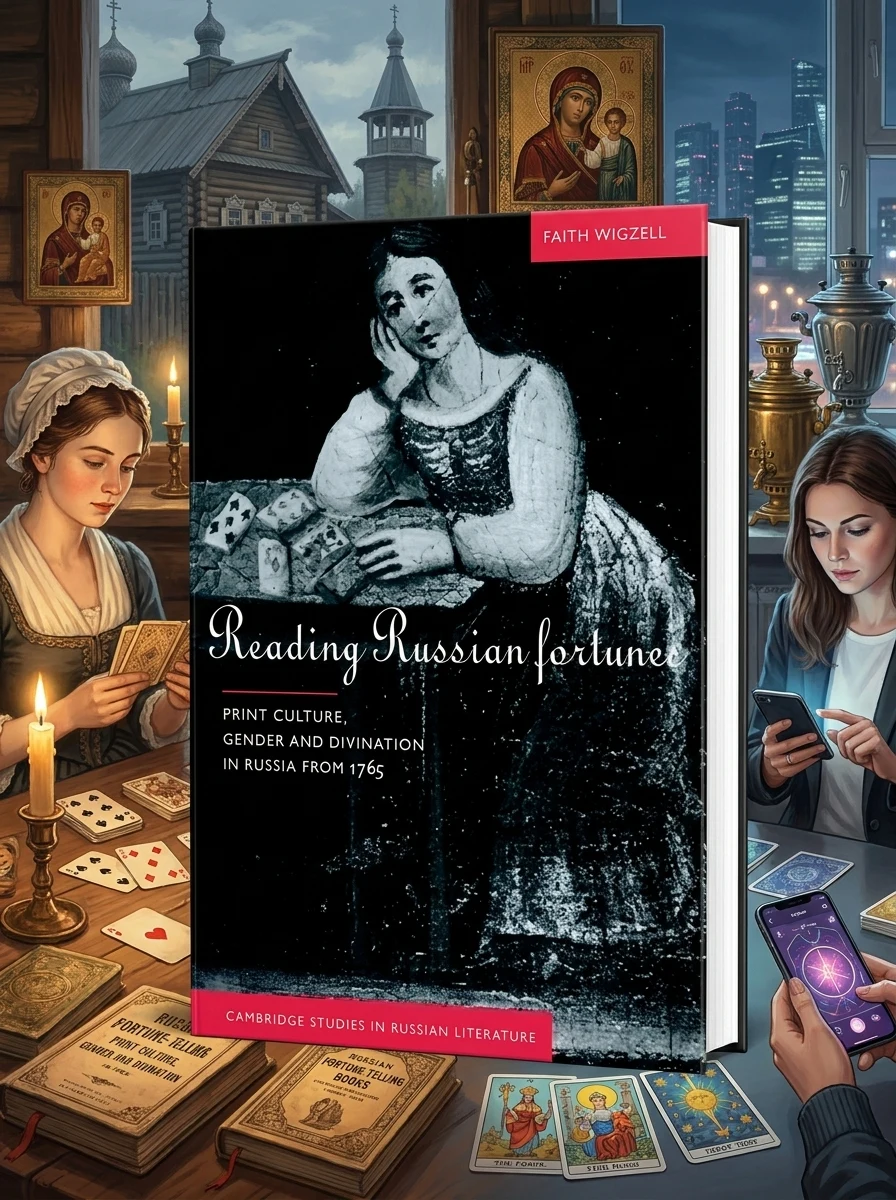
Reading Russian Fortunes: Print Culture, Gender and Divination in Russia from 1765 Wigzell, Faith
Wigzell, FaithStock reported in the catalog; fulfillment is confirmed with your request.
Uncover how Russian women wielded print to weave fate into the fabric of everyday life.
Faith Wigzell illuminates the surprising dominance of printed divination in Russian society, tracing its trajectory from the eighteenth century to the modern era. She reveals how literate urbanites embraced these manuals not merely as superstition, but as accessible literary forms that democratized foresight. The text meticulously explores the pivotal role of women authors and readers in this ecosystem, showing how they navigated gender constraints through the medium of fortune-telling. By bridging the gap between folk oral traditions and printed culture, Wigzell demonstrates why these esoteric practices remain a resilient undercurrent in contemporary Russian identity.
This scholarly work situates itself within the historiography of Russian print culture and gender studies, examining how esoteric practices evolved alongside literacy in Russia from the late eighteenth century onwards. It bridges the academic disciplines of literary history and sociological analysis of divination traditions.


📝 Description: Reading Russian Fortunes: Print Culture, Gender and Divination in Russia from 1765 Wigzell, Faith
💎 Expert review
📖 Why choose it
Why this book is worth reading
Scholars and enthusiasts of occult history will find this text indispensable for its rigorous examination of how printed divination manuals functioned as more than mere superstition. Wigzell offers a compelling narrative on the democratization of foresight, revealing how literate urbanites utilized these texts to navigate their social realities. Readers particularly interested in the agency of women in historical contexts will appreciate the detailed exploration of how female authors and readers used fortune-telling to circumvent gender constraints. This book provides a unique lens through which to view the intersection of literacy, gender dynamics, and spiritual practice, making it essential for those seeking to understand the resilient undercurrents of contemporary Russian identity rooted in these historical esoteric movements.
⭐ Reader reviews
Reader rating
Needed this for my research. It rewards patience more than any book I've bought this year. The print is clean and easy on the eyes for long sessions.
Needed this for my research. The historical context alone makes it worth the price. It rewards patience more than any book I've bought this year. Deserves a place on any esoteric bookshelf.
Exactly what I was looking for. I appreciated how the argument builds steadily from first principles.
I collect works on this subject and this is a worthy addition. Some sections stopped me cold in the best way. It pairs well with more modern commentaries on the same tradition. If you're drawn to this subject, don't hesitate.
Wigzell delivers a dense, academically rigorous analysis that may prove inaccessible to casual readers of occultism or general history. Those seeking practical instructions on how to read tarot cards or perform psychic rituals will find this volume entirely devoid of such utility, as it focuses strictly on historical and sociological frameworks rather than technique. The text is best suited for university libraries and researchers specializing in Russian cultural studies or gender theory. While the argument regarding the literary quality of divination manuals is provocative, the scholarly tone and specific focus on print culture may alienate readers looking for a lighter, more mystical exploration of fortune-telling traditions. It is a serious academic contribution, not a popular guide.
❓ Frequently asked questions
📖 Who should read this
Scholars of Slavic history, gender studies, and the sociology of religion will find this essential. It is also for any reader interested in how marginalized groups use esoteric practices to carve out agency within restrictive social structures.
🎯 Key themes and symbolism
Printed Fate and Literacy
The book argues that fortune-telling books were not lowbrow distractions but significant literary artifacts that allowed the emerging literate class to engage with the unknown. By analyzing the format and distribution of these texts, Wigzell shows how print culture transformed abstract destiny into a tangible, purchasable commodity, making the future feel manageable and immediate for the urban reader.
Female Agency in Divination
Wigzell highlights how women utilized fortune-telling as a unique sphere of authority and expression. In a society with limited professional avenues for women, the creation and consumption of divination texts offered a subtle form of power. These manuals became a space where female voices could articulate anxieties, desires, and social commentary under the guise of mystical guidance.
Urban Folk Traditions
The study examines the tension and synergy between traditional oral folklore and modern printed manuals. It illustrates how urban Russians adapted ancient, communal divination practices into individualized, private rituals facilitated by books. This synthesis created a distinct cultural phenomenon where the collective wisdom of the village met the individualistic nature of the city, sustaining the practice across centuries.
💬 Quotes from the book
“Fortune-telling was not merely a pastime but a serious engagement with the uncertainties of existence.”
“Women used the printed page to voice what society otherwise silenced.”
📜 Historical context
📚 Glossary
- Print Culture
- Esoteric Manuals
- Literate Urbanites
📔 Questions to reflect on
- How does the commodification of fate in print reflect our modern relationship with uncertainty and control?
- In what ways can marginalized voices use esoteric or symbolic languages to assert agency in restrictive environments?
- How do traditional oral practices transform when they are codified into written, mass-produced formats?
✍️ More books by this author Wigzell, Faith
All books by this author →
🏛 Books from this publisher Cambridge University Press
All books from this publisher →

 75
75

You might also like
See more →