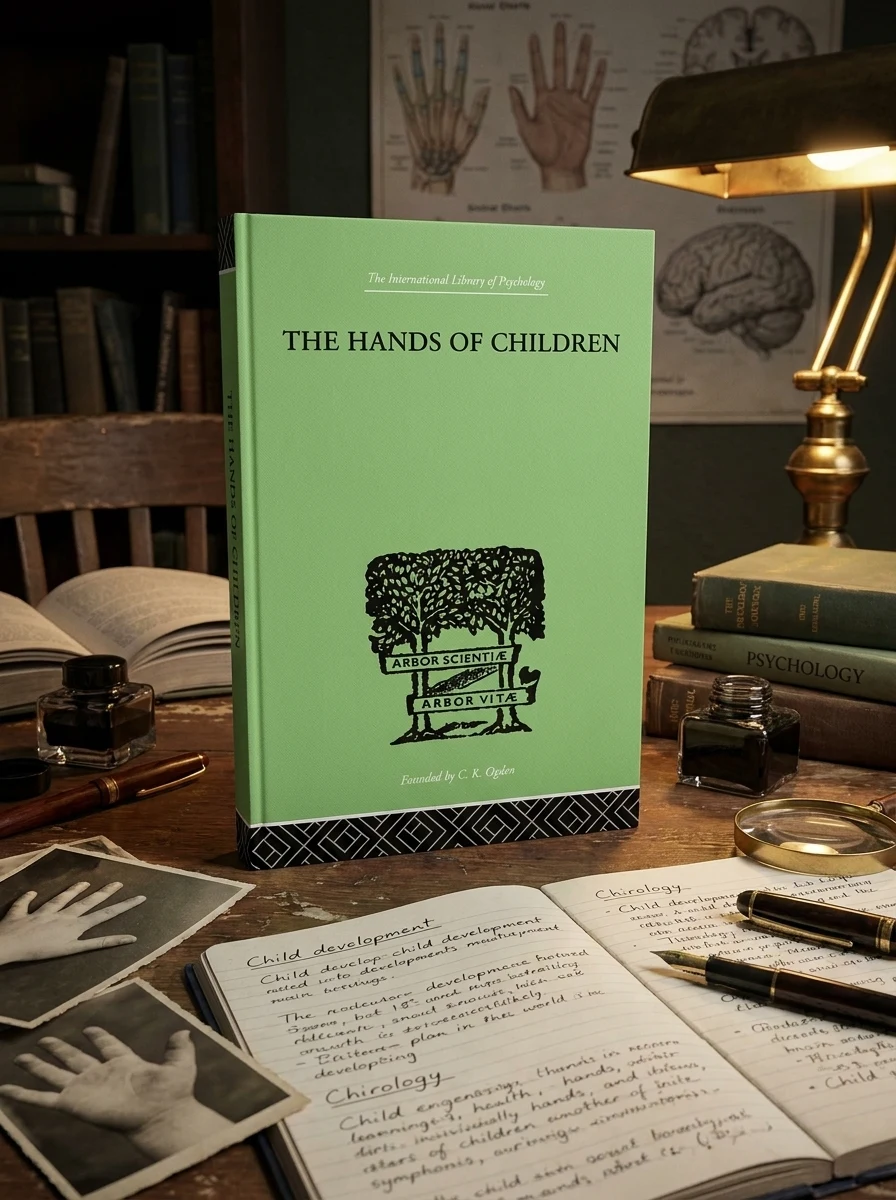

The Hands of Children: An Introduction to Psycho-Chirology
Stock reported in the catalog; fulfillment is confirmed with your request.
Uncover the hidden psychological landscape of childhood etched within the lines of a hand.
Originally penned by Julius Spier and published posthumously in 1931, this volume offers a fascinating initial exploration into psycho-chirology. It delves into the unique insights gleaned from children's hands, blending traditional palmistry with early psychological principles. The current edition benefits from additional experimental analysis by its editor, enhancing Spier's foundational work. Furthermore, a compelling appendix by Herta Levi examines the hands of individuals grappling with mental illness, adding another layer to this intriguing study of human variation.
This work sits at the intersection of early twentieth-century esotericism and emerging psychoanalytic theory, reflecting a period where occult practices began incorporating psychological frameworks. It represents a niche but significant bridge between traditional palmistry and the scientific inquiry into human behavior prevalent in that era.


📝 Description: The Hands of Children: An Introduction to Psycho-Chirology
💎 Expert review
📖 Why choose it
Why this book is worth reading
Readers with a deep curiosity about the intersection of psychology and divination will find this book uniquely rewarding. It offers a fresh perspective on palmistry by focusing on children, revealing how early life shapes our physical markings. Those interested in the historical development of psycho-chirology or the evolution of psychological thought within occult circles will appreciate the foundational insights provided here. The inclusion of experimental analysis and Herta Levi’s appendix adds valuable depth for scholars studying human variation and mental health through an esoteric lens. It is ideal for those who enjoy intellectual exploration alongside mystical tradition.
⭐ Reader reviews
Reader rating
This volume presents a compelling, albeit specialized, study that may not suit casual readers seeking straightforward fortune-telling or simple palmistry guides. It requires patience for its academic tone and focus on psychological analysis rather than predictive divination. Readers looking for quick answers or traditional esoteric lore might find the scientific approach dry or overly theoretical. However, for those willing to engage with the text’s intellectual rigor, it offers a fascinating look at how childhood experiences imprint upon the body. It is best appreciated by scholars and serious students of occult history who value the synthesis of early psychology and mysticism over practical divination techniques.
❓ Frequently asked questions
📖 Who should read this
If you're fascinated by the intersection of early psychology, esoteric studies, and child development, this book is for you. Dive into a historical approach to understanding personality through physical traits, offering a unique perspective on human individuality and diagnostic methods from a bygone era.
🎯 Key themes and symbolism
Children's Psychological Development
Spier specifically focuses on the hands of children, arguing they provide a clearer, less convoluted map of nascent personality traits and emotional tendencies. The book explores how hand lines and shapes might reveal inclinations, anxieties, or developmental stages in young individuals, offering early insights into their psychological make-up before adult complexities take hold.
Early Psychological Diagnostics
The work situates itself within an early 20th-century movement exploring non-conventional diagnostic methods. It exemplifies a period when psychology was still defining its boundaries, incorporating observations from physical characteristics to deduce mental and emotional states, including an appendix dedicated to the hands of those with mental health challenges.
💬 Quotes from the book
“The child's hand, unburdened by the complexities of adult life, often reveals with striking clarity the nascent tendencies of the soul.”
“Observe the delicate interplay of mounts and lines; here lies not fortune, but the subtle blueprint of character and emotional rhythm.”
📜 Historical context
📚 Glossary
- Chirology
- Posthumous
- Individual Differences
📔 Questions to reflect on
- Reflect on a child's hand you know well. What observations could this system offer about their personality or emotional state?
- Consider how the concept of 'individual differences' was approached in the early 20th century versus today. What has changed, and what remains constant?
- If hands are maps of our inner world, what stories might your own hands tell about your past or present psychological landscape?
🏛 Books from this publisher Routledge
All books from this publisher →




 89
89



You might also like
See more →
 91
91