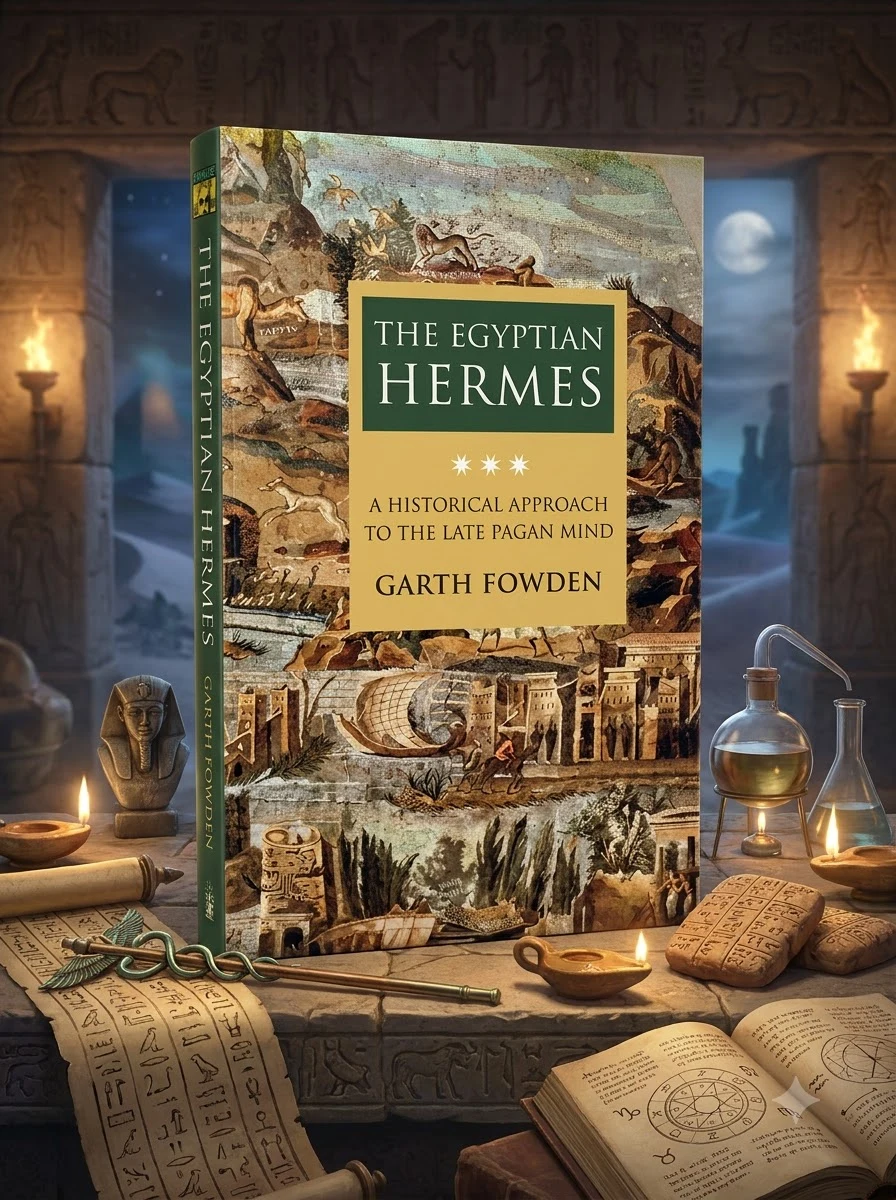
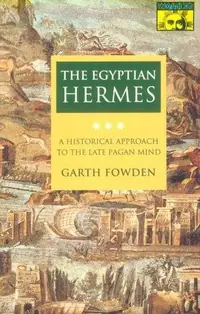
The Egyptian Hermes: A Historical Approach to the Late Pagan Mind (Revised) - Ingram Academic Fowden, Garth
Stock reported in the catalog; fulfillment is confirmed with your request.
Uncover the enigmatic origins of Hermes Trismegistus and his profound influence on ancient thought.
Garth Fowden’s seminal work, "The Egyptian Hermes," offers a unique historical lens on the mythical figure of Hermes Trismegistus. This revised edition delves into the complex cultural synthesis of Hellenistic and Roman Egypt, where this sage, scientist, and sorcerer emerged. Fowden meticulously explores how the diverse technical and philosophical texts attributed to Hermes, traditionally seen as disparate, actually form a cohesive "way of Hermes." By examining the social and intellectual environment, this study redefines our understanding of Hermeticism's enduring appeal across ancient civilizations, including early Christian circles.
This work situates itself within the study of late pagan mindsets and the complex cultural synthesis of Hellenistic and Roman Egypt, exploring the emergence of Hermes Trismegistus as a central figure in ancient intellectual history.


📝 Description: The Egyptian Hermes: A Historical Approach to the Late Pagan Mind (Revised) - Ingram Academic Fowden, Garth
💎 Expert review
📖 Why choose it
Why this book is worth reading
Scholars and enthusiasts of esoteric history will find this revised edition indispensable for understanding the cohesive 'way of Hermes' that emerged from diverse technical and philosophical traditions. Fowden’s meticulous exploration of the social environment redefines our grasp on how these texts functioned as a unified system rather than disparate fragments. Readers interested in the profound influence of ancient thought on early Christian circles and the enduring appeal of Hermeticism across civilizations will gain a nuanced perspective on this enigmatic sage. It is essential for anyone seeking to move beyond surface-level myths to the complex realities of late pagan intellectual life.
⭐ Reader reviews
Reader rating
Garth Fowden provides a rigorous, academically dense historical lens that is vital for serious researchers but likely alienating for casual readers seeking accessible mysticism or practical magical instructions. The text demands patience and a strong background in Hellenistic history to fully appreciate its arguments regarding the synthesis of Greek and Egyptian thought. It does not suit those looking for straightforward occult practice guides, mythological retellings, or simplified summaries of Hermetic philosophy. This is a scholarly deconstruction intended for those willing to engage with complex intellectual environments and social histories rather than enchanted narratives.
❓ Frequently asked questions
📖 Who should read this
If you're drawn to the esoteric roots of Western thought, the syncretic spirituality of ancient Egypt, or the historical context of magical and philosophical traditions, this meticulously researched volume will profoundly deepen your understanding of the Hermetic legacy.
🎯 Key themes and symbolism
The Hermetic Figure
This book meticulously traces the evolution of Hermes Trismegistus from a revered human sage, contemporary with Moses, to an undisputed deity. It explores how this composite figure became the cultural hero of late pagan antiquity, credited with an immense body of literature spanning magic, alchemy, astrology, and profound philosophy.
Graeco-Egyptian Syncretism
Fowden investigates the vibrant and often tense cultural melting pot of post-Alexandrian Egypt. He reveals how the unique blend of Greek and Egyptian traditions forged the fertile ground from which Hermetic thought blossomed, illustrating the intricate fusions that shaped its distinct character.
A Unified Hermetic Vision
A central argument posits that the seemingly disparate technical and philosophical writings within the Hermetica are not isolated traditions but integral facets of a single spiritual path. The book illuminates how this late antique perspective, where diverse paths lead to a common goal, ensured Hermeticism's broad appeal.
💬 Quotes from the book
“The 'way of Hermes' was not a fractured path of disparate disciplines, but a unified current where philosophy, cult, and technical arts converged toward a singular, transcendent wisdom.”
“To truly understand the enduring power of Hermes Trismegistus, one must traverse the complex lineage from human sage, through deification, to his role as the archetypal source of all arcane knowledge.”
📜 Historical context
📚 Glossary
- Hermes Trismegistus
- Hellenistic Egypt
- Hermetica
📔 Questions to reflect on
- How might a modern understanding of "science" and "magic" inform or complicate our perception of figures like Hermes Trismegistus?
- Considering Fowden's argument for a unified "way of Hermes," how might this perspective challenge or reinforce your previous notions of spiritual or philosophical disciplines?
- Reflect on the impact of cultural syncretism, like that seen in Graeco-Egyptian society, on the development of unique spiritual or intellectual traditions.
🏛 Books from this publisher Princeton University Press
All books from this publisher →
 87
87






You might also like
See more →
 91
91


 91
91