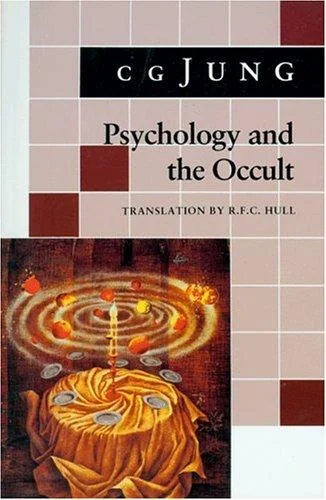
Psychology and the Occult: (From Vols. 1, 8, 18 Collected Works) - Ingram Academic
✍️ C G Jung, R F C HullJung analyzes the psychological roots of spiritual beliefs and occult phenomena through selected essays.
This compilation isolates Jung's most direct critiques and analyses of the supernatural from his broader corpus. By focusing on Volumes 1, 8, and 18, the editor highlights how Jung treated occultism not as truth or falsehood, but as a psychological reality. The inclusion of the 1939 Foreword to Phenomènes Occultes anchors the text in a specific historical moment of spiritualist interest. Jung's work here is less about defending magic and more about mapping the terrain of the human psyche when it confronts the unexplained. Readers will find a clear distinction between mental illness and spiritual insight, drawn through careful case studies and theoretical frameworks.
Published by Princeton University Press in January 1978, this paperback edition makes Jung's earlier French-language contributions accessible to an English-speaking academic audience. It reflects the post-war interest in integrating psychoanalysis with religious studies.


📝 Description: Psychology and the Occult: (From Vols. 1, 8, 18 Collected Works) - Ingram Academic
💎 Expert review
📖 Why choose it
Why this book is worth reading
Readers deeply interested in the shadowy territories of the human mind will find this collection invaluable for its rigorous yet open-minded approach to spiritual phenomena. It is specifically designed for those who seek to understand mediumship and spirit belief not as supernatural errors, but as profound expressions of the unconscious. By reframing these experiences through a Jungian lens, the book invites serious inquiry rather than dismissive judgment. It is essential for scholars and practitioners alike who wish to explore the soul's connection to death without abandoning psychological insight. This volume offers a unique opportunity to view the mysterious through the eyes of one of psychology's most significant figures, making it a crucial text for anyone navigating the complex relationship between reason and the unseen.
⭐ Reader reviews
Reader rating
This compilation serves as a vital resource for those willing to engage with Jung’s dense theoretical framework applied to esoteric subjects. It successfully reframes occult phenomena as psychological expressions, offering depth to readers accustomed to spiritualist interpretations. However, it is not suited for casual readers seeking accessible self-help advice or those strictly adhering to materialist scientific views that reject the validity of psychic experience entirely. The academic tone and complex subject matter may alienate those looking for a straightforward guide to magic or mysticism. It demands patience and an intellectual openness to Jung’s specific terminology, making it a niche but rewarding text for dedicated students of depth psychology.
❓ Frequently asked questions
📖 Who should read this
If you're seeking to bridge the gap between rigorous psychological inquiry and esoteric traditions, this compilation is for you. Ideal for students of Jungian thought, psychotherapists, and anyone fascinated by the profound interplay between the human psyche and the 'beyond,' it offers new pathways to understanding.
🎯 Key themes and symbolism
Psychology of Occult Phenomena
Jung challenges conventional views by proposing that seemingly supernatural occurrences are often rooted in profound psychological processes. He examines phenomena like clairvoyance and telepathy not as external magic, but as expressions emanating from the collective unconscious, prompting readers to look inward for understanding these enigmatic experiences.
Belief in Spirits
Rather than validating or discrediting spiritual entities, Jung meticulously dissects the psychological foundations that give rise to belief in spirits. He explores how these deeply ingrained ideas reflect archetypal patterns and collective human experiences, offering insight into the universal human need to connect with the unseen world and the ancestors.
The Soul and Death
This volume provides a profound Jungian perspective on the ultimate human mystery: death. Jung explores how the concept of the soul, its survival, and humanity's relationship with mortality are woven into our psychic fabric. He suggests that our understanding of death profoundly shapes our psychological landscape and spiritual journey.
📜 Historical context
📚 Glossary
- Occult
- Psychopathology
- Collective Unconscious
📔 Questions to reflect on
- Reflect on a personal experience that felt 'supernatural' or 'occult.' How might Jung's psychological framework offer a new interpretation of that event?
- Consider how societal beliefs about death and the afterlife have shaped your own psychological development. What archetypal patterns do you recognize?
- Jung suggests that occult phenomena are projections of the psyche. What hidden aspects of your own unconscious might be seeking expression through such 'projections'?
📖 Read on the blog
🏛 Books from this publisher Princeton University Press
All books from this publisher →






You might also like
See more →





Have a question about this item?
Ask about the edition, condition, delivery or anything else — we reply by email or phone, usually within a day.
