


Dreams of a Lifetime: How Who We Are Shapes How We Imagine Our Future
Cerulo, Karen a; , Ruane, Janet MThis edition can be ordered. No arrival date is confirmed.
Your aspirations aren't just yours; society quietly shapes every future you envision.
This groundbreaking work challenges the conventional belief that our dreams are purely personal constructs, demonstrating instead how deeply intertwined they are with our social standing. Cerulo and Ruane meticulously reveal how factors like social class, gender, and age profoundly influence not only what we dare to dream but also our conviction in their attainability. It's a compelling exploration of how external societal structures become internalized, quietly dictating the very scope and nature of our most intimate future imaginings, thus perpetuating cycles of inequality even in the realm of thought.
This work emerges from contemporary sociological discourse, challenging traditional psychological models of individualism by foregrounding the structural forces that mold human aspiration. It sits at the intersection of social stratification studies and the sociology of imagination, reflecting a period where systemic inequality is increasingly examined through the lens of cognitive and emotional life.


📝 Description: Dreams of a Lifetime: How Who We Are Shapes How We Imagine Our Future
💎 Expert review
📖 Why choose it
Why this book is worth reading
This book offers a profound lens for sociologists, educators, and anyone interested in the mechanics of social mobility to understand how invisible barriers are constructed within the mind. Readers who seek to dismantle their own assumptions about meritocracy will find this analysis invaluable. It illuminates how class, gender, and age act as silent curators of our ambitions, providing a critical framework for recognizing why certain futures feel attainable while others remain out of reach. By exposing these internalized societal structures, the text empowers individuals to question the authenticity of their desires, fostering a deeper awareness of how external inequality perpetuates itself through our very thoughts and dreams.
⭐ Reader reviews
Reader rating
While intellectually rigorous, this volume is strictly academic and may alienate casual readers seeking inspirational self-help narratives. It does not suit those who believe personal agency operates entirely independent of social context, as the authors firmly argue that such freedom is largely an illusion shaped by structural forces. The dense sociological framework requires patience and a willingness to engage with complex theories of social stratification. It is best approached by scholars or serious students of sociology who appreciate nuanced arguments about how society infiltrates the private sphere of imagination. Those expecting practical advice on dream interpretation will find little utility here, as the focus remains squarely on the macro-social determinants of micro-level thought.
❓ Frequently asked questions
📖 Who should read this
If you're fascinated by the subtle power of social forces on individual psychology and curious about the hidden mechanisms of inequality, this book is for you. It offers profound insights for anyone seeking to understand the societal roots of personal aspiration and limitation.
🎯 Key themes and symbolism
Social Stratification of Dreams
The book meticulously unpacks how an individual's position within society—defined by class, race, and gender—directly correlates with the scope and perceived realism of their personal aspirations. It argues that privilege or disadvantage doesn't just open or close doors; it subtly dictates what possibilities we even allow ourselves to consider for the future.
Internalized Societal Constraints
This work explores how external social inequalities are internalized, manifesting as invisible mental boundaries that limit our imaginative capacities. It shows how our social location shapes our cognitive landscape, influencing whether we embrace dreaming, what we dream about, and our belief in the practical realization of those dreams, from the mundane to the extraordinary.
Dreams as Inequality Indicators
Beyond simply discussing social disparities, the authors illustrate how the very act of dreaming, or refraining from it, reflects and amplifies existing societal inequalities. They argue that differences in how we envision our futures exacerbate social gaps, inadvertently narrowing the perceived life paths available to those already facing systemic disadvantages.
💬 Quotes from the book
“We often mistake the boundaries of our imagination for the limits of possibility, unaware that society has drawn those lines for us.”
“To understand why some dreams flourish while others wither, we must first examine the soil of social reality from which they spring.”
📜 Historical context
📚 Glossary
- Social Location
- Dreaming (as used in the book)
- Sociocultural Disparities
📔 Questions to reflect on
- Reflect on a personal dream you've held. How might your social background (class, gender, race, age) have influenced its scope or your belief in its attainability?
- Consider someone from a significantly different social location than your own. How might their 'dreams of a lifetime' differ, and what societal factors might contribute to those differences?
- Beyond direct opportunity, how do you think your social environment has subtly shaped what you even *allow* yourself to imagine as a potential future?
✍️ More books by this author Cerulo, Karen a; , Ruane, Janet M
All books by this author →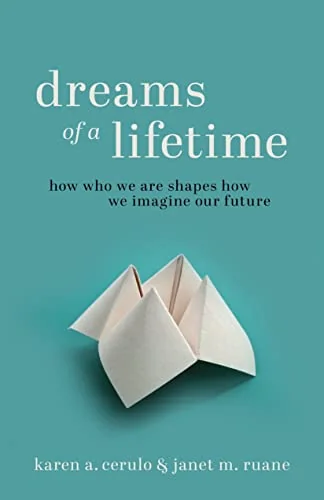
🏛 Books from this publisher Princeton University Press
All books from this publisher →
 87
87






You might also like
See more →