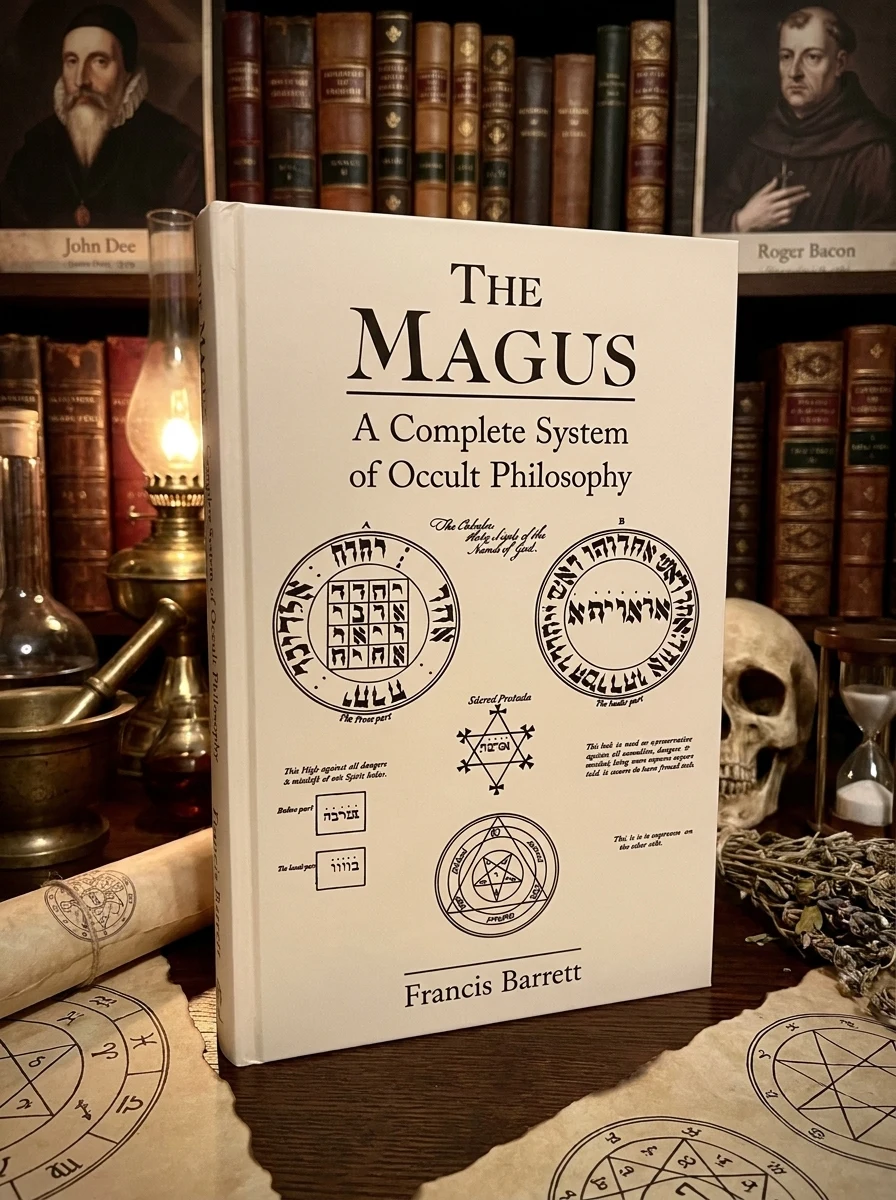
The Magus: A Complete System of Occult Philosophy (Revised) Barrett, Francis
✍️ Barrett, FrancisFrancis Barrett assembled this volume to collect foundational writings on the Western magical tradition into a single reference. Drawing directly from works like Agrippa's Three Books of Occult Philosophy, the text brings together practical areas of study alongside historical background. Readers find material on talismanic operations, alchemy, and cabalistic theory, accompanied by figures of traditional occult diagrams. It offers direct access to the historical texts that shaped nineteenth-century occultism.


📝 Description: The Magus: A Complete System of Occult Philosophy (Revised) Barrett, Francis
💎 Expert review
📖 Why choose it
Why this book is worth reading
This volume is an indispensable resource for serious students dedicated to the study of esoteric philosophy and Western magical thought. Readers who seek a comprehensive understanding of natural magic, alchemical principles, and talismanic practices will find immense value in its systematic approach. By distilling foundational texts like Agrippa’s works into one accessible compendium, Barrett provides a clear pathway for those eager to explore Qabalistic insights and ceremonial rituals. The inclusion of unique illustrations inspired by ancient grimoires further enriches the experience for practitioners looking to ground their theoretical knowledge in historical context and visual symbolism.
⭐ Reader reviews
Reader rating
Barrett’s magnum opus remains a definitive guide for those committed to the rigorous study of occult systems. Its strength lies in its exhaustive scope, covering everything from natural magic to intricate ceremonial procedures. However, it is not suited for casual readers seeking quick spells or superficial entertainment. The text demands patience and intellectual engagement, as it presents dense philosophical concepts rather than simple instructions. Those looking for modern, simplified interpretations may find the language and structure archaic and difficult to navigate. It is best approached by individuals willing to invest time in deep, scholarly exploration of historical magical traditions and their underlying theoretical frameworks.
❓ Frequently asked questions
📖 Who should read this
If you're a serious student of Western esotericism, a practicing ceremonial magician, or an occult historian seeking primary sources, this book is essential. It provides a foundational understanding for anyone looking to delve deeply into the historical and practical aspects of traditional magic.
🎯 Key themes and symbolism
Ceremonial & Qabalistic Magic
This volume deeply delves into the intricate rituals and symbolic structures underpinning ceremonial magic, providing practical insights and theoretical frameworks. It also integrates Qabalistic principles as a foundational system for understanding divine emanations and their application in magical practice, guiding the practitioner through complex operations.
Alchemy & Natural Magic
Barrett meticulously outlines the principles of natural magic, exploring the hidden virtues of herbs, stones, and celestial influences for practical applications. Furthermore, the text touches upon alchemical theories, not just as a quest for gold, but as a transformative philosophical process, linking material and spiritual purification.
Historical Esoteric Figures
Beyond theoretical exposition, "The Magus" offers biographical sketches of key historical figures who shaped Western occultism, such as Albertus Magnus, Roger Bacon, and John Dee. These profiles provide context and inspiration, illustrating the lineage and evolution of magical thought through the lives of its most influential practitioners.
📜 Historical context
📚 Glossary
- Occult Philosophy
- Ceremonial Magic
- Qabalah
📔 Questions to reflect on
- How does Barrett's approach to integrating various magical traditions (e.g., Qabalah, Hermeticism) inform your own understanding of a unified esoteric philosophy?
- Reflect on the distinction between "natural magic" and "ceremonial magic" as presented. How might these different approaches complement or diverge in practice today?
- Consider the biographies of figures like Agrippa or Dee. What lessons can be drawn from their lives regarding the pursuit of occult knowledge and its societal implications?