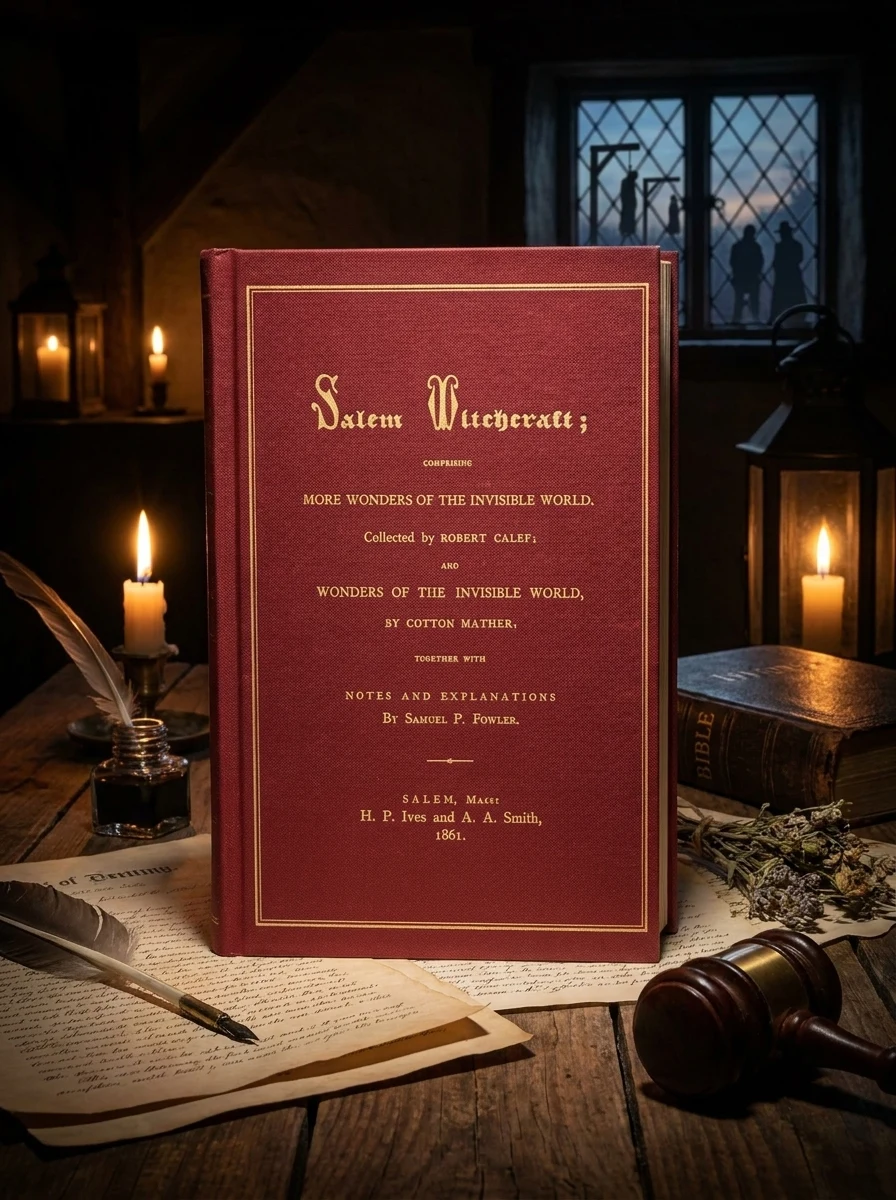
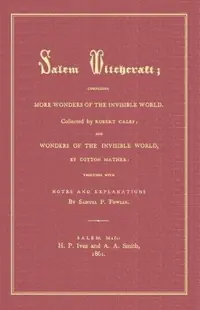
Salem Witchcraft: Comprising More Wonders of the Invisible World. Collected by Robert Calef; And Wonders of the Invisible World, By Cotton Mather; Tog
Stock reported in the catalog; fulfillment is confirmed with your request.
Uncover the chilling clash of belief and skepticism from the heart of the Salem Witch Trials.
This essential volume presents two foundational, yet fiercely opposing, perspectives on the infamous Salem Witch Trials. Cotton Mather's 1693 account, 'Wonders of the Invisible World,' initially defends the proceedings and the validity of witchcraft accusations, despite his earlier reservations about judicial conduct. Countering this, Robert Calef's 1700 'More Wonders of the Invisible World' delivers a scathing critique, systematically dismantling the trials as a profound miscarriage of justice and questioning Mather's influence. Together, these works offer an unparalleled, contemporaneous look into one of America's darkest historical episodes.
This volume anchors itself in the foundational literature of American colonial history and early modern occult studies, specifically addressing the Salem Witch Trials through primary source documents. It serves as a critical text for understanding the historical intersection of religious fervor, legal procedure, and the debate over the 'invisible world' in 17th-century New England.


📝 Description: Salem Witchcraft: Comprising More Wonders of the Invisible World. Collected by Robert Calef; And Wonders of the Invisible World, By Cotton Mather; Tog
💎 Expert review
📖 Why choose it
Why this book is worth reading
Readers fascinated by the psychological and theological underpinnings of mass hysteria will find immense value in this dual-perspective volume. It offers a rare opportunity to witness the intense intellectual battle between justification and skepticism during one of America's most infamous dark episodes. By presenting Cotton Mather’s defense alongside Robert Calef’s scathing critique, the book allows you to evaluate the validity of accusations firsthand. You gain insight into how authority figures manipulated belief systems for judicial ends. It is essential for those seeking to understand the human cost of dogmatic certainty and the enduring power of historical narrative in shaping our perception of justice and truth.
⭐ Reader reviews
Reader rating
This collection is a vital resource for historians and students of early American literature who wish to examine the primary sources of the Salem Witch Trials directly. However, it does not suit casual readers seeking a straightforward narrative or those uninterested in dense theological arguments and legalistic debates. The text requires patience and a strong interest in historical analysis rather than dramatic storytelling. Readers looking for modern interpretations or fictionalized accounts will likely find the contemporaneous, argumentative nature of these 17th-century texts dry and difficult to engage with without prior context. It is best approached as a scholarly reference or a deep dive into historical primary sources.
❓ Frequently asked questions
📖 Who should read this
If you're drawn to the chilling intersection of law, religion, and mass hysteria, or seek to understand the origins of American judicial skepticism, this dual perspective offers indispensable insight. Essential for students of history, law, and the occult.
🎯 Key themes and symbolism
Justice and Injustice
Calef's work stands as an early, powerful argument against judicial overreach and public hysteria, meticulously detailing the procedural flaws and lack of credible evidence that led to wrongful convictions. It forces readers to confront how societal fears can warp legal principles and lead to profound moral failures.
Faith Versus Skepticism
The collection highlights the stark intellectual divide of the era: Mather’s deep-seated belief in the tangible reality of witchcraft, even while scrutinizing judicial methods, contrasted sharply with Calef's rational skepticism that questioned the very foundations of the accusations and the supernatural claims fueling them.
Historical Interpretation
By presenting these two primary sources side-by-side, the book illuminates how historical events are shaped and contested through differing narratives. It demonstrates the critical importance of examining multiple viewpoints to fully grasp the complexities of the past and the biases inherent in historical accounts.
💬 Quotes from the book
“The Devil, by the permission of God, has had a more than ordinary commission to vex and plague the children of men.”
“To condemn individuals upon such flimsy pretenses, without substantial proof, is to betray justice and invite further delusion.”
📜 Historical context
📚 Glossary
- Wonders of the Invisible World
- More Wonders of the Invisible World
- Spectral Evidence
📔 Questions to reflect on
- How do the differing perspectives of Mather and Calef challenge or affirm your understanding of historical truth and objectivity?
- Reflect on how public fear and religious conviction, as seen in these accounts, can influence legal systems and lead to collective delusion.
- Consider the ethical responsibilities of those in positions of authority (clerical, judicial, literary) when confronting widespread societal panic or alleged supernatural phenomena.
You might also like
See more →
 91
91