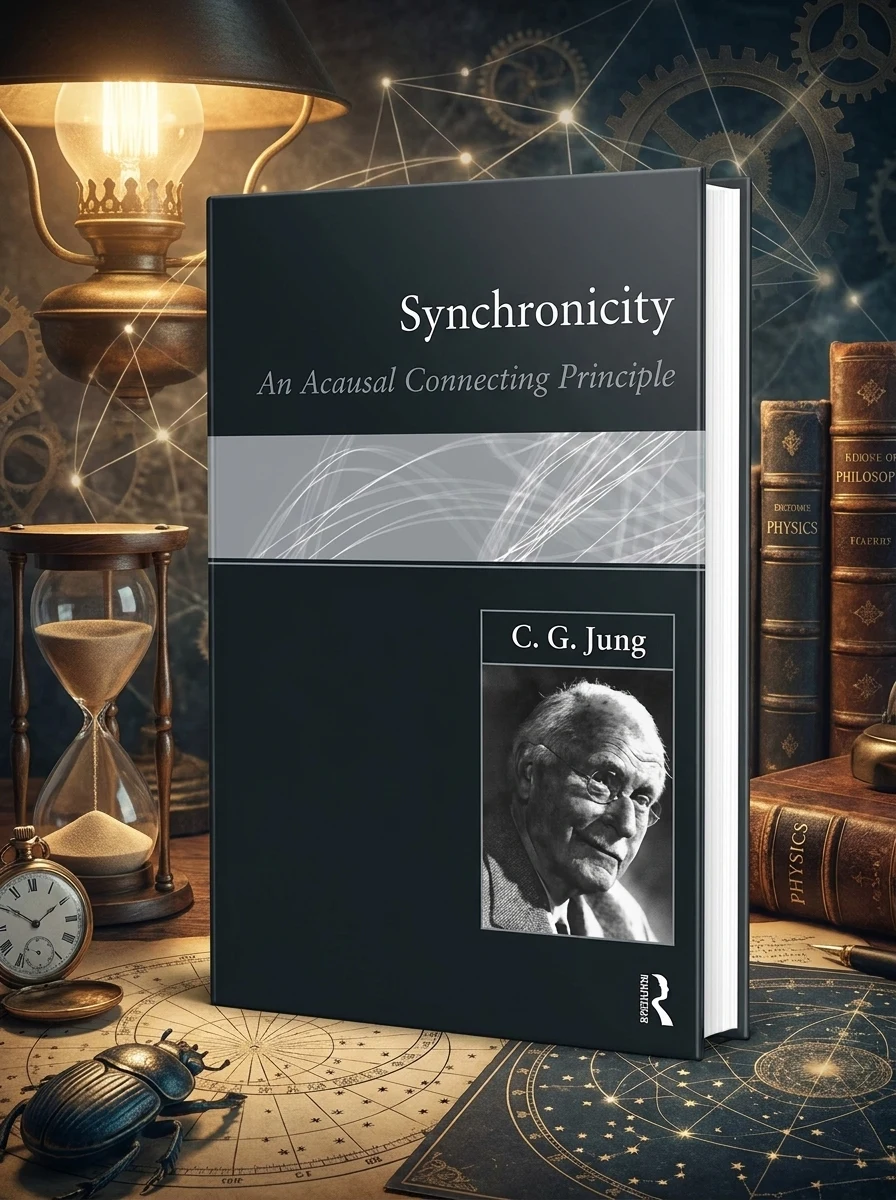
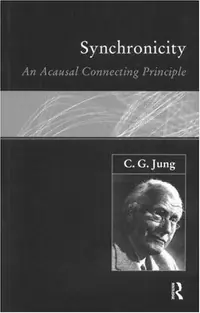
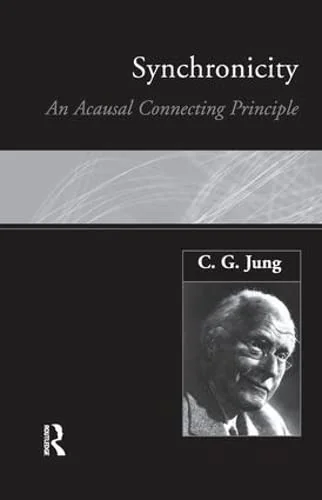
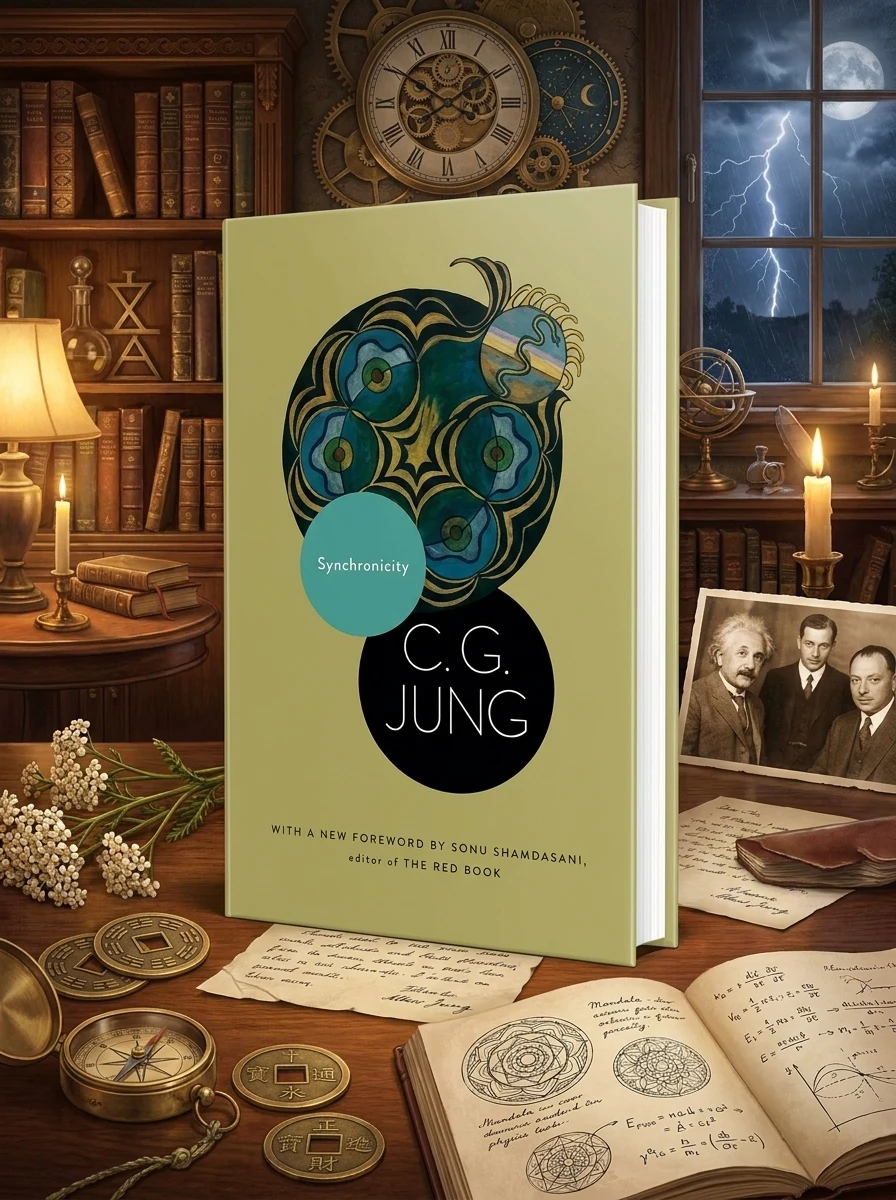
Synchronicity: An Acausal Connecting Principle
Jung, C GStock reported in the catalog; fulfillment is confirmed with your request.
Explore Jung's mind-bending theory of meaningful coincidences that defy standard cause and effect.
Carl Jung introduces synchronicity as a profound psychological framework where events connect through meaning rather than linear causality. This text challenges the rigid boundaries of physics and psychology, suggesting that the psyche and the material world are intertwined in ways that transcend space and time. By examining meaningful coincidences, Jung invites readers to reconsider the nature of chance and the hidden patterns governing singular life events. It is a dense, philosophical exploration of the acausal connecting principle, offering a bridge between empirical science and the mystical experiences of the human mind.
This work sits at the intersection of depth psychology and esoteric philosophy, challenging the materialist paradigms of early 20th-century science. It bridges empirical psychological inquiry with mystical interpretations of reality, offering a framework for understanding non-linear connections in human experience.


📝 Description: Synchronicity: An Acausal Connecting Principle
💎 Expert review
📖 Why choose it
Why this book is worth reading
Readers fascinated by the hidden architectures of consciousness and those seeking to reconcile scientific rigor with mystical intuition will find profound value here. Jung invites you to look beyond linear cause-and-effect, revealing how meaningful coincidences govern singular life events. If you feel that standard physics leaves out the psyche's vital role in shaping reality, this text offers a compelling bridge. It is ideal for thinkers willing to question the nature of chance and explore the intertwined relationship between mind and matter, providing a dense but rewarding exploration of acausal connections that transcend space and time.
⭐ Reader reviews
Reader rating
Honestly wasn't sure what to expect, but I'm impressed. I appreciated how the argument builds steadily from first principles. One of my better finds this year.
Added this to my reference shelf. Not a light read, but far more accessible than I feared. The print is clean and easy on the eyes for long sessions. It assumes more background than a beginner might have.
Jung’s treatise is a rigorous, philosophical exploration that demands patience from its audience. While it offers a fascinating bridge between empirical science and mystical experience, it is not for those seeking quick answers or light reading. The dense theoretical framework may frustrate readers expecting straightforward psychological advice or simple magical techniques. Those who prefer rigid materialist explanations of the universe might find the concept of acausal connecting principle unsettling or unscientific. However, for open-minded intellectuals willing to engage with complex ideas about meaning and coincidence, it remains an essential, mind-bending contribution to understanding the psyche's role in our perceived reality.
❓ Frequently asked questions
📖 Who should read this
Readers fascinated by the intersection of depth psychology, quantum physics, and metaphysics will find this essential. It suits those questioning the limits of rationalism and seeking deeper patterns in their personal experiences.
🎯 Key themes and symbolism
Acausal connection
Meaningful coincidence
Psyche-world unity
💬 Quotes from the book
“Synchronicity is a meaningful coincidence in time.”
“It challenges the physicist's classical view of causality.”
📜 Historical context
📚 Glossary
- Synchronicity
- Acausal
- Psyche
📔 Questions to reflect on
- Can you identify a recent 'meaningful coincidence' in your life that felt significant?
- How does the idea of acausal connection change your view of random chance?
- In what ways do your internal thoughts seem to mirror external events?
✍️ More books by this author Jung, C G
All books by this author →

 89
89
 79
79
 88
88
 82
82


🏛 Books from this publisher Routledge
All books from this publisher →

 89
89

You might also like
See more →
 87
87

 91
91
 91
91