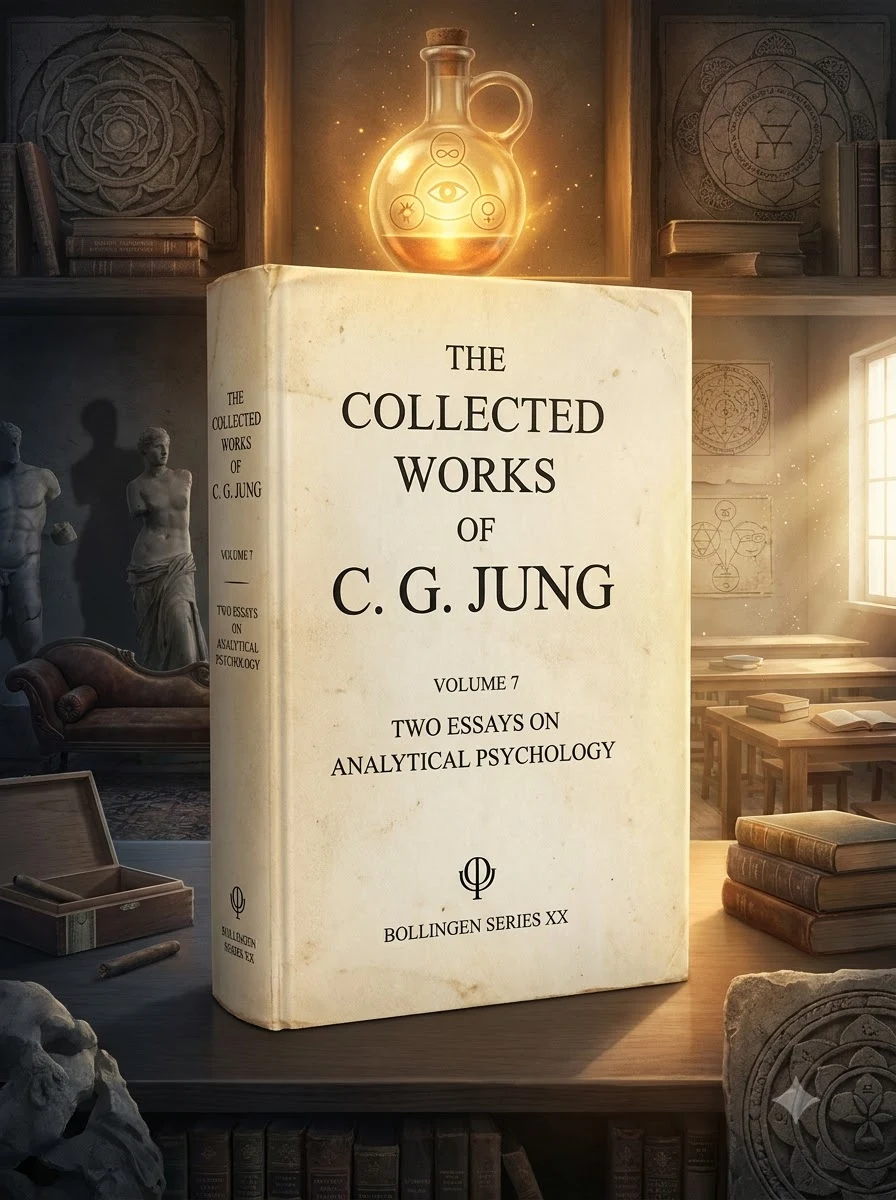
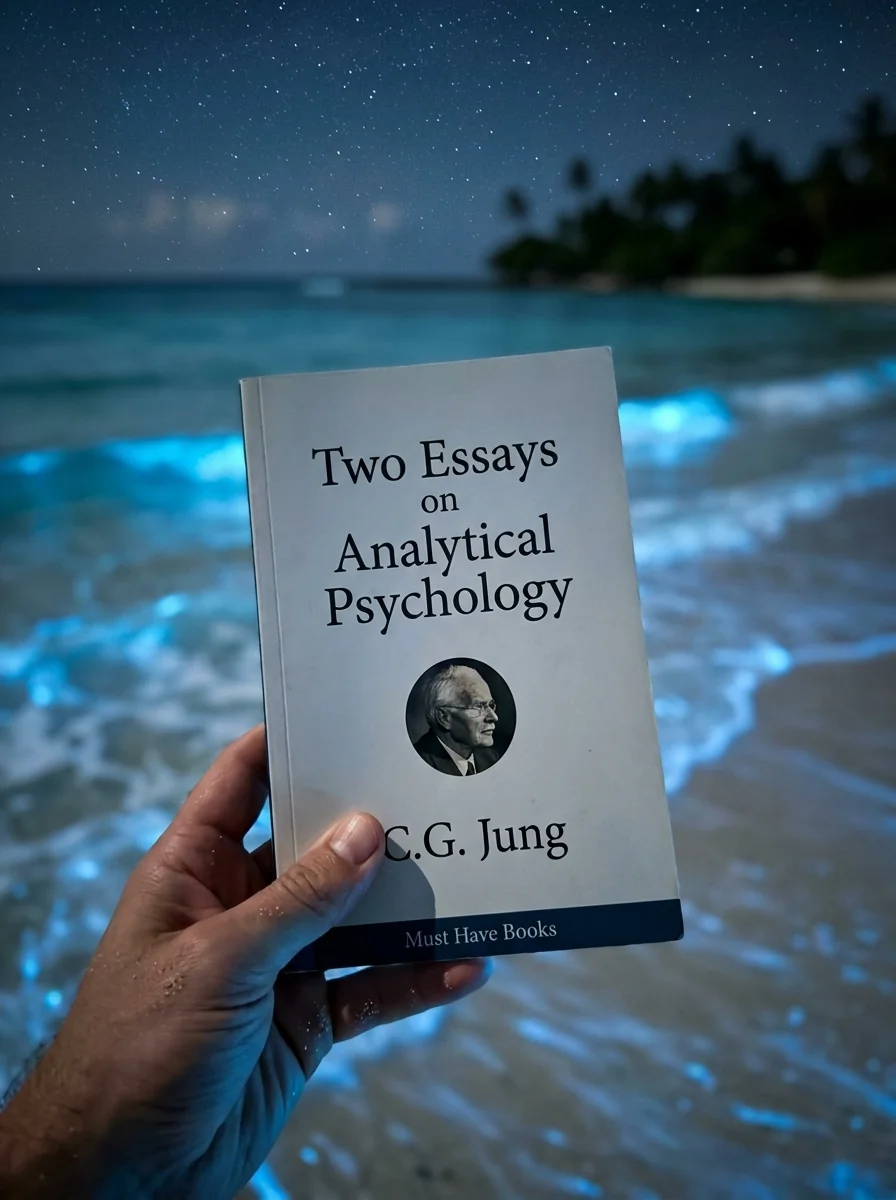

Two Essays on Analytical Psychology
✍️ Jung, C GThis seminal collection offers perhaps the clearest gateway into the profound thought of C. G. Jung. Comprising two foundational essays, "The Relations between the Ego and the Unconscious" and "On the Psychology of the Unconscious," it distills the core principles of his analytical psychology. Readers will find Jung's essential framework for understanding the intricate dance between our conscious self and the vast, often hidden, inner world. It's a critical text marking his definitive divergence from his predecessors, laying the groundwork for a truly comprehensive psychological system.


📝 Description: Two Essays on Analytical Psychology
💎 Expert review
📖 Why choose it
Why this book is worth reading
Readers seeking to understand the intricate architecture of their own minds will find this book indispensable. It serves as a clear gateway into C.G. Jung’s profound thought, making complex concepts accessible without losing depth. The collection is ideal for those fascinated by the dynamic relationship between the conscious ego and the vast, hidden unconscious. By exploring Jung's revolutionary path beyond Freud, readers gain essential tools for self-discovery. This text is particularly valuable for individuals ready to engage with foundational essays that distill core principles of analytical psychology. It offers a critical framework for navigating the inner world, providing clarity on how our conscious self interacts with deeper psychological forces. If you desire a comprehensive understanding of the psyche's structure and Jung's unique contributions, this seminal work provides the necessary foundation.
⭐ Reader reviews
Reader rating
This collection delivers perhaps the clearest entry point into Jung’s analytical psychology through two foundational essays. It successfully distills core principles regarding the ego-unconscious dynamic, offering a revolutionary perspective that moves beyond Freudian theory. However, it is not suitable for readers seeking light entertainment or simple self-help advice; this is dense theoretical work requiring serious engagement. Those expecting practical exercises may find the abstract nature of 'The Relations between the Ego and the Unconscious' demanding. It suits scholars and serious students of depth psychology who appreciate rigorous intellectual exploration over accessible narrative. The text is a critical historical marker, but its value lies in its conceptual density rather than readability for casual browsers or those uninterested in complex psychological systems.
❓ Frequently asked questions
📖 Who should read this
If you've heard of Jung but haven't yet delved into his primary works, this is your starting point. It's essential reading for anyone seeking to grasp the foundations of analytical psychology, understand the psyche's deeper layers, or explore the origins of modern depth psychology.
🎯 Key themes and symbolism
Ego-Unconscious Dynamic
Jung meticulously explores the complex relationship between the conscious ego and the boundless unconscious. He elucidates how this interplay shapes our personality, influencing our perceptions, behaviors, and our journey toward individuation. The essays reveal the ego not as a sole ruler, but as a crucial mediator with the powerful, often mysterious, forces beneath awareness.
Birth of Analytical Psychology
Witness the genesis of Jung's distinct psychological system as he articulates his core concepts. These writings are fundamental in establishing the unique theoretical underpinnings of analytical psychology, presenting his groundbreaking ideas on the nature of the psyche, its structure, and its inherent drive towards wholeness, setting it apart from contemporary schools.
Synthesizing Early Psychologies
Jung endeavors to integrate the insights of Sigmund Freud's psychoanalysis and Alfred Adler's individual psychology into a more expansive framework. He acknowledges their contributions while transcending their limitations, offering a broader, more holistic understanding of human motivation and development. This work highlights his intellectual ambition to create a unified psychological science.
📜 Historical context
📚 Glossary
- Analytical Psychology
- Ego
- Unconscious
📔 Questions to reflect on
- Reflect on a time when an 'unconscious' impulse or dream significantly influenced your conscious decision-making. How did the ego mediate this interaction?
- Consider Jung's distinction between the personal and collective unconscious. What might be an example of an archetype influencing a contemporary cultural phenomenon?
- If the ego is a mediator, what 'inner' and 'outer' worlds do you perceive it balancing in your own life currently?