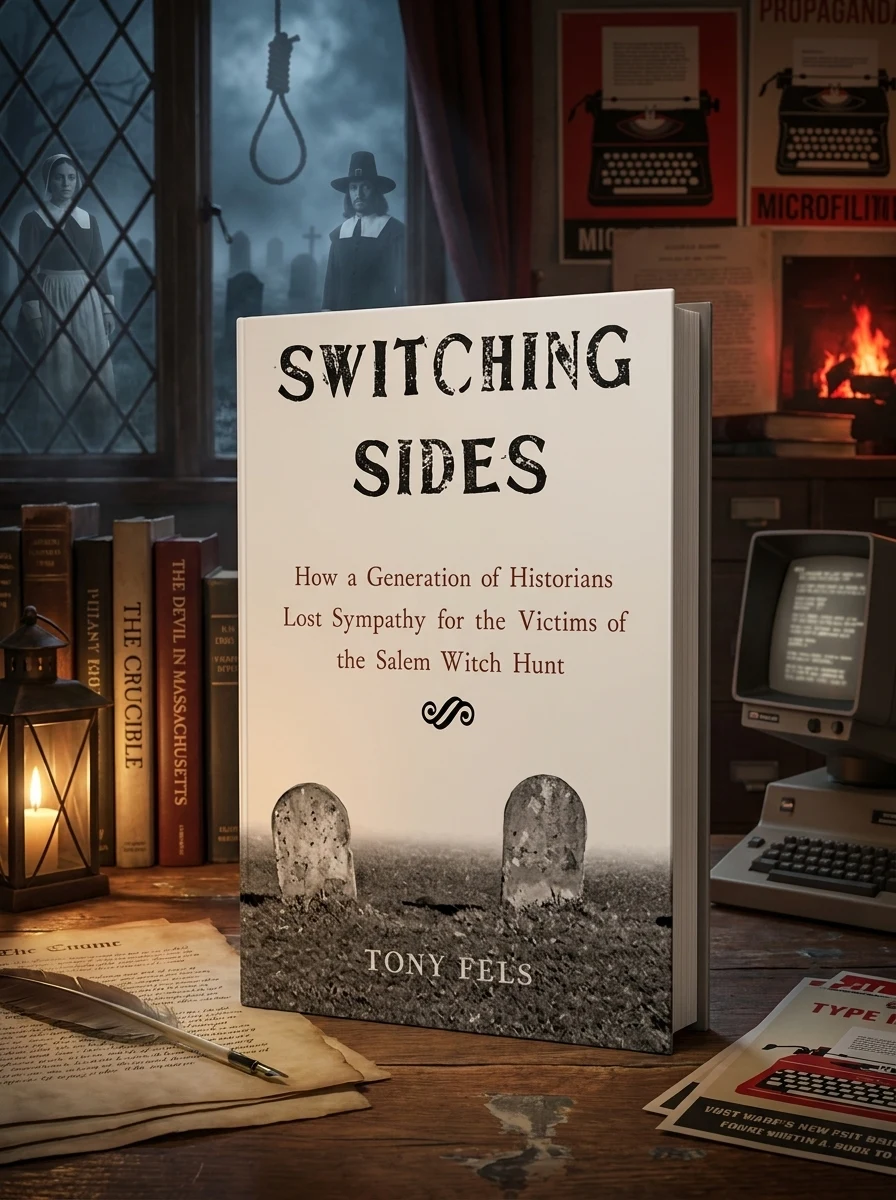
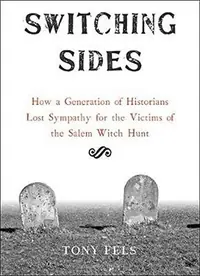
Switching Sides: How a Generation of Historians Lost Sympathy for the Victims of the Salem Witch Hunt
This edition can be ordered. No arrival date is confirmed.
Fels exposes how modern academia inverted moral sympathy, elevating accusers over the accused in Salem's dark legacy.
Tony Fels meticulously traces the historiographical inversion surrounding the Salem witch trials. While post-WWII scholars viewed the events as a warning against ideological tyranny, favoring the martyred victims, a subsequent generation influenced by New Left radicalism reversed this perspective. This new wave of historians championed the accusers as oppressed commoners while dismissing the victims as products of patriarchal oppression. Fels argues this shift represents a profound loss of historical empathy, replacing moral clarity with a politically motivated reinterpretation that ignores the reality of the innocent who were executed.
This work sits within the tradition of historiographical critique and social history, examining how scholarly narratives evolve in response to shifting political ideologies. It engages deeply with the cultural memory of early American colonial events and the academic discourse surrounding witchcraft studies.


📝 Description: Switching Sides: How a Generation of Historians Lost Sympathy for the Victims of the Salem Witch Hunt
💎 Expert review
📖 Why choose it
Why this book is worth reading
You should read this book if you are fascinated by the mechanics of historical interpretation and how political biases can reshape our understanding of the past. Tony Fels offers a compelling defense of moral clarity, inviting readers to reconsider the narrative of the Salem witch trials through a lens that restores sympathy for the executed victims. It is essential for those who appreciate rigorous academic critique and wish to understand how modern ideological frameworks can distort historical empathy. By exposing this inversion of sympathy, Fels provides a valuable corrective to contemporary scholarship, making it a vital read for historians, students of moral philosophy, and anyone concerned with the integrity of historical truth against the backdrop of shifting cultural values.
⭐ Reader reviews
Reader rating
Not my usual area but wanted to branch out. The language takes some getting used to, but it becomes part of the charm. It assumes more background than a beginner might have. Solid, if not essential.
This edition finally does the material justice. A text you study rather than simply read. It connects ideas I'd only seen treated separately elsewhere. A keeper.
Came across this title in a footnote and had to track it down. It connects ideas I'd only seen treated separately elsewhere. Every rereading turns up something I missed. Well worth it.
This has been on my wishlist for months. I found myself reading passages aloud just to sit with them. Some archaic spellings slow things down.
A friend in my study group recommended this one. I found myself reading passages aloud just to sit with them. There's real depth here that reveals itself on a second reading. A few pages arrived with light corner wear, though nothing serious. Solid, if not essential.
Was skeptical at first. It connects ideas I'd only seen treated separately elsewhere. The material is presented clearly and the structure makes it easy to revisit key passages.
Fels delivers a rigorous academic indictment of historiographical trends, appealing primarily to scholars interested in the sociology of knowledge and early American history. The text is dense with theoretical argumentation, making it unsuitable for casual readers seeking a narrative-driven account of the trials themselves or those uninterested in meta-historical analysis. It may frustrate readers who prefer straightforward historical storytelling over complex debates about academic morality and bias. However, for those willing to engage with its challenging thesis, the book offers a provocative and necessary examination of how political movements can alter collective memory. It is a significant contribution to the field but demands patience and a specific intellectual interest in the evolution of scholarly sympathy.
❓ Frequently asked questions
📖 Who should read this
Readers interested in the politics of historical interpretation, those studying colonial American history, and anyone concerned with how contemporary ideologies reshape our understanding of the past.
🎯 Key themes and symbolism
Historiographical Bias
New Left Radicalism
Moral Inversion
💬 Quotes from the book
“The shift from viewing the trials as a tragedy of innocent victims to a narrative of social control marks a profound moral dislocation in American historiography.”
“We have traded the courage of the martyred for the comfort of the oppressor, guided by a political agenda rather than historical evidence.”
📜 Historical context
📚 Glossary
- Historiography
- New Left
- Sympathetic Reinterpretation
📔 Questions to reflect on
- How might your own political or social biases influence your reading of historical conflicts?
- When did you last change your mind about a historical figure based on new scholarly interpretations?
- Why is it difficult to maintain sympathy for victims when modern narratives suggest they were complicit in their own fate?
🏛 Books from this publisher Johns Hopkins University Press
All books from this publisher →




You might also like
See more →

 91
91