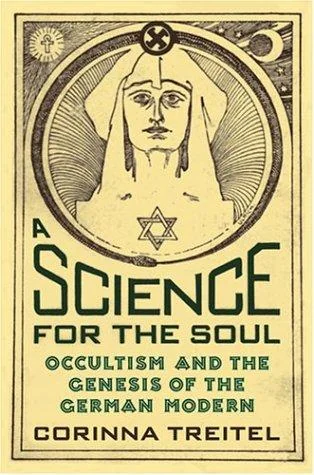
A Science for the Soul: Occultism and the Genesis of the German Modern
Stock reported in the catalog; fulfillment is confirmed with your request.
Uncover how a nation's spiritual hunger reshaped its encounter with modernity through occultism.
Germany's tumultuous entry into the modern era at the turn of the 20th century sparked a profound spiritual void, as rapid scientific and industrial progress left many feeling culturally bereft. Corinna Treitel’s incisive study reveals how a widespread embrace of occult practices—from Theosophy to astrology—emerged not as a fringe curiosity, but as a national phenomenon. This book meticulously traces how Germans, grappling with the perceived "disenchantment of the world," sought to re-enchant their lives, forging a unique synthesis between ancient wisdom and the burgeoning scientific spirit. It's a compelling exploration of occultism's role in navigating societal change.
This work situates itself within the historiography of German modernity and the sociology of religion, exploring the late nineteenth and early twentieth-century intellectual landscape where occultism intersected with scientific progress. It addresses the broader phenomenon of 'disenchantment' and the subsequent cultural search for spiritual re-enchantment in Europe.


📝 Description: A Science for the Soul: Occultism and the Genesis of the German Modern
💎 Expert review
📖 Why choose it
Why this book is worth reading
Scholars and history enthusiasts fascinated by the intersection of science, spirituality, and national identity will find this text indispensable. Corinna Treitel offers a nuanced view of how occultism served as a vital bridge for Germans navigating the disorienting shift toward modernity. By examining movements like Theosophy and astrology not as fringe curiosities but as central cultural phenomena, the book illuminates how spiritual hunger reshaped societal encounters with progress. Readers seeking to understand the psychological and cultural underpinnings of early twentieth-century Europe will gain profound insight into how ancient wisdom was synthesized with scientific spirits to fill a perceived void.
⭐ Reader reviews
Reader rating
Treitel’s study is a rigorous academic contribution that meticulously traces the national phenomenon of occultism in Germany. It succeeds in reframing these practices as essential responses to industrial and scientific rapidity rather than mere eccentricities. However, readers seeking light entertainment or practical occult guidance will likely find this dense historical analysis dry and overly theoretical. The book demands patience from those expecting narrative flair over scholarly depth, making it unsuitable for casual browsers of esoteric topics who prefer accessible, action-oriented guides over sociological critique.
❓ Frequently asked questions
📖 Who should read this
If you're fascinated by the intersection of history, spirituality, and societal transformation, this book is for you. Explore the complex cultural landscape of turn-of-the-century Germany and discover how occultism offered compelling answers to a nation grappling with modernity's profound challenges.
🎯 Key themes and symbolism
Modernity's Spiritual Cost
Treitel examines the profound sense of loss and spiritual emptiness that accompanied Germany's rapid modernization. As scientific rationalism gained dominance, many felt a deep cultural impoverishment, leading them to seek alternative avenues for meaning and transcendence beyond the material realm. This deep societal unease forms the primary backdrop for the rise of occult interests.
Occultism as a Bridge
This work highlights how various paranormal beliefs served as a crucial intermediary between fading traditional religious frameworks and the ascendant scientific worldview. Occultism offered a way to reconcile spiritual longings with a modern, empirical outlook, providing a "science for the soul" that promised both depth and rational understanding.
A National Phenomenon
Far from being isolated or marginal, German occultism is presented as a vibrant, widespread movement. The book details its pervasive presence through countless organizations, commercial enterprises, and publications catering to a broad populace, demonstrating how deeply integrated and influential these beliefs were within German society.
💬 Quotes from the book
“The search for a 'science for the soul' was not merely an intellectual exercise for Germany's fin-de-siècle thinkers; it was a deeply felt societal need, a collective yearning for spiritual ballast in an era of unprecedented material acceleration.”
“Far from existing on the fringes, the vibrant network of occult clubs, publications, and practitioners demonstrates the profound integration of these 'paranormal' sensibilities into the very fabric of Wilhelmine and Weimar Germany.”
📜 Historical context
📚 Glossary
- Disenchantment of the World
- Theosophy
- Scientific Materialism
📔 Questions to reflect on
- How might a society's rapid technological advancement lead to a sense of spiritual or cultural emptiness for its citizens?
- In what ways do contemporary movements or beliefs serve a similar "bridge" function between traditional spiritualities and modern scientific understanding, as German occultism did?
- Consider the concept of "disenchantment" today. Are there elements of our modern world that feel spiritually impoverished, and if so, how do people seek to re-enchant their lives?
🏛 Books from this publisher Johns Hopkins University Press
All books from this publisher →

You might also like
See more →


 91
91
 91
91