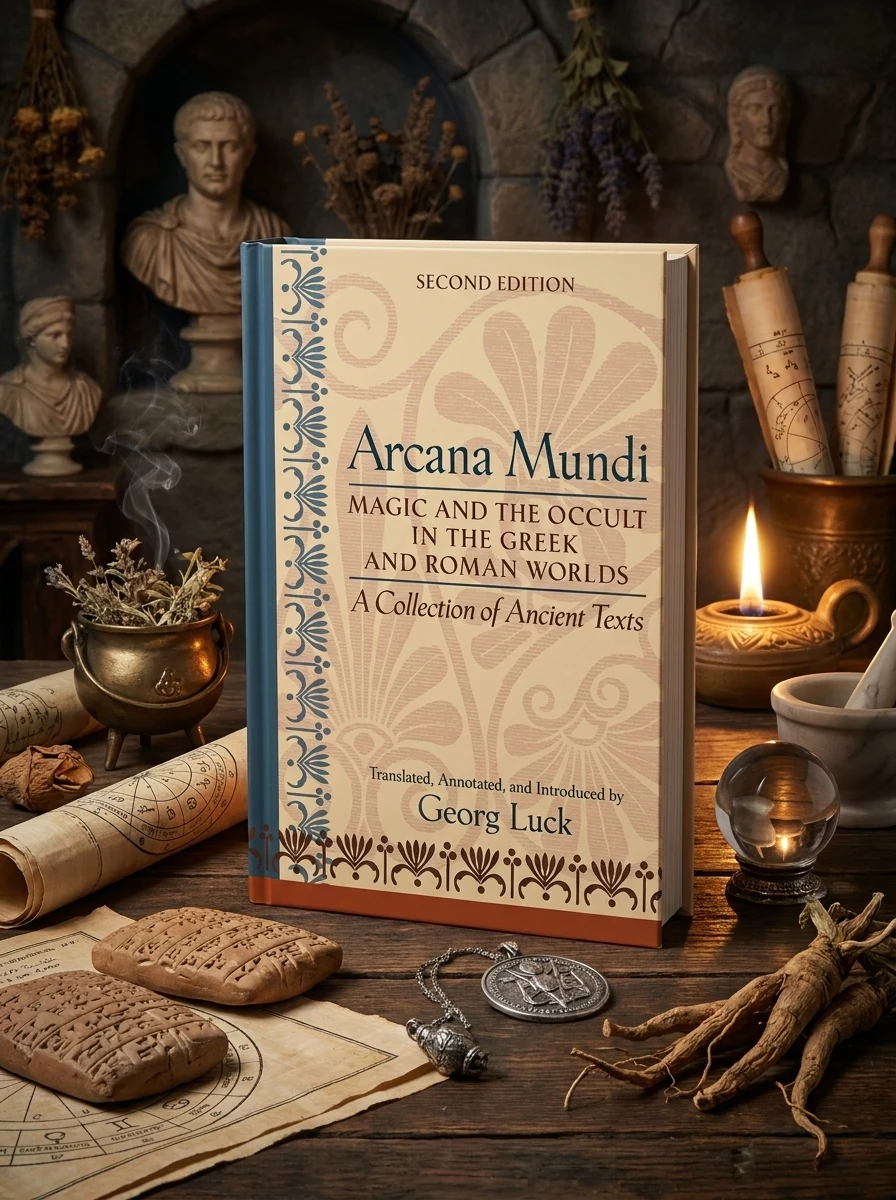
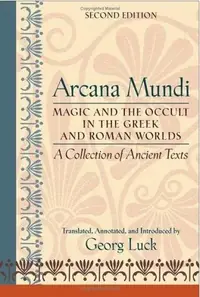
Arcana Mundi: Magic and the Occult in the Greek and Roman Worlds: A Collection of Ancient Texts
Stock reported in the catalog; fulfillment is confirmed with your request.
Unlock the shadowed rituals of antiquity with this definitive collection of ancient magical texts.
Georg Luck’s Arcana Mundi serves as an essential gateway into the esoteric practices of the classical world, spanning from the eighth century BCE to the fourth century CE. This revised edition compiles 130 translated primary sources, offering a raw look at how witches, astrologers, and sorcerers navigated their spiritual landscapes. Beyond the core texts, the volume features a robust general introduction and a critical epilogue tracing the survival of these rites into the Byzantine era. Notably, it includes a new appendix exploring the role of psychoactive substances in occult rites and an extensive glossary of Greek and Latin terminology, making this an indispensable resource for serious students of ancient mysticism.
This volume anchors itself in the classical esoteric tradition, bridging the gap between ancient Greek and Roman occult practices and their subsequent survival into the Byzantine era. It serves as a scholarly repository for the spiritual landscapes navigated by historical figures such as witches and astrologers.


📝 Description: Arcana Mundi: Magic and the Occult in the Greek and Roman Worlds: A Collection of Ancient Texts
💎 Expert review
📖 Why choose it
Why this book is worth reading
Serious students of ancient mysticism will find this volume indispensable for its rigorous compilation of primary sources and critical analysis. Readers interested in the intersection of spirituality and chemistry will appreciate the new appendix exploring psychoactive substances. The extensive glossary aids those navigating complex Greek and Latin terminology, while the general introduction provides necessary context for understanding how sorcerers navigated their spiritual worlds. It is ideal for scholars seeking a definitive gateway into the raw realities of classical magic.
⭐ Reader reviews
Reader rating
I collect works on this subject and this is a worthy addition. Solid binding, decent paper — holds up to heavy use. The print is clean and easy on the eyes for long sessions. Highly recommend to serious students.
My book club chose this last month. Not a light read, but far more accessible than I feared. Great value for what you get.
Honestly wasn't sure what to expect, but I'm impressed. It connects ideas I'd only seen treated separately elsewhere. A keeper.
Was skeptical at first. Some sections stopped me cold in the best way. One of my better finds this year.
Exactly what I was looking for. Some sections stopped me cold in the best way. Definitely recommend.
Georg Luck’s Arcana Mundi offers a robust, scholarly look at classical occultism, spanning from the eighth century BCE to the fourth century CE. While the inclusion of 130 translated texts and a critical epilogue on Byzantine survival is valuable, this book demands significant academic engagement. It does not suit casual readers seeking accessible mythology or those uncomfortable with dense historical analysis. The technical glossary and focus on primary sources may overwhelm generalists. However, for dedicated researchers of ancient ritual practices and the evolution of esoteric rites, it remains a vital, albeit demanding, resource.
❓ Frequently asked questions
📖 Who should read this
This volume is ideal for scholars of classical antiquity, practitioners of modern ceremonial magic seeking historical precedent, and anyone fascinated by the intersection of ancient philosophy and supernatural belief systems.
🎯 Key themes and symbolism
Classical Daemonology
Ancient Ritual Practices
Psychoactive Occultism
💬 Quotes from the book
“We can no longer idealize the Greek and Roman world while ignoring its darker aspects.”
“Magic, miracles, daemonology, divination, astrology, and alchemy were the arcana mundi.”
📜 Historical context
📚 Glossary
- Arcana Mundi
- Daemonology
- Epilogue
📔 Questions to reflect on
- How does the ancient view of spirits as intermediary forces differ from modern monotheistic perspectives?
- In what ways do the psychoactive substances described in the appendix reflect a search for altered states of consciousness?
- How did the boundary between 'magic' and 'religion' blur in the daily lives of Greeks and Romans?
🏛 Books from this publisher Johns Hopkins University Press
All books from this publisher →
You might also like
See more →
 91
91
 91
91
 91
91