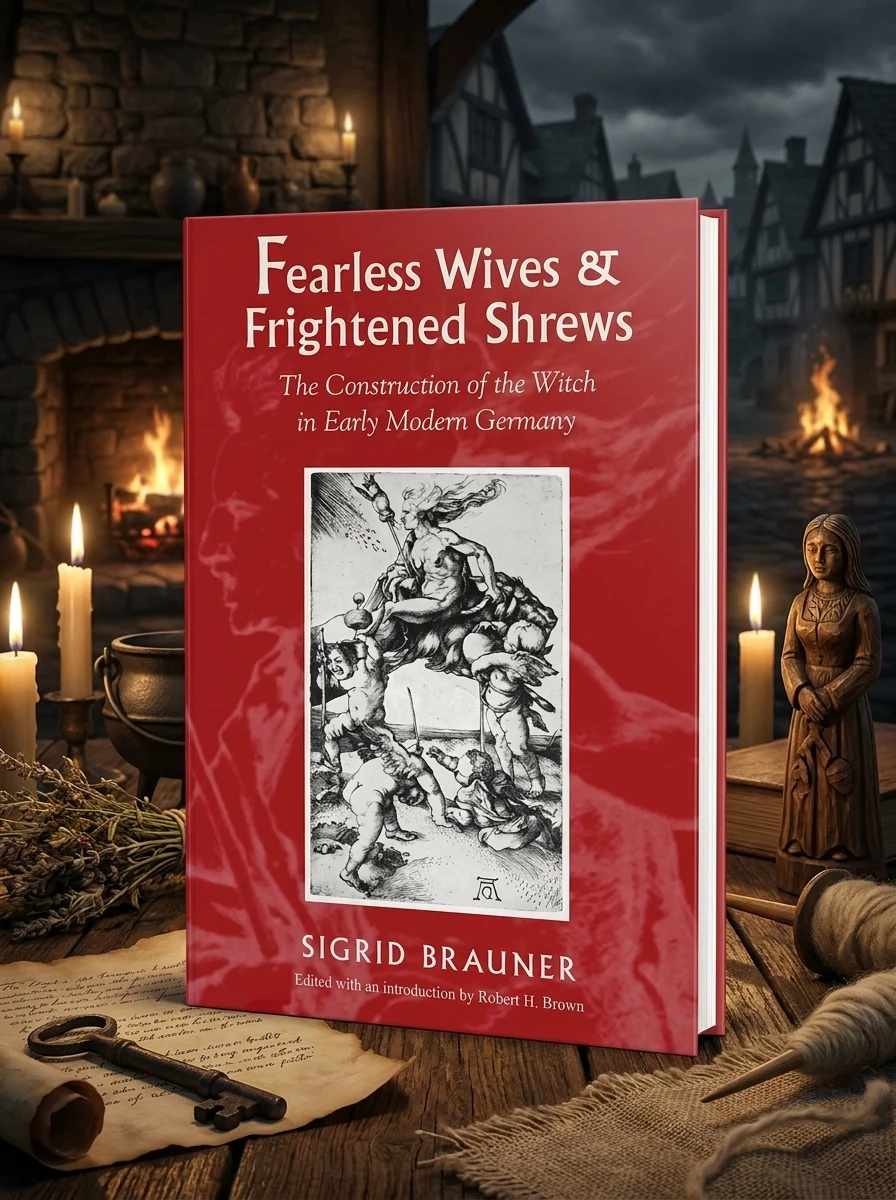
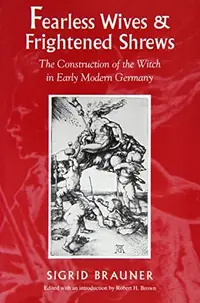
Fearless Wives and Frightened Shrews: The Construction of the Witch in Early Modern Germany
This edition can be ordered. No arrival date is confirmed.
Uncover the chilling genesis of the witch in early modern Germany and its profound impact on women.
"Fearless Wives and Frightened Shrews" meticulously dissects the tumultuous landscape of fifteenth-century Germany, exploring the unprecedented emergence of women as the primary targets of witchcraft accusations. This compelling study illuminates the complex interplay between evolving gender dynamics, societal anxieties, and the nascent construction of the "witch" archetype. It reveals how fundamental shifts in women's roles and public perception converged to create a new, terrifying figure, forever altering their place within German society. This is a crucial investigation into the historical roots of a pervasive cultural fear.
This work sits firmly within the historiography of early modern European social history and gender studies, specifically addressing the legal and cultural mechanisms of the witch hunts in Germany. It contributes to the broader scholarly discourse on how patriarchal structures constructed criminal archetypes to control female agency.


📝 Description: Fearless Wives and Frightened Shrews: The Construction of the Witch in Early Modern Germany
💎 Expert review
📖 Why choose it
Why this book is worth reading
Scholars, students of gender history, and those interested in the sociological roots of misogyny will find this text indispensable. It offers a rigorous analysis of how societal anxieties were projected onto women during a pivotal era. Readers seeking to understand the origins of systemic prejudice against female autonomy will gain profound insight into the specific cultural shifts in Germany that enabled such widespread persecution. The book serves as a vital corrective to simplistic narratives, providing depth to our understanding of how fear was institutionalized and how gender roles were weaponized to maintain social order during times of uncertainty.
⭐ Reader reviews
Reader rating
This is a dense academic study that demands patience and a strong grasp of historical context. It is not suitable for casual readers seeking narrative entertainment or those looking for quick, digestible summaries of the witch trials. The text requires engagement with complex sociological theories and specific regional German history. However, for those committed to understanding the structural underpinnings of gender-based violence in early modern Europe, it provides an essential, albeit difficult, framework. It lacks narrative flair but offers significant analytical weight for serious inquiry.
❓ Frequently asked questions
📖 Who should read this
If you are fascinated by the history of witchcraft, gender studies, or the societal construction of fear, this book offers profound insights. Scholars and curious readers will find its meticulous research and compelling arguments essential for understanding how cultural anxieties shaped early modern perceptions of women.
🎯 Key themes and symbolism
Genesis of the Witch
This book meticulously traces the historical moment in fifteenth-century Germany when the concept of the witch, specifically identifying women as its primary embodiment, first crystallized. It investigates the unique confluence of factors that led to this unprecedented categorization, marking a pivotal shift in European cultural and legal thought regarding perceived evil and its agents.
Evolving Gender Roles
Brauner examines how profound societal changes regarding women's status and expected behaviors directly contributed to their vulnerability to witchcraft accusations. The text explores the pressures and anxieties surrounding shifting female autonomy and power within early modern German society, revealing how these transformations fed into the emerging witch narrative.
Societal Construction of Evil
Beyond individual accusations, the work explores the broader societal mechanisms through which the "witch" was systematically constructed as a terrifying, female-coded threat. It delves into the cultural anxieties and fears that were projected onto women, solidifying their image as dangerous figures and justifying their persecution within the framework of early modern German beliefs.
💬 Quotes from the book
“The fifteenth century did not merely witness an increase in accusations; it fundamentally redefined who a witch was, shifting the archetype from a generic malefactor to a predominantly female figure imbued with specific, terrifying characteristics.”
“To understand the witch hunts is not merely to catalogue atrocities, but to dissect the intricate societal anxieties, theological frameworks, and evolving gender dynamics that made such widespread persecution not only possible, but seemingly logical within its historical context.”
📜 Historical context
📚 Glossary
- Witch Hunt
- Early Modern Period
- Gender Roles
📔 Questions to reflect on
- How do you see the historical construction of the "witch" in early modern Germany still influencing perceptions of powerful or non-conformist women today?
- Considering the shifts in gender roles discussed, what societal anxieties might be projected onto marginalized groups in our contemporary world?
- If a society needs a scapegoat, what factors determine who becomes that scapegoat, and how does this relate to the historical targeting of women as witches?
🏛 Books from this publisher University of Massachusetts Press
All books from this publisher →
You might also like
See more →
 91
91