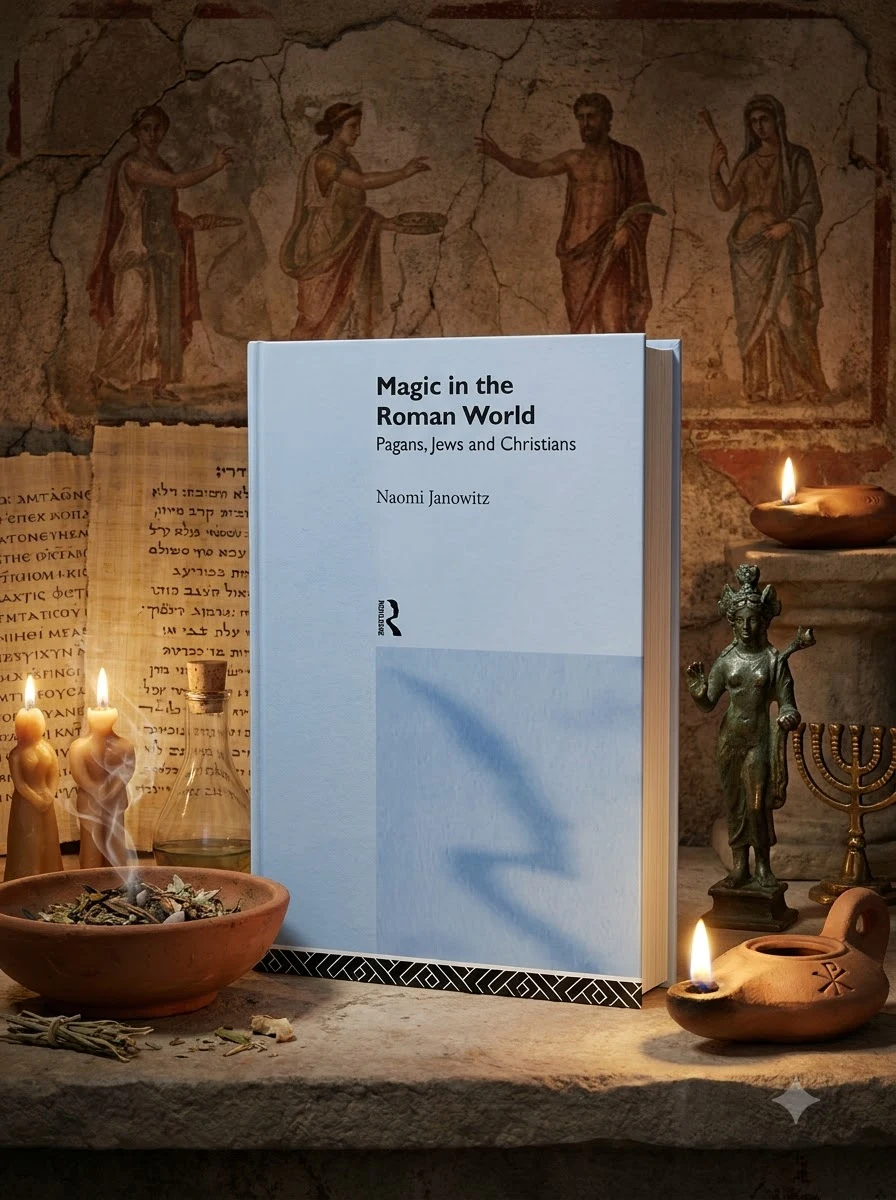
Magic in the Roman World: Pagans, Jews and Christians Janowitz, Naomi
Janowitz, Naomi 79
79
 Editorial score
How we rate
Editorial score
How we rate
Stock reported in the catalog; fulfillment is confirmed with your request.
Unmask the true nature of 'magic' in ancient Rome, where one's ritual was another's heresy.
Naomi Janowitz skillfully dismantles the conventional understanding of "magic" in the Roman world. This incisive study reveals how the term was less about inherent supernatural power and more a weaponized label, frequently deployed by various groups—Pagans, Jews, and Christians—to disparage opposing rituals and beliefs. Exploring practices from compelling love spells to profound alchemical transformations and even divine self-realization, Janowitz illustrates that these activities were deeply woven into the fabric of late antique religious life. Her work challenges us to view these so-called magical acts through the eyes of those who performed them, revealing their integral role in spiritual expression.
This scholarly work examines the complex religious landscape of late antiquity, specifically focusing on the interactions between Pagans, Jews, and Christians in the Roman world. It situates itself within the field of historical theology and the sociology of religion during a period of significant cultural transition.


📝 Description: Magic in the Roman World: Pagans, Jews and Christians Janowitz, Naomi
💎 Expert review
📖 Why choose it
Why this book is worth reading
Readers fascinated by the blurred lines between religion and magic will find this text indispensable. It offers a refreshing perspective that strips away modern biases, revealing how ritual was often used as a tool for social and theological contention rather than just supernatural efficacy. Those interested in the lived experience of ancient spirituality, particularly how love spells and alchemical practices were perceived by contemporaries, will appreciate Janowitz’s nuanced approach. It is essential for understanding how identity was negotiated through the labeling of opposing groups as heretical or magical. By viewing these acts through the eyes of their performers, the book illuminates the deep spiritual expression embedded in what history has dismissed as mere sorcery.
⭐ Reader reviews
Reader rating
Janowitz provides a rigorous academic dismantling of the concept of 'magic' in antiquity, making this an excellent resource for serious students of late antique religious history. However, it is not suitable for casual readers seeking practical spellcasting instructions or light historical fiction. The text demands patience and a willingness to engage with complex sociological arguments about power dynamics and labeling. Readers expecting a straightforward narrative of heroic wizards will be disappointed; instead, they get a dense, analytical study of how Pagans, Jews, and Christians weaponized the term against one another. It is best suited for academics and dedicated enthusiasts who appreciate scholarly depth over entertainment value.
❓ Frequently asked questions
📖 Who should read this
If you're fascinated by the complexities of ancient religion, eager to deconstruct historical biases, or simply wish to understand the true spiritual landscape of the Roman world, this book is essential. It challenges preconceived notions about what constituted "magic" in antiquity.
🎯 Key themes and symbolism
Magic as Social Label
This book meticulously demonstrates how the concept of "magic" in late antiquity served primarily as a social and rhetorical tool. It was a convenient label, wielded by Pagans, Jews, and Christians alike, to delegitimize the religious practices of their rivals, rather than denoting a distinct category of supernatural activity.
Integrated Religious Practice
Janowitz illustrates that many activities commonly branded as "magic"—such as exorcisms, love charms, or alchemical processes—were, in fact, deeply integrated components of the era's diverse religious and spiritual traditions. These were not fringe practices but core expressions of faith and desire for many.
Understanding Ancient Spirituality
The author advocates for a critical re-evaluation, urging readers to comprehend these ancient practices from the viewpoint of those who engaged in them. By doing so, we gain insight into their genuine spiritual significance and the cultural context that shaped their meaning, free from modern biases.
💬 Quotes from the book
“The boundary between 'piety' and 'magic' was not a static line drawn by divine decree, but a shifting battleground of cultural and theological assertion.”
“To truly understand an ancient rite, one must shed the modern lens and consider the profound spiritual logic that underpinned its performance for the practitioner.”
📜 Historical context
📚 Glossary
- Polemics
- Late Antiquity
- Exorcism
📔 Questions to reflect on
- Reflect on contemporary examples where one group labels another's spiritual practices as "superstitious" or "magical" to diminish their legitimacy. What are the underlying power dynamics?
- Consider how your own cultural understanding of "magic" might influence your interpretation of historical religious texts and practices. How can you mitigate this bias?
- If an act brings about perceived supernatural change and is integral to a belief system, where do we draw the line between "religion" and "magic" in our own definitions?
✍️ More books by this author Janowitz, Naomi
All books by this author →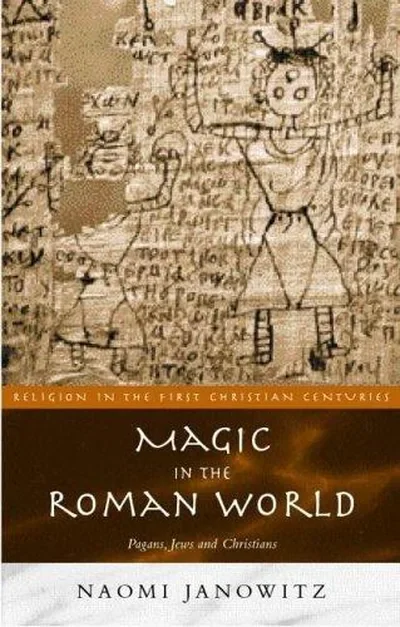
🏛 Books from this publisher Routledge
All books from this publisher →

 89
89

You might also like
See more →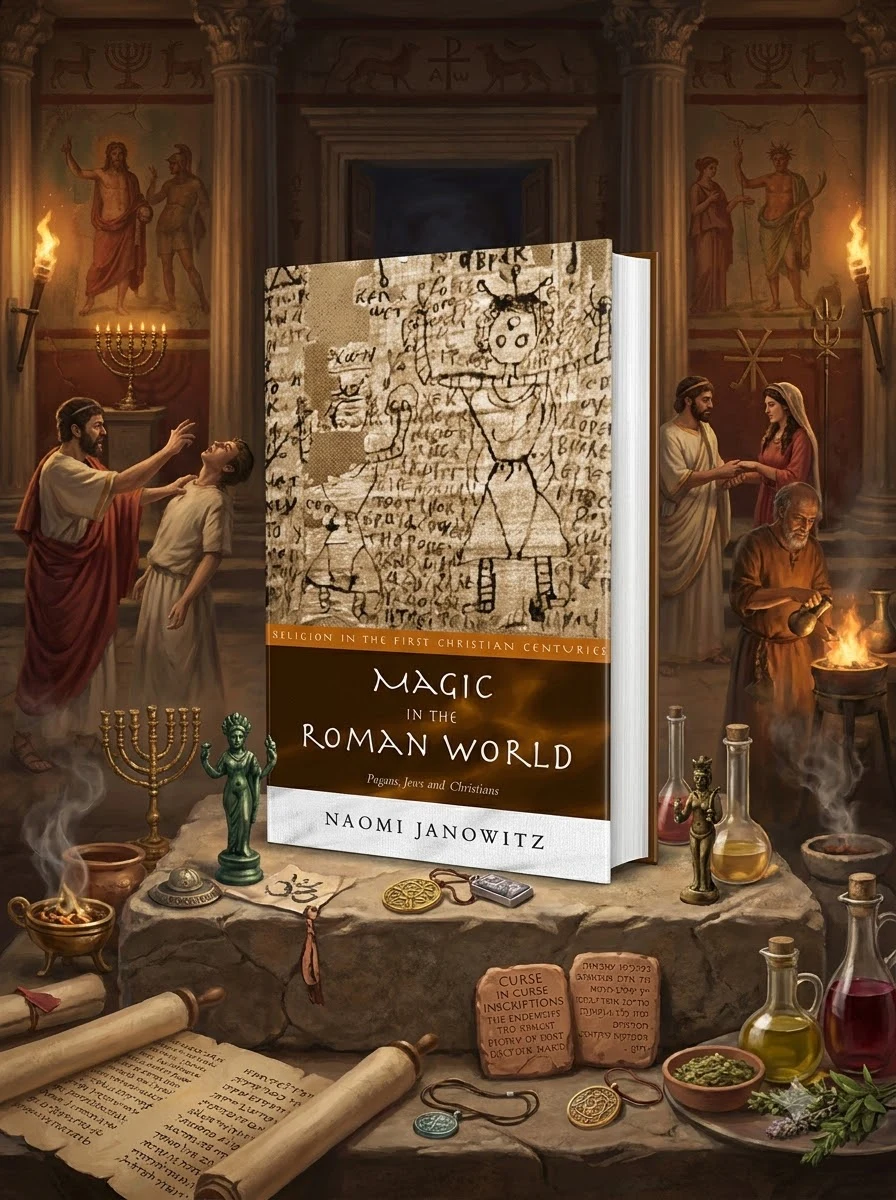
 91
91
 90
90
 90
90
 90
90