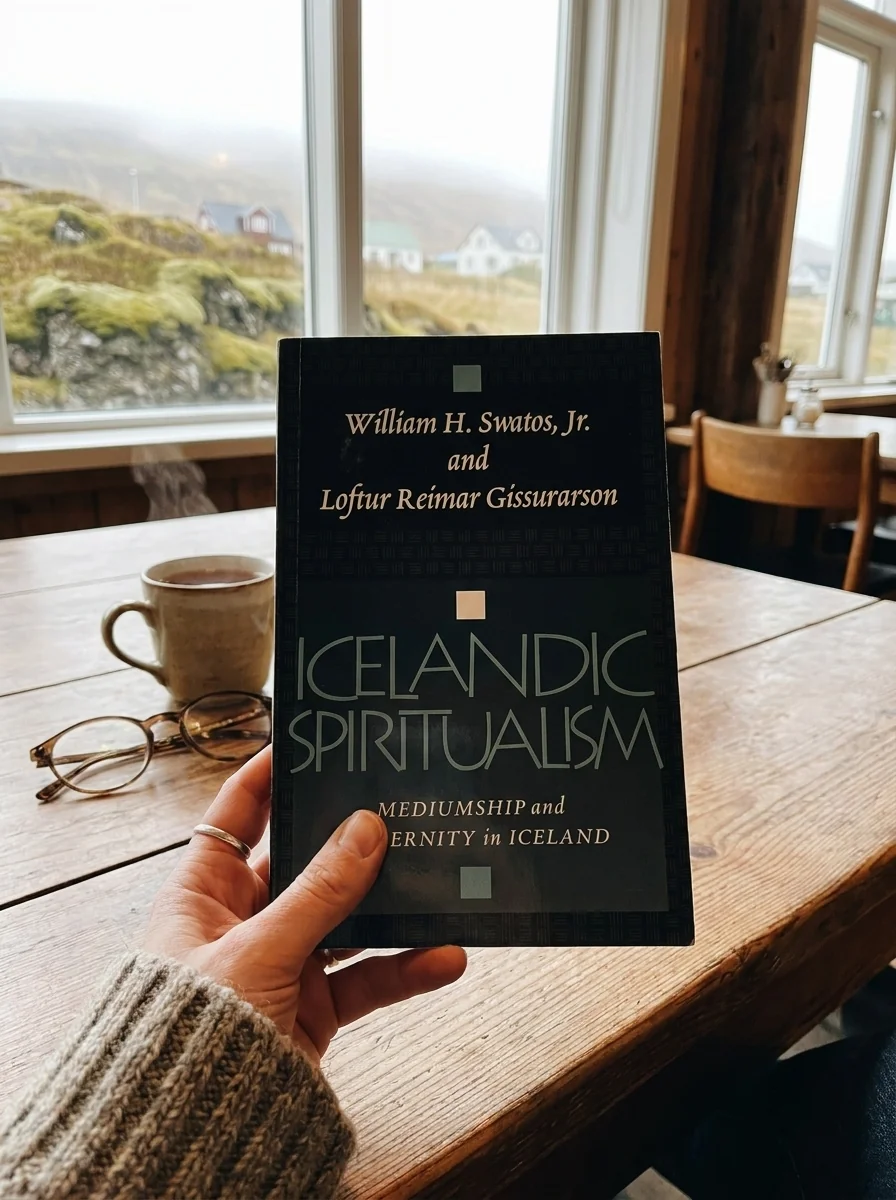
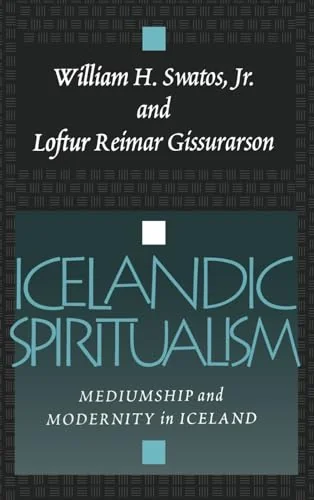
Icelandic Spiritualism: Mediumship and Modernity in Iceland (Revised)
✍️ Gissurarson, Loftur ReimarAn anthropological study examining mediumship and church dynamics during Iceland's transition into modernity.
This social anthropological work investigates how mediumistic phenomena became embedded within the state church and broader Icelandic society at the turn of the twentieth century. Moving through historic religious shifts from Christian conversion to modern psychical research, the text explores how public reports in newspapers shaped cultural views on the spirit world. It challenges standard religious sociology theories by framing spiritualist activity as a core component of modern national development rather than an isolated religious anomaly.
Set in fin-de-siecle and early twentieth-century Iceland, this text situates mediumistic phenomena within the state church and national transition to modernity.


Praise for this book
“William A. Swatos's original interest was in the process of secularization. In directing his attention to research on Icelandic society, however, what he discovered, in this seemingly secular lecture, was a significant presence of spiritualism. In conjunction with Loftur Reimer Gissurarson, Swatos decided to explore the presence of spiritualism in Iceland at the turn of the century. It is the theoretical aim of this study to redress . . . a major weakness in contemporary sociology of religion.”
📝 Description: Icelandic Spiritualism: Mediumship and Modernity in Iceland (Revised)
💎 Expert review
📖 Why choose it
Why this book is worth reading
Readers interested in the nuanced history of spiritualism and its societal impact will find this book invaluable. It offers a unique perspective on how spirit communication was not merely a fringe phenomenon but a central thread in Iceland's journey toward modernity. Scholars and enthusiasts of social anthropology will appreciate the rich historical data and vivid descriptions that challenge conventional academic views on religion. By exploring public discourse and interactions between societal groups, the text illuminates the profound ways the spirit world became interwoven with Icelandic culture. It is essential for those seeking to understand the complex relationship between the established church, mediumistic phenomena, and national identity during a transformative era.
⭐ Reader reviews
Reader rating
Gissurarson delivers a meticulous social anthropological study that recontextualizes spiritualism within Iceland's early twentieth-century modernity. While the historical data is rich and the descriptions vivid, this text demands serious academic engagement rather than casual reading. It is not suitable for those seeking practical mediumship guides or supernatural thrillers; it is a scholarly analysis of societal interactions and public discourse. Readers expecting straightforward religious history may find the anthropological framework dense. However, for those willing to navigate its complex arguments about the established church and spirit world integration, it provides a compelling, evidence-based challenge to conventional views on religion.
❓ Frequently asked questions
📖 Who should read this
If you're captivated by the intersection of spirituality, anthropology, and social history, especially in unique cultural contexts, this book is for you. It's an essential read for anyone interested in Nordic spiritual traditions, the history of psychical research, or the complex pathways of modernity.
🎯 Key themes and symbolism
Mediumship & Modernity
This book illuminates how spiritualism wasn't a marginal belief but an integral force in Iceland's transition to the modern era. It argues that engaging with spirits provided a framework for societal adaptation, demonstrating a unique interplay between traditional beliefs and the emergence of a contemporary national identity, rather than being an obstacle to progress.
Spiritualism in Icelandic Society
Explore the widespread impact of spiritualism on Icelandic life, from its appearance in daily newspapers to its interactions with the state church. The text reveals how mediumistic phenomena sparked public debate and shaped cultural understanding, showcasing a society openly grappling with the unseen realm and its implications for collective belief systems.
Revisiting Religious Narratives
By presenting Icelandic spiritualism as a "deviant case" within Protestantism, the book compels readers to re-evaluate standard theoretical approaches to religious studies. It offers a fresh perspective on how deeply ingrained spiritual practices can influence and even redefine a nation's religious landscape, moving beyond simplistic categorizations of belief.
📜 Historical context
📚 Glossary
- Spiritualism
- Mediumship
- Fin-de-siècle
📔 Questions to reflect on
- How does the integration of spiritual practices into a nation's modernity challenge your preconceived notions about progress and tradition?
- Reflect on how a 'deviant case' like Icelandic spiritualism can enrich or complicate our understanding of global religious history and its academic study.
- Consider the role of public media (like newspapers in this context) in shaping or reflecting societal attitudes towards emergent spiritual or paranormal phenomena.
📖 Read on the blog
✍️ More books by this author Gissurarson, Loftur Reimar
All books by this author →


🏛 Books from this publisher Routledge
All books from this publisher →



You might also like
See more →


Have a question about this item?
Ask about the edition, condition, delivery or anything else — we reply by email or phone, usually within a day.
