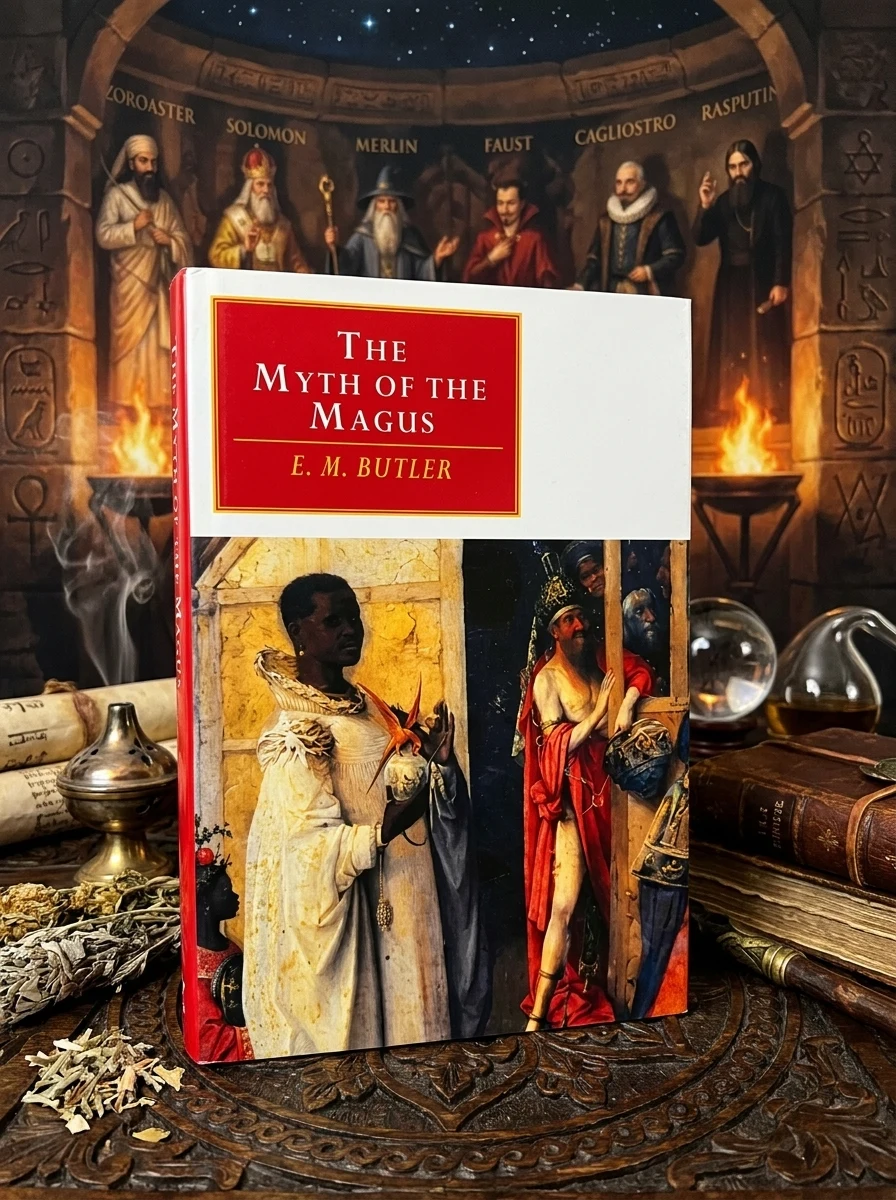

The Myth of the Magus Butler, E M
Stock reported in the catalog; fulfillment is confirmed with your request.
Trace the wild lineage of the Magus from shamanic roots to modern occult revival.
E.M. Butler unravels the complex tapestry of the Magus archetype, beginning with ancient tribal rituals designed to secure prosperity. She traces this figure’s evolution through pre-Christian mystics, medieval alchemists, and sorcerers, culminating in the nineteenth-century occult resurgence. By examining figures ranging from Zoroaster and Solomon to Merlin and Rasputin, Butler bridges myth and history, offering a comprehensive look at how these legendary practitioners shaped religious and magical traditions over millennia.
This volume sits firmly within the study of esoteric history and the evolution of ceremonial magic traditions. It serves as a scholarly exploration of the Magus archetype, bridging ancient tribal rituals with modern occult revival movements.


📝 Description: The Myth of the Magus Butler, E M
💎 Expert review
📖 Why choose it
Why this book is worth reading
Readers fascinated by the deep historical roots of magical practice will find immense value in this comprehensive survey. E.M. Butler offers a unique lens through which to view the Magus not merely as a mystical figure, but as a cultural constant evolving from shamanic origins to modern times. Those interested in the intersection of myth, religion, and history will appreciate how the author connects disparate figures like Zoroaster, Solomon, Merlin, and Rasputin into a coherent narrative. It is ideal for students of occultism seeking to understand the lineage of their craft or historians exploring the persistence of archetypes across millennia. By unraveling this complex tapestry, the book provides essential context for anyone wishing to grasp how legendary practitioners have shaped religious and magical traditions over thousands of years.
⭐ Reader reviews
Reader rating
Bought this as a gift for my sister and ended up ordering a second copy for myself. You can tell why this work has endured. Every rereading turns up something I missed. Already eyeing my next order.
Not my usual area but wanted to branch out. It pairs well with more modern commentaries on the same tradition. Shipping was quick too.
Took a chance on this and glad I did. I appreciated how the argument builds steadily from first principles. A few pages arrived with light corner wear, though nothing serious. Happy enough with the purchase.
This has been on my wishlist for months. A text you study rather than simply read. Glad I finally picked this up.
Needed this for my research. The symbolism is layered and generous to patient readers. Solid binding, decent paper — holds up to heavy use. Recommended if you're ready to do the work.
Butler’s work is a dense, scholarly examination that demands patience from its audience. While it successfully traces the Magus archetype from pre-Christian mystics through medieval alchemy to the nineteenth-century occult resurgence, it may feel overly academic for casual readers seeking practical magic or simple narratives. It does not suit those looking for instructional grimoires or quick historical overviews without theoretical depth. However, for serious researchers and dedicated students of esoteric history, this text is an indispensable resource. It bridges myth and history with rigor, though its complexity might alienate readers preferring accessible pop-occultism or purely fictional accounts of magical figures. It remains a vital reference for understanding the archetype's enduring power.
❓ Frequently asked questions
📖 Who should read this
Readers fascinated by the intersection of anthropology and magic, those studying the historical development of esoteric figures, and anyone seeking to understand the enduring cultural impact of the wizard archetype.
🎯 Key themes and symbolism
Archetypal Evolution
Historical Mythography
Magical Practice
💬 Quotes from the book
“The Magus is an archetype central to myth and religion across many cultures.”
“Legends of the Magus are explored and where possible compared with the historical record.”
📜 Historical context
📚 Glossary
- Magus
- Anthropological Origins
- Occult Revival
📔 Questions to reflect on
- How do modern depictions of wizards in media reflect or distort the ancient shamanic roots described by Butler?
- Which historical figure in this text challenges your preconceived notions of what a 'magician' can be?
- In what ways does the archetype of the Magus still influence contemporary spiritual or magical practices?
🏛 Books from this publisher Cambridge University Press
All books from this publisher →

 75
75

You might also like
See more → 91
91
 89
89
 89
89