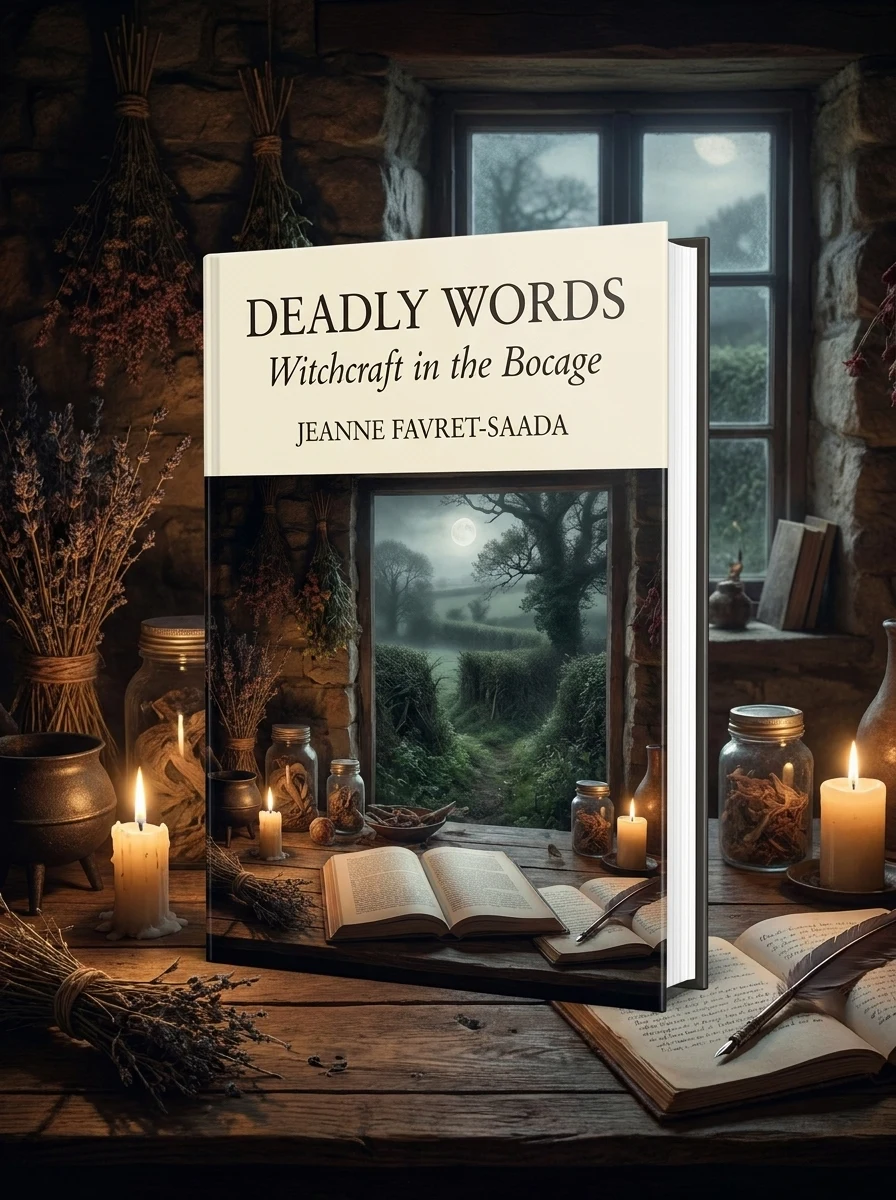
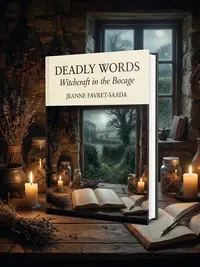
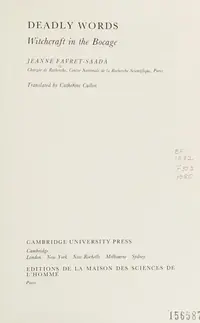
Deadly Words Favret-Saada, Jeanne
Stock reported in the catalog; fulfillment is confirmed with your request.
Unearth the chilling power of spoken curses in rural France.
Favret-Saada's groundbreaking 1980 study plunges deep into the heart of the Bocage, a rural region of western France, to explore the intricate web of witchcraft beliefs and practices. This seminal work goes beyond mere observation, advocating for an immersive ethnographic approach where the researcher must grapple directly with the lived reality of magical influence. It meticulously documents how "deadly words" manifest in daily life, shaping perceptions and actions within the community. The book challenges conventional anthropological distance, suggesting that true understanding of witchcraft necessitates a profound engagement with its inherent logic and emotional impact on individuals.
This seminal 1980 ethnographic study anchors itself within the tradition of immersive anthropological research into rural European witchcraft beliefs. It challenges conventional scholarly distance by advocating for direct engagement with the lived reality of magical influence in western France.


📝 Description: Deadly Words Favret-Saada, Jeanne
💎 Expert review
📖 Why choose it
Why this book is worth reading
Readers deeply interested in the anthropology of belief, the sociology of rural communities, and the tangible power attributed to language will find this text indispensable. It offers a profound glimpse into how individuals navigate a world where speech carries literal weight. Scholars and practitioners of ceremonial magic seeking historical roots for the concept of 'deadly words' will appreciate its rigorous documentation of emotional impact. Those fascinated by the intersection of linguistics and supernatural belief systems gain a unique perspective on how perceptions are shaped by community consensus. It is essential for anyone wishing to understand the mechanics of witchcraft beyond superficial tropes.
⭐ Reader reviews
Reader rating
This academic text demands patience from readers expecting accessible storytelling or practical spellcraft instructions. It is not suited for casual enthusiasts of occultism seeking quick answers or dramatic narratives. Scholars requiring strict ethnographic methodology will appreciate its depth, but those preferring theoretical abstraction may find the immersive approach tedious. The book’s strength lies in its unflinching examination of local logic, which can feel alien to urban readers. It serves best as a serious reference work for anthropologists and historians rather than a general interest read.
❓ Frequently asked questions
📖 Who should read this
If you are fascinated by the anthropology of magic, the sociology of belief systems, or the profound impact of cultural narratives on individual experience, this book offers an unparalleled, deeply personal exploration. It's essential reading for anyone interested in the lived realities of witchcraft beyond its sensationalized portrayals.
🎯 Key themes and symbolism
The Reality of Bewitchment
This book vividly portrays how witchcraft is not a distant superstition, but a potent, everyday force in the Bocage. It delves into the specific curses, counter-spells, and the social dynamics surrounding accusations and protections, illustrating the profound and often terrifying impact these beliefs have on the lives of those who experience them, making the intangible feel acutely real.
Ethnographic Immersion
Favret-Saada champions a radical methodology, arguing that an ethnographer must move beyond detached observation. She posits that to truly comprehend the world of the bewitched, one must, to some extent, allow oneself to be 'caught' by its logic and emotional currents. This active engagement challenges traditional scientific objectivity, making the researcher an integral part of the study's unfolding narrative.
Language as Magical Force
The title itself, "Deadly Words," underscores a central theme: the profound power of language. The book examines how specific phrases, curses, and invocations are not merely symbolic but are believed to possess inherent magical efficacy. It explores the mechanisms by which these spoken words are thought to inflict harm, heal, or protect, revealing a cosmology where speech directly shapes reality.
💬 Quotes from the book
“The malefic word, once uttered, reshapes reality for both sender and receiver, becoming a palpable force that demands engagement, not mere observation.”
“To truly understand the bewitched, one must, however briefly, suspend disbelief and grapple with the world as they perceive it, rather than merely documenting a 'superstition'.”
📜 Historical context
📚 Glossary
- Bocage
- Ethnography
- Bewitchment
📔 Questions to reflect on
- How might a modern, scientific worldview inherently limit our understanding of magical or spiritual practices, as suggested by Favret-Saada's approach?
- Reflect on a time when words spoken to you (positive or negative) had a profound, almost magical, impact on your reality or self-perception. How does this resonate with the concept of 'deadly words'?
- If you were an ethnographer studying a belief system radically different from your own, what personal and methodological challenges do you anticipate in adopting Favret-Saada's immersive strategy?
🏛 Books from this publisher Cambridge University Press
All books from this publisher →
 75
75

You might also like
See more →
 89
89
 89
89
 88
88