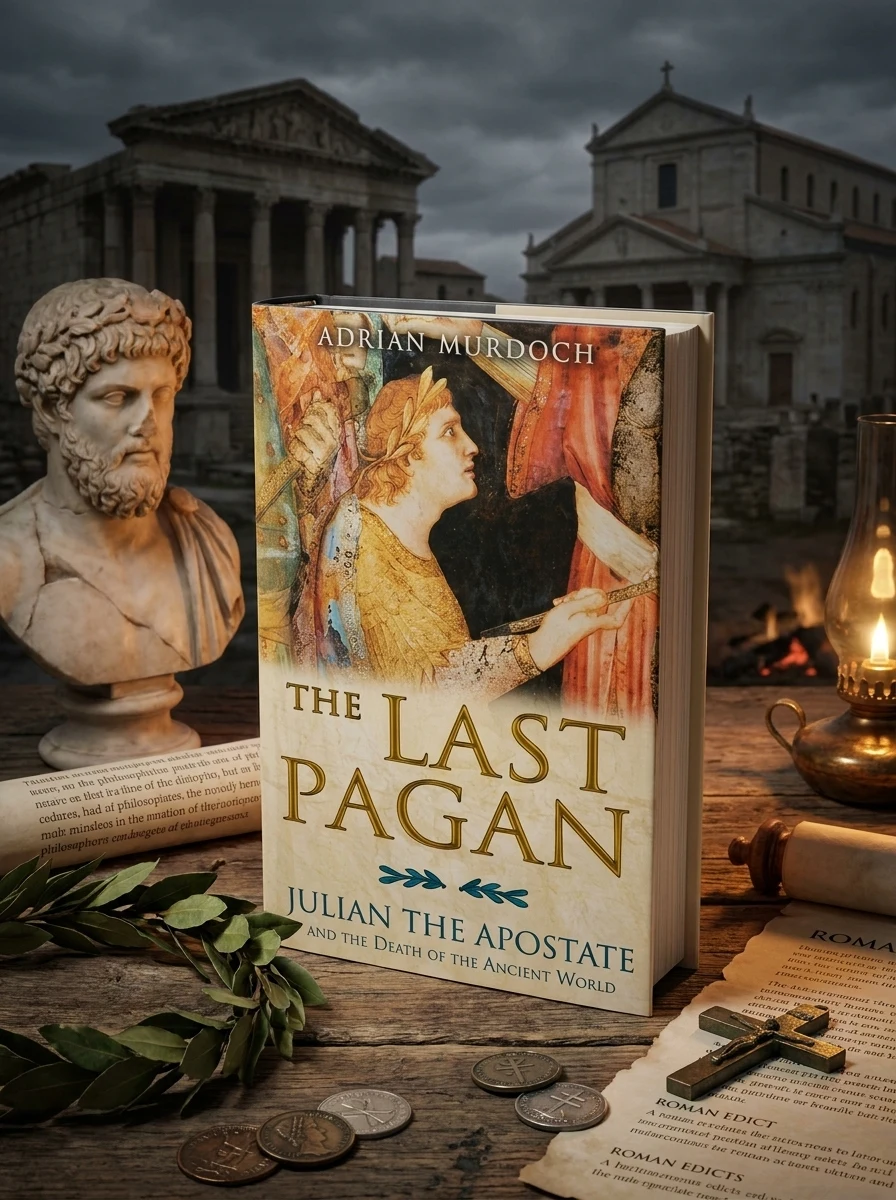
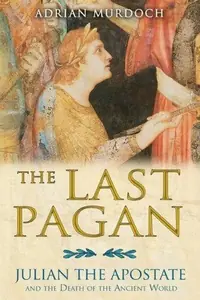
The Last Pagan: Julian the Apostate and the Death of the Ancient World


This edition can be ordered. No arrival date is confirmed.
Witness the dramatic, final stand of ancient paganism against the rising tide of Christianity.
Adrian Murdoch masterfully chronicles the life and reign of Julian, the Roman emperor famously dubbed "the Apostate." Descended from Constantine's lineage, Julian embarked on a fervent mission to restore traditional polytheism as the dominant faith, challenging the rapidly ascendant Christian Church. His brief, two-year rule was marked by significant reforms designed to marginalize Christians. This book explores how his sudden death not only ended his ambitious project but also profoundly shaped the subsequent vilification of paganism by the triumphant Church.
This work sits at the intersection of late Roman imperial history and the theological transition from polytheism to Christianity, serving as a crucial narrative for understanding the decline of ancient pagan traditions. It appeals to enthusiasts of esoteric history who trace the lineage of Western spiritual shifts through pivotal political figures.


📝 Description: The Last Pagan: Julian the Apostate and the Death of the Ancient World
💎 Expert review
📖 Why choose it
Why this book is worth reading
Readers fascinated by the dramatic clash between polytheistic antiquity and the rising Christian Church will find this biography compelling. It offers a rare, sympathetic perspective on Julian the Apostate, framing his reign not merely as political history but as the final, desperate stand for ancient pagan spirituality. Those interested in how historical narratives are shaped by victors will appreciate the insight into Julian’s vilification by the triumphant Church. This book is essential for anyone seeking to understand the cultural and religious forces that defined the end of the ancient world and the birth of a new spiritual era.
⭐ Reader reviews
Reader rating
Adrian Murdoch provides a vivid chronicle of Julian’s brief but impactful rule, effectively highlighting the tension between traditional polytheism and Christianity. While the narrative is engaging for those interested in esoteric history and religious transition, it may not suit readers seeking dry, academic historiography or those strictly aligned with Christian apologetics, as the perspective clearly favors the pagan viewpoint. The book excels in illustrating the personal stakes of Julian’s mission but might feel too focused on religious polemics for general political historians. It is best appreciated by those open to a narrative that challenges traditional victor-centric histories of the era.
❓ Frequently asked questions
📖 Who should read this
If you're fascinated by the pivotal religious shifts of the Roman Empire, the intersection of philosophy and power, or the untold stories of history's perceived villains, this book offers a compelling narrative. Discover the man who dared to defy the Christianization of the ancient world.
🎯 Key themes and symbolism
Julian's Philosophical Vision
The book re-examines Julian not as a mere apostate but as a dedicated philosopher-king, deeply committed to a revitalized Hellenic paganism. It delves into his intellectual journey and how his philosophical convictions informed his imperial policies, portraying him as a figure who genuinely sought a spiritual alternative to Christian monotheism.
Imperial Religious Reforms
Murdoch details the specific policies Julian implemented during his reign to curb Christian influence and revive pagan practices. These included limiting Christian involvement in education and government, and promoting traditional cults. The text illustrates the practical, often controversial, methods Julian employed to shift the religious landscape of the Empire.
Legacy of Pagan Suppression
The author explores the profound aftermath of Julian's death, revealing how the victorious Church strategically demonized paganism. It shows how the term "pagan" became synonymous with evil and opposition to God, a narrative that persisted for centuries and whose echoes can still be felt in contemporary religious discourse.
💬 Quotes from the book
“Julian, more than a mere reactionary, envisioned a revitalized Hellenism, a philosophical paganism capable of rivaling the burgeoning Christian dogma.”
“His untimely demise on the Persian frontier sealed the fate of ancient polytheism, irrevocably shifting the trajectory of Western civilization.”
📜 Historical context
📚 Glossary
- Julian the Apostate
- Paganism
- Constantine the Great
📔 Questions to reflect on
- If Julian had lived longer and successfully re-established paganism, how might the spiritual and philosophical landscape of the Western world be different today?
- Consider the concept of 'apostasy' from both pagan and Christian perspectives during Julian's time. How do you think each side viewed the other's adherence or abandonment of faith?
- The book suggests that the Church used 'paganism' to represent evil. Reflect on how labels and narratives are still used today to marginalize or demonize opposing viewpoints or belief systems.
🏛 Books from this publisher Inner Traditions International
All books from this publisher →



You might also like
See more →