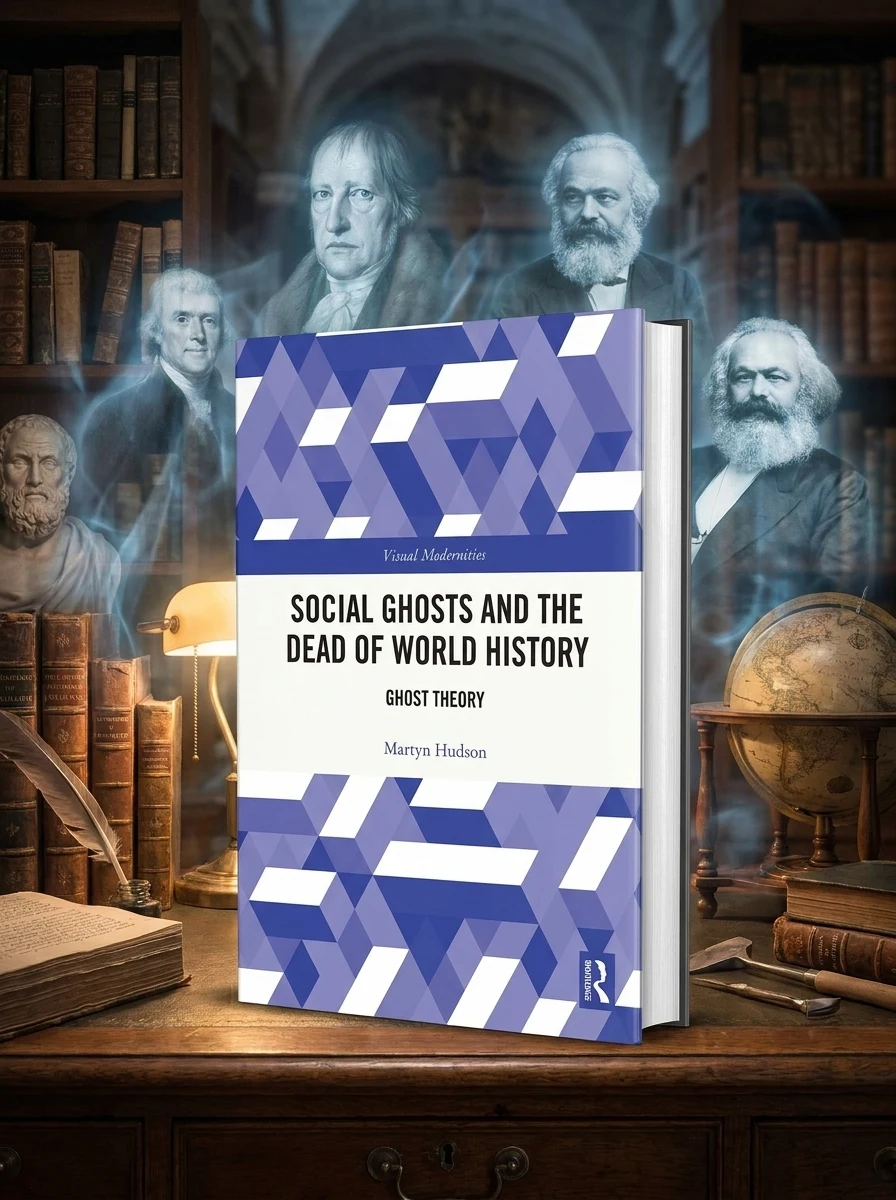
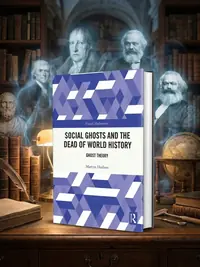
Social Ghosts and the Dead of World History: Ghost Theory Hudson, Martyn
Hudson, Martyn 87
87
 Editorial score
How we rate
Editorial score
How we rate
Stock reported in the catalog; fulfillment is confirmed with your request.
Unearth the spectral forces shaping history and society, from Hegel's Geist to Marx's phantoms.
Martyn Hudson's profound work delves into how 'the dead' and spectral presences have subtly influenced and been conceptualized within classical social science and philosophy. Moving beyond conventional interpretations, this book unpacks the recurring fascination with 'spirits' in modernity, examining figures from Hegel to Marx. It explores the intricate dance between these spectral entities and material reality across five core areas: the nature of modern phantoms, shape-shifting souls, spirits in archaeology, the phenomenology of spirit in stone, and its manifestation in wood and folklore. Hudson offers a compelling 'counter-modernity,' providing fresh perspectives on our contemporary global predicaments.
This work sits at the intersection of occult theory, esoteric philosophy, and critical social science, challenging traditional boundaries between material history and spectral metaphysics. It engages deeply with the intellectual lineage of German idealism and Marxist theory, reinterpreting them through a lens of ghostly presence.


📝 Description: Social Ghosts and the Dead of World History: Ghost Theory Hudson, Martyn
💎 Expert review
📖 Why choose it
Why this book is worth reading
Readers fascinated by the hidden architectures of thought will find this book indispensable. It offers a profound counter-narrative to standard historical materialism, revealing how spectral forces have subtly shaped societal structures from Hegel’s Geist to Marx’s phantoms. If you are weary of dry, purely materialist explanations of history and seek a richer, more eerie understanding of social phenomena, this text provides essential clarity. It is particularly valuable for scholars and philosophers looking to bridge the gap between abstract theory and tangible cultural reality, offering fresh perspectives on modernity through the unique prism of the dead and the ghostly.
⭐ Reader reviews
Reader rating
Hudson delivers a rigorous, intellectually dense exploration that demands serious engagement from its audience. The text successfully unmasks the spectral undercurrents in classical social science, providing a compelling 'counter-modernity' for those willing to navigate complex philosophical terrain. However, it does not suit readers seeking accessible pop sociology or straightforward historical narratives. Those expecting light entertainment or simplistic political commentary will likely find the academic depth and abstract focus on phenomenology and archaeology alienating. It is a specialized tool for the dedicated scholar, not a casual read for the general public interested in ghosts.
❓ Frequently asked questions
📖 Who should read this
Essential for scholars and advanced students in philosophy, history, social theory, anthropology, and cultural studies. If the intersections of the spectral, material culture, and grand historical narratives intrigue you, this rigorous book offers a profound new perspective.
🎯 Key themes and symbolism
Haunting Social Theory
This book meticulously re-examines foundational social theorists like Hegel, Weber, and Marx, revealing how their works are permeated by concepts of 'spirit,' 'ghosts,' or 'phantasms.' It argues that these spectral ideas are not peripheral but central to understanding their insights into historical progression and societal structures.
Materiality of the Unseen
Hudson explores the complex relationship between intangible spiritual presences and their tangible manifestations. From ancient archaeological sites and the stone of statues to wooden artifacts and folklore, the book investigates how the spectral imbues physical objects with meaning, challenging the strict dualism between mind and matter.
Rethinking Modern Crises
By analyzing how historical 'spirits' and 'ghosts' have shaped our understanding of the world, the book proposes a radical 'counter-modernity.' It suggests that by engaging with these overlooked spectral dimensions, we can gain profound new insights into the root causes and potential solutions for contemporary global catastrophes and social dilemmas.
💬 Quotes from the book
“The spectral, far from being ethereal, often finds its most potent expression embedded within the very stone and timber of our constructed world.”
“To truly grasp modernity's persistent crises, we must first confront the unquiet dead that haunt its foundational narratives and theoretical frameworks.”
📜 Historical context
📚 Glossary
- World-Spirit (Hegel)
- Verstehen (Weber)
- Phantasms (Marx)
📔 Questions to reflect on
- How do 'ghosts' or 'unseen forces'—whether cultural, historical, or theoretical—manifest in your own understanding of contemporary society or personal experiences?
- Consider a specific historical event or a significant cultural artifact. How might applying a 'spectral' analysis reveal layers of meaning or influence often overlooked by conventional approaches?
- In what ways do you believe current global crises reflect unresolved or unacknowledged historical 'phantasms' or 'spirits' that continue to shape our present?
📖 From the series “Visual Modernities”
All books in the series →
✍️ More books by this author Hudson, Martyn
All books by this author →🏛 Books from this publisher Routledge
All books from this publisher →

 89
89

You might also like
See more →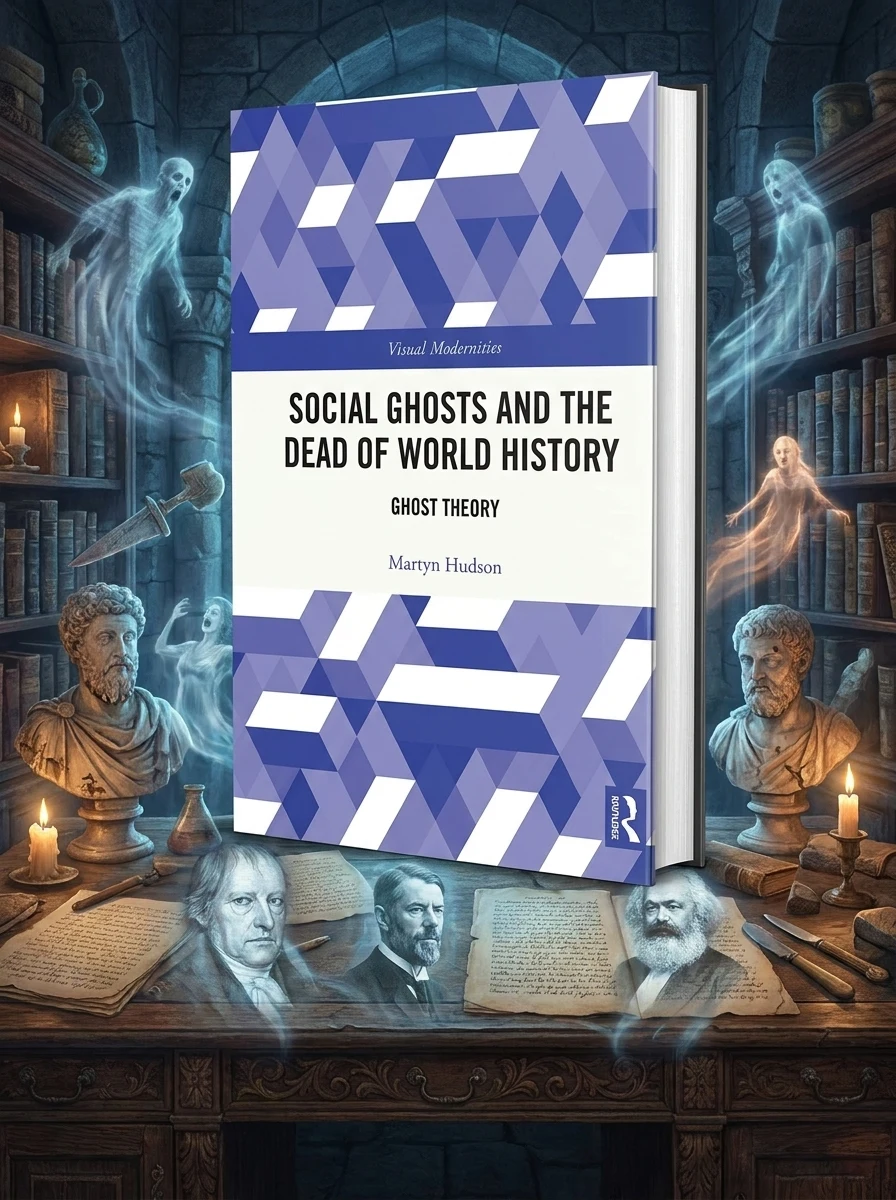
 91
91
 91
91
 90
90
 90
90