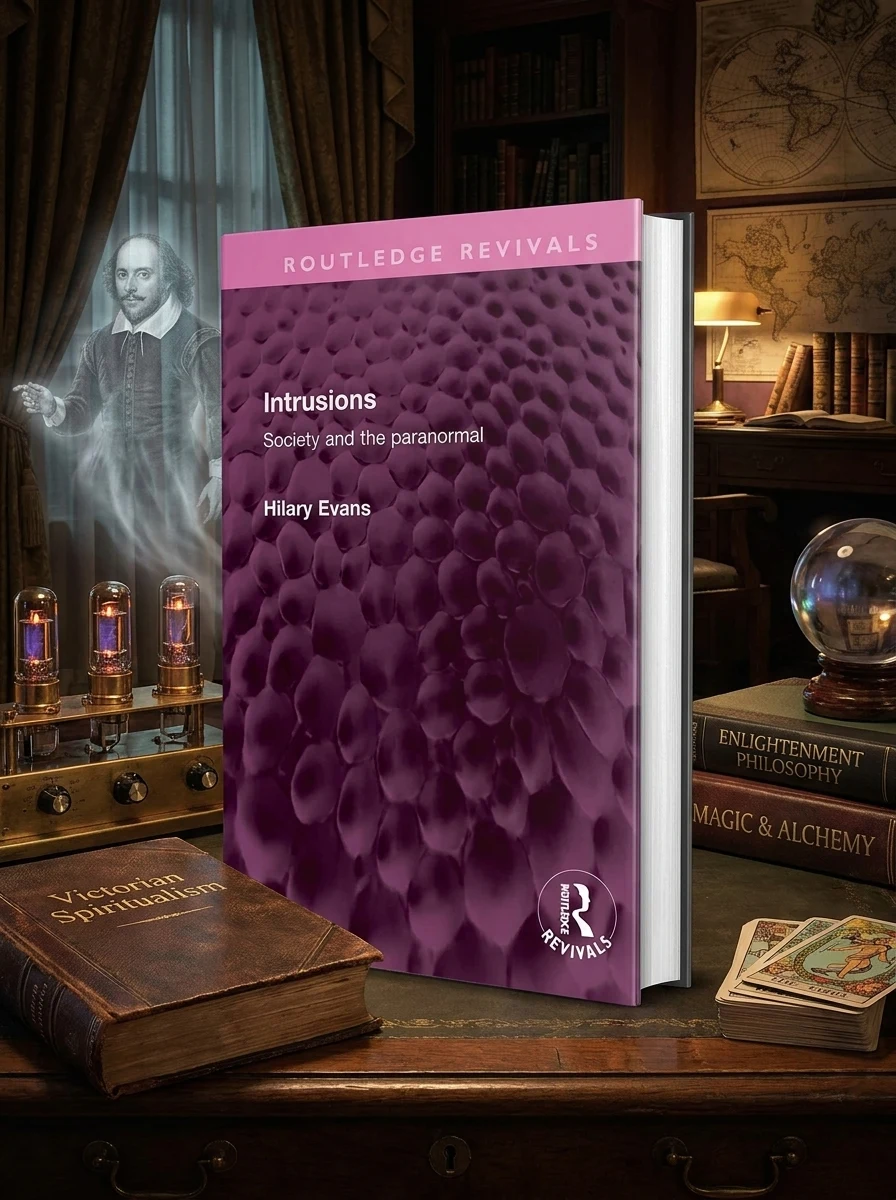
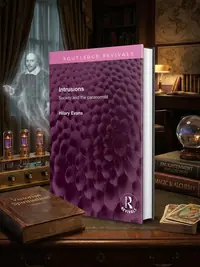

Intrusions: Society and the paranormal Evans, Hilary
 83
83
 Editorial score
How we rate
Editorial score
How we rate
Stock reported in the catalog; fulfillment is confirmed with your request.
Unmask how society has perpetually grappled with the inexplicable and the uncanny.
First published in 1982, Hilary Evans's "Intrusions" offers a compelling historical survey of how ordinary people have perceived and reacted to paranormal events, contrasting these perspectives with the often dismissive or inadequate responses from official institutions. The book delves into a wide spectrum of anomalies, from apparitions in Elizabethan times to Victorian spiritualism and modern UFO sightings, revealing a consistent pattern: the inexplicable endures despite intellectual resistance. Evans argues that mainstream thought has consistently failed to adequately address phenomena that defy conventional scientific or religious frameworks, leaving the public ill-served in understanding these persistent occurrences.
This text occupies the intersection of historical sociology and paranormal studies, exploring how societal structures have historically managed the uncanny through official versus popular lenses. It serves as a bridge between academic analysis of belief systems and the lived experience of the inexplicable in Western culture.


📝 Description: Intrusions: Society and the paranormal Evans, Hilary
💎 Expert review
📖 Why choose it
Why this book is worth reading
Readers fascinated by the tension between institutional authority and personal spiritual experience will find profound value in this survey. It is ideal for those who feel that mainstream science often ignores or dismisses their own encounters with the paranormal. By tracing the persistent human reaction to anomalies across centuries, the book validates the public's need to make sense of the inexplicable. You gain a deeper understanding of why society struggles to categorize these events and how ordinary people have historically sought meaning where official frameworks failed. This is for anyone who senses that the mystery of the unknown remains a vital, albeit suppressed, part of our collective cultural narrative.
⭐ Reader reviews
Reader rating
Evans provides a robust historical overview that challenges the adequacy of institutional responses to paranormal phenomena. The work succeeds in highlighting the gap between academic dismissal and public perception, offering a compelling argument for the endurance of the inexplicable. However, it may not suit readers seeking definitive scientific proof or those who prefer straightforward debunking without sociological context. It is best appreciated by those willing to engage with historical analysis rather than immediate answers. While some might find the focus on societal reaction over the events themselves dry, the insight into human psychology regarding the uncanny is both rigorous and thought-provoking for the right audience.
❓ Frequently asked questions
📖 Who should read this
If you're fascinated by the history of human belief, the sociology of the unexplained, or how our collective consciousness grapples with the edges of reality, this work is essential reading. It offers a fresh lens on the enduring power of the unknown.
🎯 Key themes and symbolism
Societal Reaction to Anomalies
This book meticulously chronicles the diverse ways societies throughout history have confronted phenomena that defy easy categorization. It explores the tension between popular belief and official skepticism, illustrating how cultural contexts shape our understanding and acceptance—or rejection—of the extraordinary, highlighting a persistent unease within established frameworks.
The Layman's Paranormal Experience
Evans uniquely foregrounds the firsthand accounts and interpretations of everyday individuals encountering the supernatural. By focusing on the experiences of ordinary people rather than solely academic or scientific discourse, the work emphasizes the enduring human connection to the inexplicable, often overlooked by those in positions of intellectual authority, offering a more democratic view of history.
Critique of Intellectual Resistance
A central thread is the sustained critique of intellectual establishments—both scientific and religious—for their reluctance to seriously investigate or acknowledge paranormal phenomena. The book argues that this institutional dismissal has left society ill-equipped to comprehend persistent occurrences, advocating for a more open and rigorous approach to unexplained events that continue to shape human experience.
💬 Quotes from the book
“The uncanny persists, a stubborn echo in the chambers of reason, defying every attempt to silence its whisper.”
“Our intellectual guardians often gaze upon the extraordinary not with curiosity, but with a dismissive wave, leaving the common experience untended.”
📜 Historical context
📚 Glossary
- Psychic Phenomena
- Occultism
- Spiritualism
📔 Questions to reflect on
- Reflect on a time you encountered something inexplicable. How did you personally react, and how do you think society around you would typically interpret such an event?
- Considering the historical examples in the book, how have modern media and technology changed—or reinforced—societal attitudes towards paranormal claims?
- If you were to design an 'official' body to investigate the paranormal today, what principles would guide its approach to avoid the pitfalls Evans describes?
📖 From the series “Routledge Revivals”
All books in the series →


🏛 Books from this publisher Routledge
All books from this publisher →

 89
89


You might also like
See more → 91
91
 90
90
 90
90
 90
90