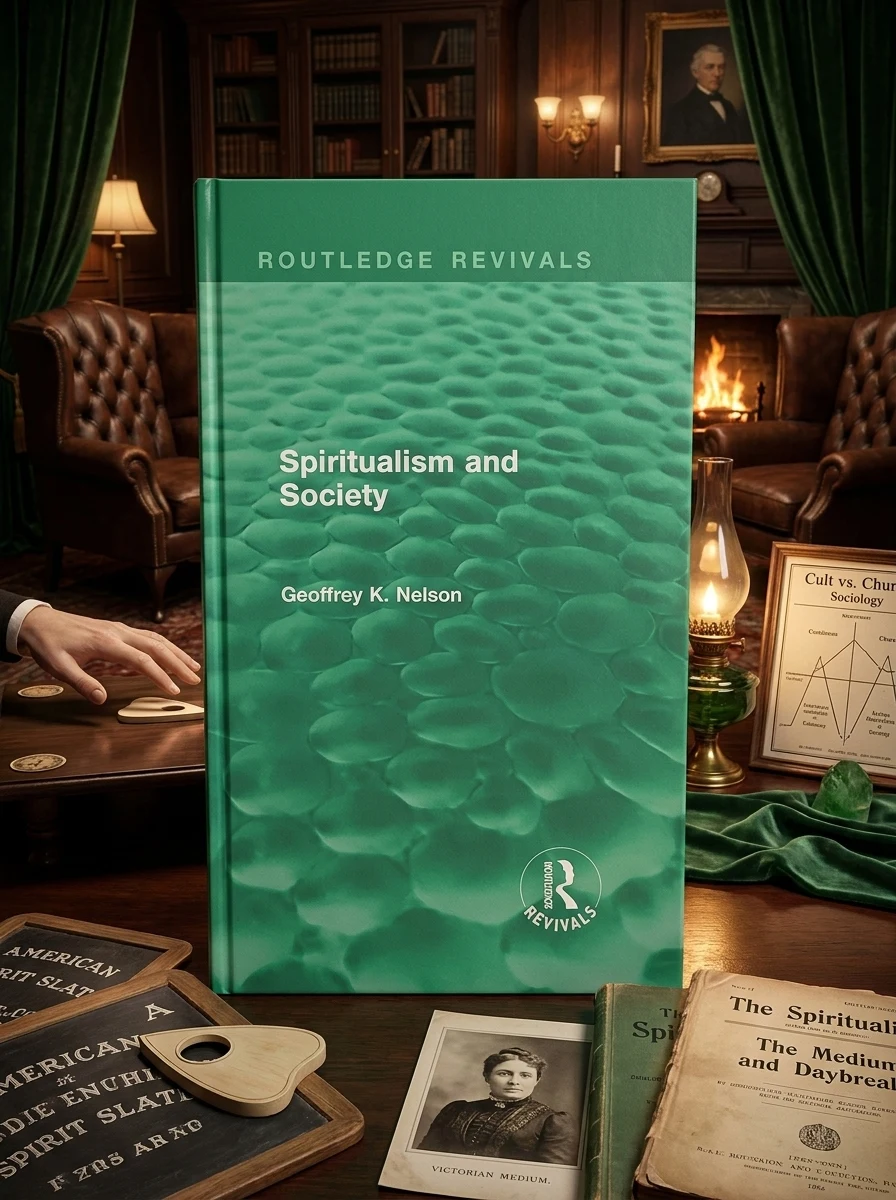

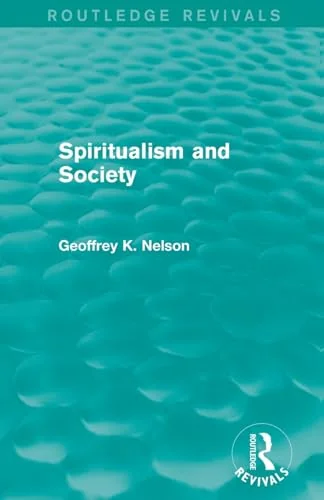
Spiritualism and Society (Routledge Revivals) Nelson, G K
Nelson, G K 89
89
 Editorial score
How we rate
Editorial score
How we rate
This edition can be ordered. No arrival date is confirmed.
Uncover the hidden roots and societal ripples of Spiritualism's profound influence.
G. K. Nelson's seminal work, originally published in 1969, meticulously chronicles the emergence of Spiritualism as a distinct religious phenomenon. It begins by tracing the movement's inception in America and its organizational growth, before shifting focus to its subsequent flourishing across Britain, drawing on period publications and firsthand accounts. The book culminates in a rigorous sociological examination, dissecting Spiritualism through frameworks of religious classification, authority structures, and leadership dynamics. This comprehensive study offers vital insights into how a spiritual practice evolved into a significant social force.
This work sits within the mid-twentieth-century academic study of new religious movements, specifically focusing on the sociological evolution of Spiritualism from its American origins to its British flourishing. It bridges historical narrative with rigorous social science analysis during a period when such esoteric practices were being subjected to serious scholarly scrutiny.


📝 Description: Spiritualism and Society (Routledge Revivals) Nelson, G K
💎 Expert review
📖 Why choose it
Why this book is worth reading
Scholars and serious enthusiasts of esoteric history will find this text indispensable for understanding how Spiritualism transformed from a localized phenomenon into a significant social force. G.K. Nelson provides a meticulous chronicle that moves beyond mere anecdote to offer a rigorous sociological examination of the movement's authority structures and leadership dynamics. Readers seeking to grasp the hidden roots and societal ripples of this spiritual practice will appreciate the depth of analysis derived from period publications and firsthand accounts. It is particularly valuable for those interested in the intersection of religious classification and social organization, offering vital insights into the organizational growth that defined this distinct religious phenomenon across two continents.
⭐ Reader reviews
Reader rating
Nelson’s seminal 1969 study offers a dense, academic dissection of Spiritualism’s rise, making it a robust resource for sociologists and historians. However, it is not suited for casual readers seeking mystical experiences or simple historical anecdotes. The text demands patience, as it prioritizes rigorous frameworks of religious classification and authority structures over narrative flair. Those looking for lighthearted ghost stories or accessible beginner guides to the occult will likely find this work too dry and theoretically heavy. It serves best for those willing to engage with period publications and analyze the complex dynamics of leadership within a religious movement, rather than for those seeking immediate spiritual gratification or entertainment.
❓ Frequently asked questions
📖 Who should read this
Are you a scholar of religious movements, a sociology student, or simply fascinated by how spiritual beliefs shape society? This foundational text offers an unparalleled exploration of Spiritualism's historical journey and its complex relationship with social structures. Essential for serious inquiry.
🎯 Key themes and symbolism
Spiritualism's American Genesis
Nelson meticulously maps the foundational moments of Spiritualism in the United States, detailing its initial manifestations and the subsequent organizational structures that propelled it from individual experiences to a recognized religious movement. This section provides a crucial historical backbone for understanding its global spread.
British Movement's Evolution
The author explores how Spiritualism took root and flourished in Great Britain. Utilizing primary sources like contemporary journals and interviews, Nelson illustrates its adaptation and unique development across the Atlantic, showcasing its broader societal integration and the distinct character it assumed there.
Sociology of Belief
This segment delves into the academic dissection of Spiritualism, applying sociological theories to understand its classification as a religious body versus a cult. Nelson scrutinizes concepts of power, leadership, and communal identity within the movement, offering a critical lens on its social organization.
💬 Quotes from the book
“The genesis of Spiritualism cannot be isolated from the concurrent social anxieties and emergent scientific paradigms of the mid-nineteenth century, providing fertile ground for its unique appeal.”
“Distinguishing between a 'church' and a 'cult' within the sociological framework reveals critical insights into power structures and the institutionalization process of new religious forms.”
📜 Historical context
📚 Glossary
- Spiritualism
- Sociology of Religion
- Cult (Sociological Definition)
📔 Questions to reflect on
- Consider how societal conditions might foster the rise of new spiritual movements in our contemporary world.
- Reflect on the distinction between a 'religion' and a 'cult' from a sociological perspective, and how public perception influences these labels.
- How might the historical analysis of Spiritualism inform our understanding of contemporary alternative spiritualities and their societal integration?
📖 From the series “Routledge Revivals”
All books in the series →






✍️ More books by this author Nelson, G K
All books by this author →🏛 Books from this publisher Routledge
All books from this publisher →



 89
89



You might also like
See more →
 91
91

 89
89