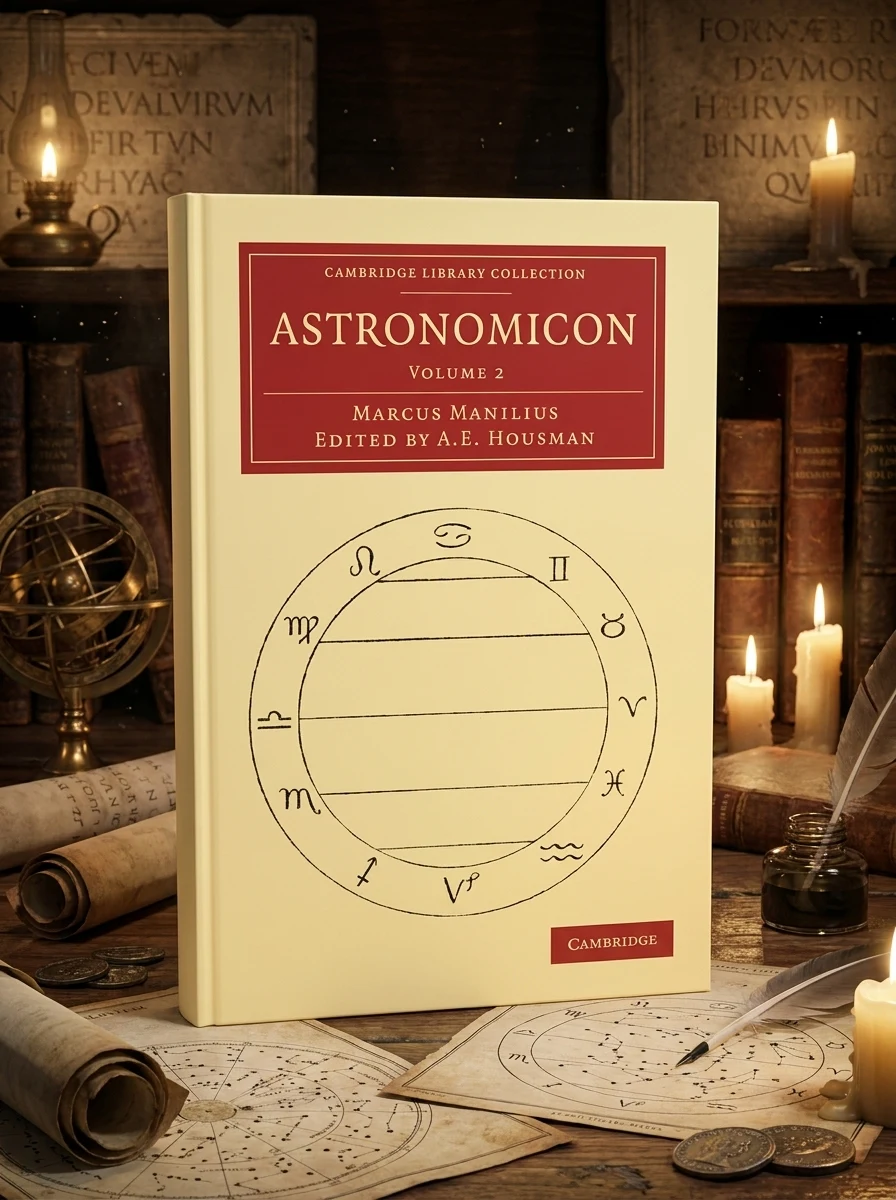
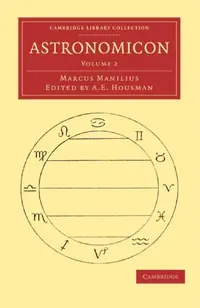
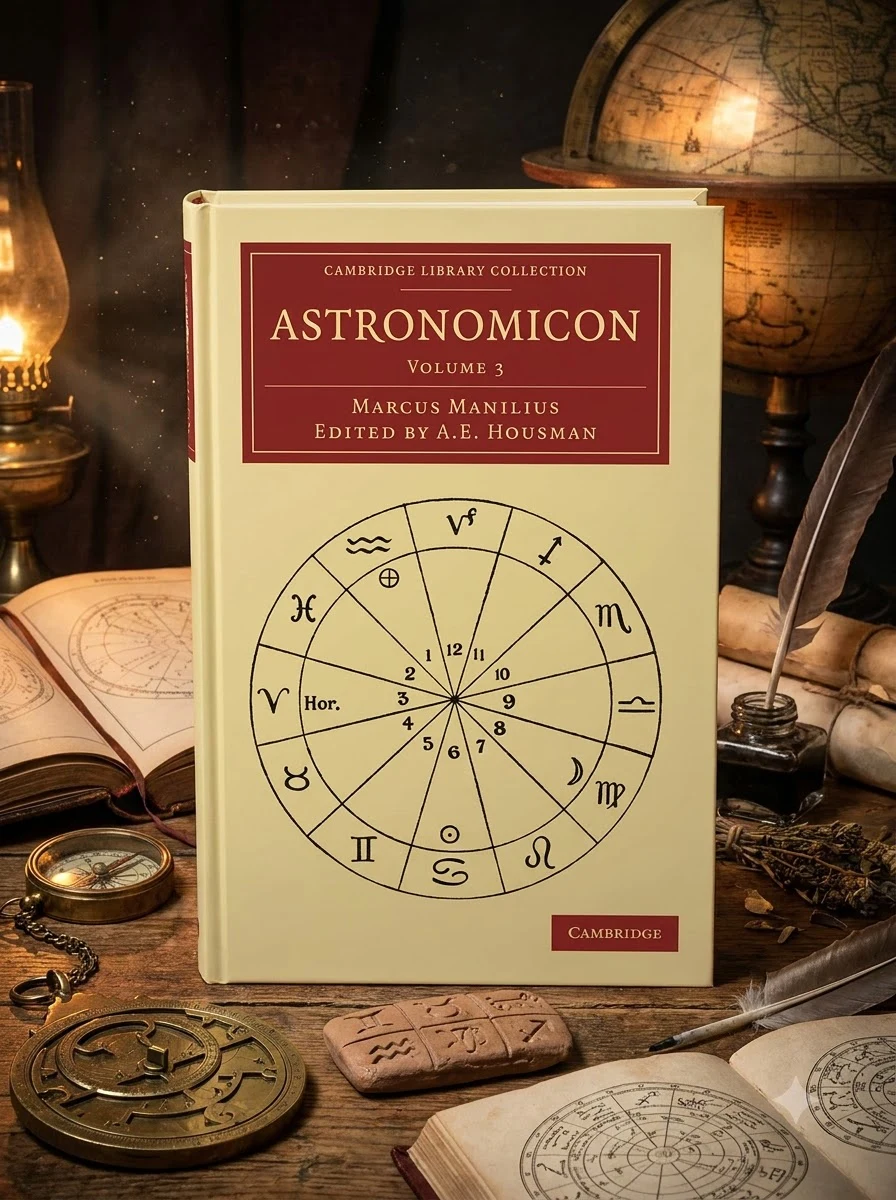
Astronomicon Manilius, Marcus
Manilius, Marcus; , Housman, A EStock reported in the catalog; fulfillment is confirmed with your request.
Unravel the ancient celestial tapestry mapping human fate from cosmic patterns.
Step into the intellectual currents of antiquity with Manilius's monumental "Astronomicon," a five-volume poetic masterpiece that stands as the earliest Western treatise linking the zodiac's divisions directly to the course of human life. This foundational work explores the profound philosophical implications of celestial influence, blending epic verse with intricate astrological theory. It offers an unparalleled glimpse into how ancient minds grappled with fate, free will, and humanity's place within a divinely ordered cosmos, making it essential reading for anyone exploring the origins of astrology and cosmic philosophy.
This text represents the earliest Western treatise linking zodiac divisions to human life, serving as a foundational work in ancient astrological theory and cosmic philosophy.


📝 Description: Astronomicon Manilius, Marcus
💎 Expert review
📖 Why choose it
Why this book is worth reading
Readers deeply interested in the intellectual currents of antiquity will find this work essential for understanding the origins of astrology. It offers an unparalleled glimpse into how ancient minds grappled with profound questions of fate, free will, and humanity's place within a divinely ordered cosmos. By blending epic verse with intricate astrological theory, Manilius provides a monumental poetic masterpiece that maps human fate from cosmic patterns. This book is ideal for those exploring the philosophical implications of celestial influence, allowing them to unravel the ancient celestial tapestry that defines Western esoteric thought.
⭐ Reader reviews
Reader rating
This volume serves as a primary source for the earliest Western treatise on zodiacal divisions and their direct link to human destiny. While it stands as a monumental poetic masterpiece blending epic verse with astrological theory, it demands significant intellectual engagement from its audience. It is strictly for those willing to explore the philosophical implications of celestial influence within an ancient framework. However, readers seeking modern psychological astrology or accessible introductory guides will likely find this dense, theoretical approach inaccessible and unengaging. It is not suited for casual browsing but rather for serious scholarly study of cosmic philosophy.
❓ Frequently asked questions
📖 Who should read this
This book is for seekers of ancient wisdom, students of classical philosophy, and anyone fascinated by the historical roots of astrology. If you're intrigued by the interplay of poetry, philosophy, and early scientific thought, Manilius offers a truly unique and enriching experience.
🎯 Key themes and symbolism
Origins of Western Astrology
This text is historically paramount as the first Western document to systematically connect the twelve houses of the zodiac with human affairs and destinies. Manilius's detailed exposition laid crucial groundwork, influencing subsequent astrological thought for centuries. It's an indispensable resource for understanding how these foundational concepts were first articulated and integrated into a comprehensive system.
Cosmic Determinism Explored
Manilius delves deep into the idea that celestial movements preordain human events, challenging readers to consider the extent of fate versus free will. The poem presents a universe governed by immutable cosmic laws, where individual lives are interwoven with the grand design of the stars, offering a profound meditation on destiny and human agency within such a framework.
Philosophy in Poetic Form
More than just an astrological manual, "Astronomicon" is a work of profound philosophical poetry. Manilius uses the epic form to explore complex questions about the universe's structure, humanity's place within it, and the very nature of existence itself. It elegantly combines scientific observation (as understood then) with speculative metaphysics, all articulated in eloquent Latin verse.
💬 Quotes from the book
“The stars above, though distant, hold their sway; / On mortal lives, they cast their destined day.”
“No random chance dictates the earthly tide; / But cosmic order, vast and deep, does guide.”
📜 Historical context
📚 Glossary
- Zodiac
- Astrological Houses
- Cosmic Determinism
📔 Questions to reflect on
- How does the ancient concept of celestial influence on human destiny resonate with or challenge your modern understanding of fate and free will?
- Consider the blending of scientific observation (as understood in antiquity) with poetry and philosophy in this work. How might this integrative approach inform contemporary thought?
- If our lives were indeed preordained by the stars, what implications would this have for personal responsibility and the pursuit of individual goals?
📖 From the series “Cambridge Library Collection - Classics”
All books in the series →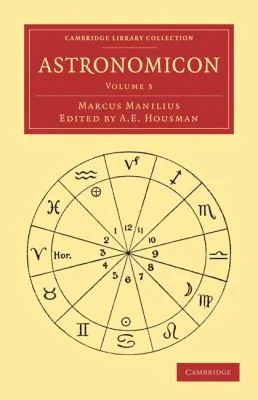
✍️ More books by this author Manilius, Marcus; , Housman, A E
All books by this author →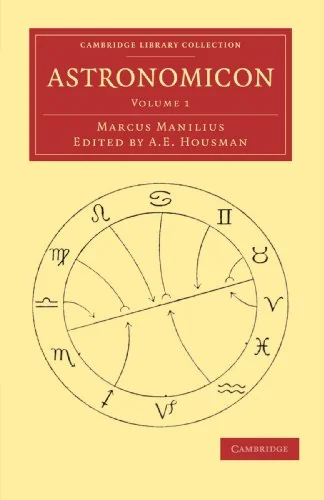
🏛 Books from this publisher Cambridge University Press
All books from this publisher →

 75
75

You might also like
See more →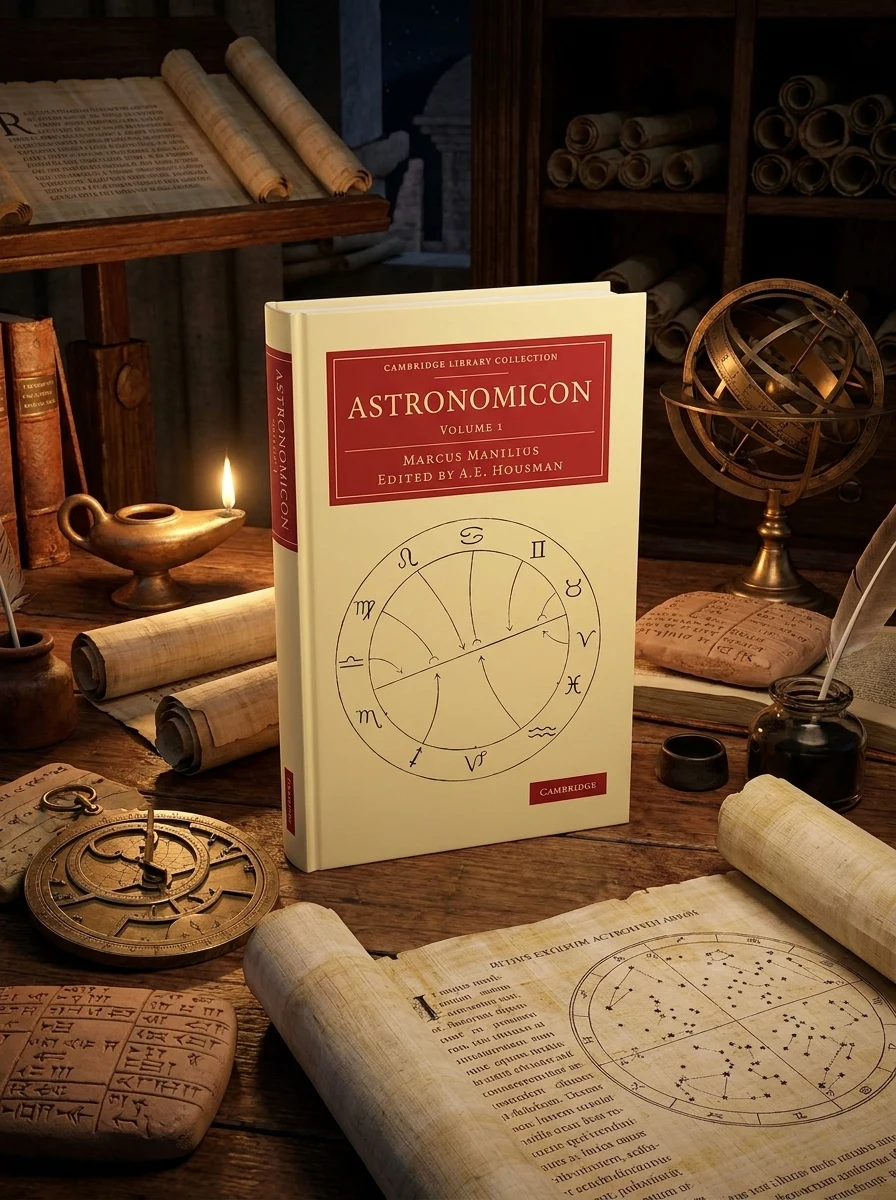 88
88
 84
84
 89
89
 91
91
 91
91
 91
91