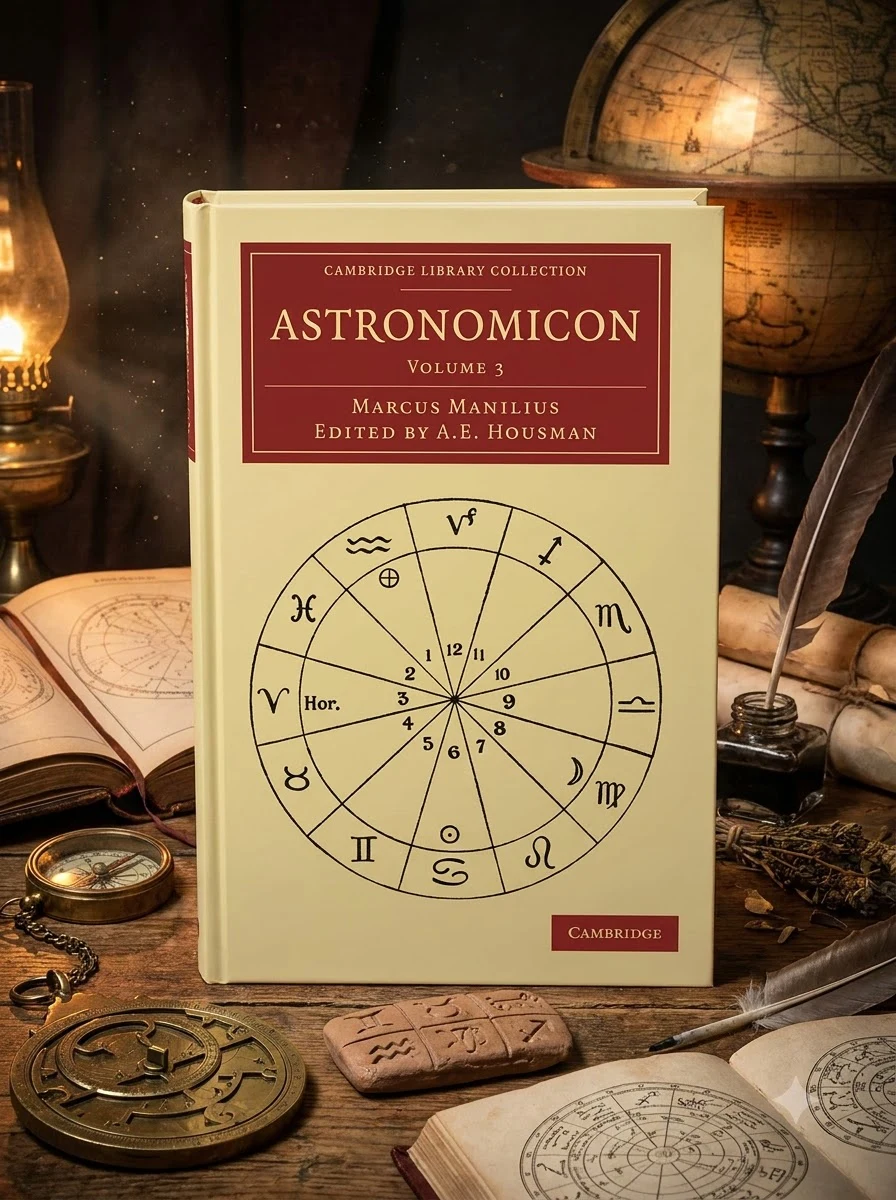
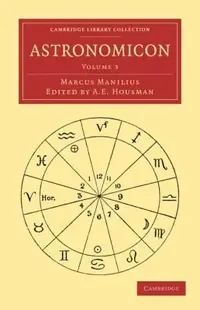
Astronomicon Manilius, Marcus
Manilius, Marcus; , Housman, A EStock reported in the catalog; fulfillment is confirmed with your request.
Unravel the cosmos' intricate dance with human destiny in this ancient astrological cornerstone.
This foundational five-volume poem, whose precise authorship and composition date remain veiled in antiquity, stands as the earliest known Western text to systematically map the twelve houses of the zodiac onto the unfolding tapestry of human existence. It ventures beyond mere observation, attempting to establish a profound, deterministic link between celestial mechanics and terrestrial fate, offering an unprecedented glimpse into the nascent stages of astrological philosophy.
This text serves as a foundational pillar within the tradition of ancient Western astrology, bridging celestial mechanics with terrestrial fate in its nascent philosophical stages.


📝 Description: Astronomicon Manilius, Marcus
💎 Expert review
📖 Why choose it
Why this book is worth reading
Readers deeply interested in the historical roots of esoteric thought will find this volume indispensable. It offers a rare, systematic window into how early thinkers mapped the zodiac’s twelve houses onto human existence. Those seeking to understand the deterministic link between celestial mechanics and destiny will appreciate its profound philosophical depth. The work is ideal for scholars and enthusiasts who value antiquity’s intricate dance of cosmic influence. It provides an unprecedented glimpse into astrological philosophy, making it essential for anyone tracing the lineage of Western esoteric traditions back to their ancient origins.
⭐ Reader reviews
Reader rating
While this five-volume poem remains a cornerstone of astrological literature, it is not for casual readers seeking light entertainment or modern psychological interpretations. Its dense, systematic mapping of celestial fate demands serious engagement with antiquity’s deterministic worldview. The precise authorship and composition date remain veiled, adding to its enigmatic nature rather than offering clarity. Readers expecting straightforward horoscopes or contemporary advice will likely find it dry and inaccessible. It is strictly for those willing to navigate the complex tapestry of ancient astrological philosophy without modern simplifications.
❓ Frequently asked questions
📖 Who should read this
If you are drawn to the origins of Western astrology, the philosophical underpinnings of fate, or the intellectual heritage of ancient Rome, this seminal work offers unparalleled insight. It's essential for anyone seeking to understand how the stars first came to be read as a grand blueprint for life.
🎯 Key themes and symbolism
Zodiacal Determinism
This work meticulously explores the revolutionary concept that the specific positions of celestial bodies within the zodiac's twelve houses directly influence and predetermine individual human lives and world events. It lays the groundwork for predictive astrology by assigning specific significations to each cosmic division.
Cosmic Order & Fate
Manilius postulates a grand, divinely ordered universe where nothing is left to chance. The book delves into the philosophical implications of this cosmic architecture, suggesting that human fate is intricately woven into the fabric of the stars, challenging notions of free will.
Early Astrological Science
Far from mere superstition, *Astronomicon* presents an intellectual attempt to systematize and rationalize astrological principles. It reflects the ancient world's efforts to observe, categorize, and interpret celestial phenomena, establishing a framework that would influence Western astrological thought for centuries.
💬 Quotes from the book
“The sky, with its myriad stars, is but a mirror reflecting the very soul of man, his triumphs and his tragedies etched in the celestial spheres.”
“For what is fate but the unyielding decree of the heavens, a pattern woven by divine hands, to which all earthly existence must submit?”
📜 Historical context
📚 Glossary
- Zodiac
- Houses (Astrology)
- Cosmology
📔 Questions to reflect on
- How does the ancient concept of celestial influence on human life compare to modern understandings of destiny or personal agency?
- If our lives are indeed mapped out by the stars, what implications does this hold for our ethical choices and our perception of free will?
- Reflect on how systematizing observations, as Manilius did with astrology, helps humanity to understand or cope with the unknown.
📖 From the series “Cambridge Library Collection - Classics”
All books in the series →
✍️ More books by this author Manilius, Marcus; , Housman, A E
All books by this author →
🏛 Books from this publisher Cambridge University Press
All books from this publisher →

 75
75

You might also like
See more →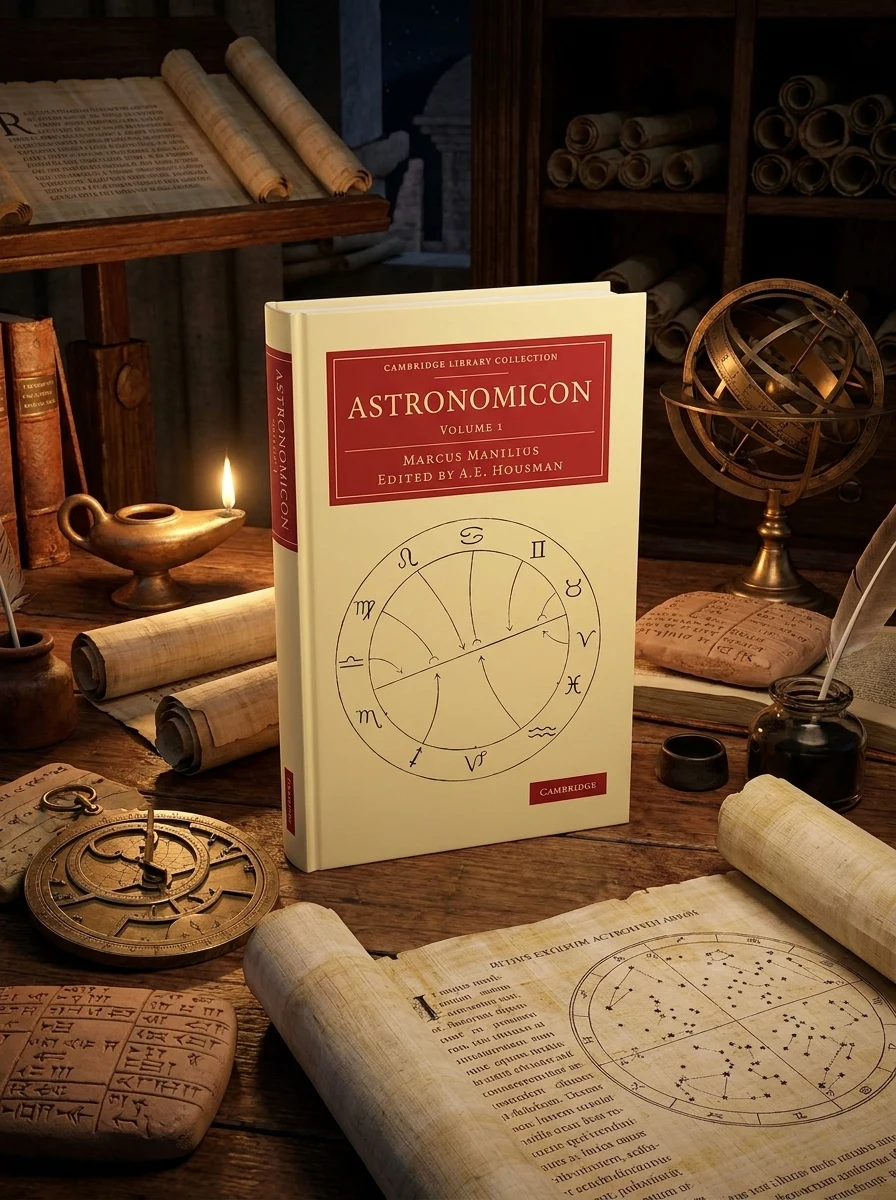 88
88
 83
83
 89
89