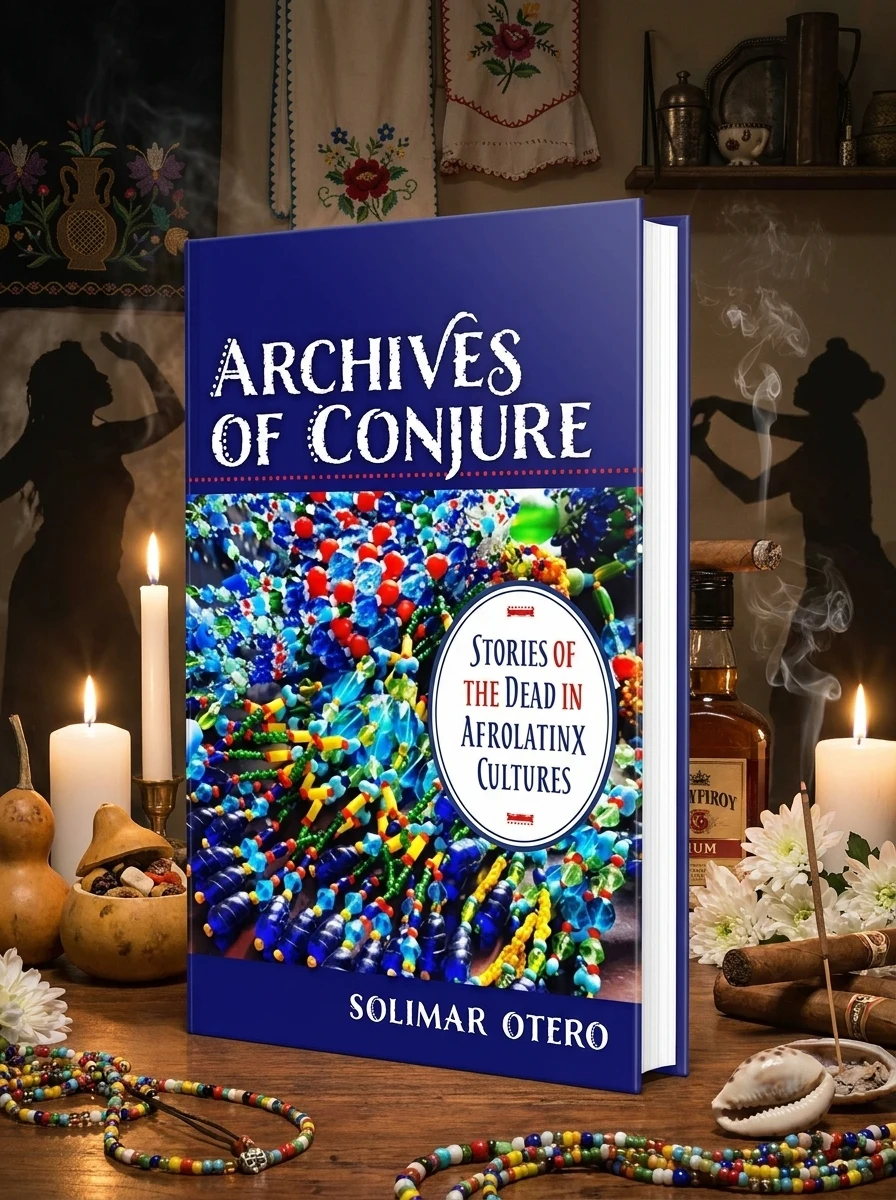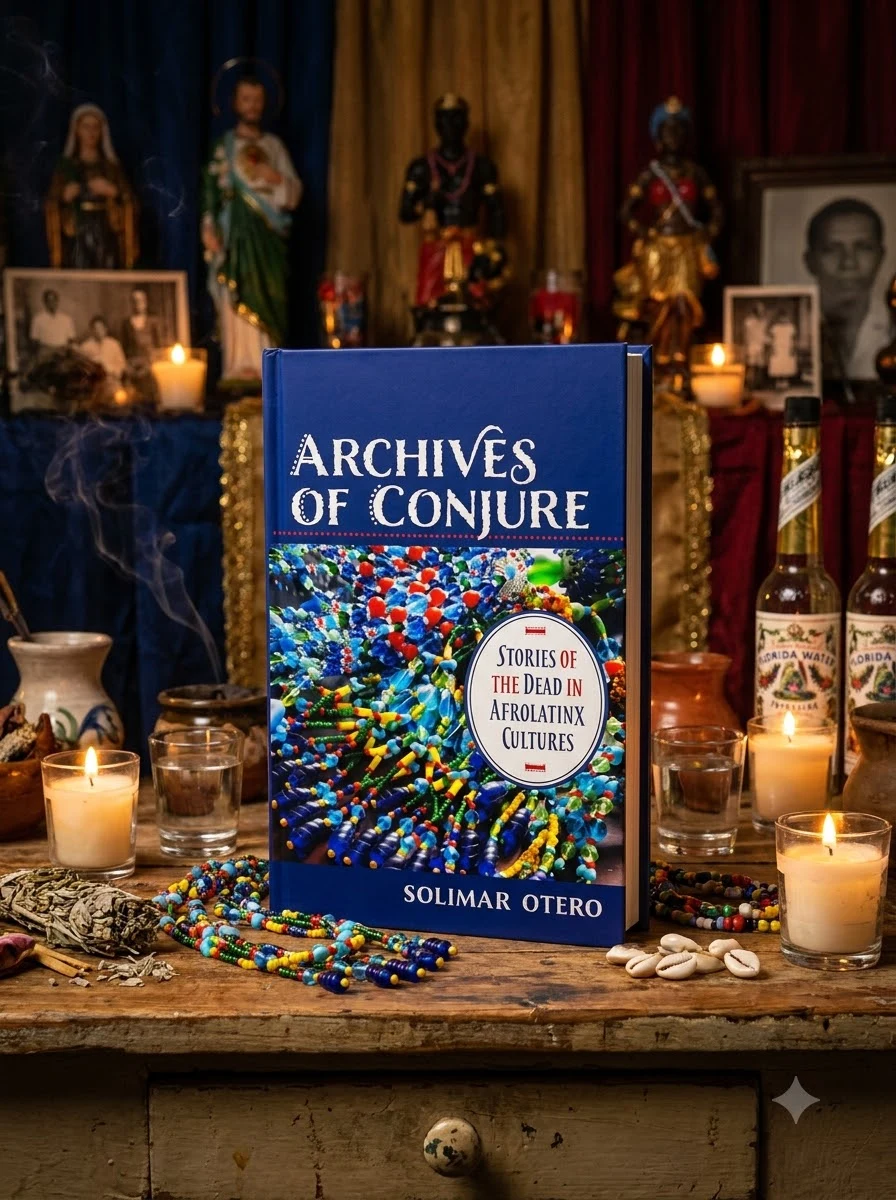
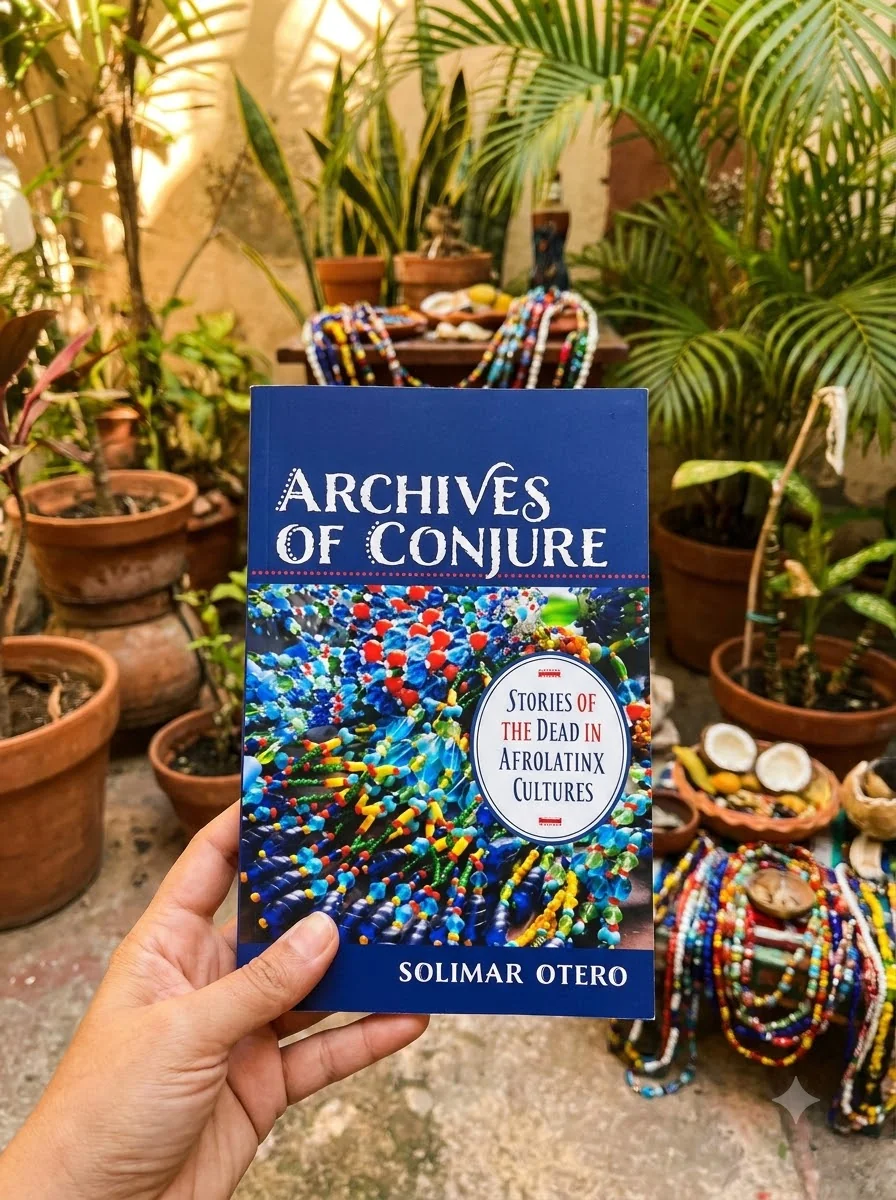
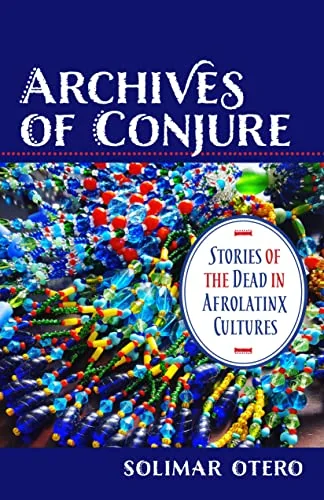
Archives of Conjure: Stories of the Dead in Afrolatinx Cultures - Ingram Academic Otero, Solimar
✍️ Otero, SolimarAn academic study of spirit communication, material culture, and storytelling across Afrolatinx religious traditions.
Solimar Otero, a professor of folklore and ethnomusicology at Indiana University, examines how divine spirits and ancestors act through physical materials, mediumship, and human bodies. Drawing on more than ten years of archival research and fieldwork in Cuba, the text focuses on Cuban Espiritismo, Puerto Rican Santería, and Brazilian Candomblé. Otero combines Caribbean literary analysis, performance theory, and the storytelling practices of Afrolatinx women and LGBTQ practitioners to trace how residual transcriptions linger in beads, cloth, smoke, washings, and natural waterways.
Rooted in Afro-Atlantic diasporic traditions, this research focuses on fieldwork conducted in Cuba alongside cross-cultural Caribbean analysis. It engages with long-standing practices of Cuban Espiritismo, Puerto Rican Santería, and Brazilian Candomblé.


📝 Description: Archives of Conjure: Stories of the Dead in Afrolatinx Cultures - Ingram Academic Otero, Solimar
📑 What's inside
- Acknowledgments
- Introduction: Archives of Conjure
- 1. Residual Transcriptions
- 2. Crossings
- 3. Flows
- 4. Sirens
- Conclusion: Espuma del Mar, Sea- Foam
- Notes
- References
- Index
💎 Expert review
📖 Why choose it
Why this book is worth reading
Scholars, anthropologists, and individuals deeply interested in the intersection of race, gender, and spirituality will find this text invaluable. Solimar Otero offers a profound lens through which to understand how the dead are not passive relics but active agents in daily life. Readers seeking to grasp how ancestral voices influence modern identity formation within Afrolatinx communities will appreciate the nuanced analysis of ritual and material culture. It is essential for those who wish to move beyond superficial observations of magic to understand the complex, evolving archive of conjure that defines these vibrant spiritual landscapes.
⭐ Reader reviews
Reader rating
Otero delivers a rigorous academic examination that may feel dense to casual readers of occult lore. This book is not suitable for those seeking simple spellbooks or practical instruction on casting spells; it is a theoretical study of cultural dynamics. Readers expecting straightforward narratives about ghostly encounters might find the focus on gender, sexuality, and racial identity too abstract. However, for those willing to engage with complex sociological frameworks, it provides an unparalleled view into how spirits co-produce culture. It demands intellectual effort but rewards the reader with deep insights into the living archive of Afrolatinx conjure traditions.
❓ Frequently asked questions
📖 Who should read this
If you're drawn to the vibrant intersections of spirituality, cultural studies, and the power of ancestral wisdom, this book is for you. Readers interested in Afrolatinx religions, folklore, and the innovative ways scholarship can engage with the unseen will find it profoundly enriching.
🎯 Key themes and symbolism
Spirit Communication & Agency
Explore how the departed are not passive memories but active collaborators in Afrolatinx spiritual practices. Otero illuminates the intricate channels through which spirits communicate, offering counsel, making demands, and instigating future rituals, thereby exerting significant agency in the present lives of their devotees.
Archives of Conjure
Delve into Otero's innovative concept of "archives of conjure," where historical narratives and ancestral wisdom are not just written but "stitched, beaded, smoked, and washed" into being. This theme reveals how these dynamic repositories are continually created and accessed through ritual and material culture, ensuring the living legacy of the dead.
Identity & Ancestral Influence
Understand how divine and ancestral figures play a pivotal role in shaping contemporary understandings of gender, sexuality, and race within Afrolatinx societies. The book unpacks how spirit guidance provides unique perspectives and interventions, offering nuanced insights into personal and collective identities.
📜 Historical context
📚 Glossary
- Afrolatinx
- Espiritismo
- Spirit Mediumship
📔 Questions to reflect on
- How does the concept of a "living archive" challenge your understanding of history and knowledge preservation?
- Consider a cultural tradition you know. Where might you find "residual transcriptions" or unwritten narratives shaping its present?
- How might acknowledging the agency of spirits or ancestors transform our approach to contemporary social issues like identity and community?