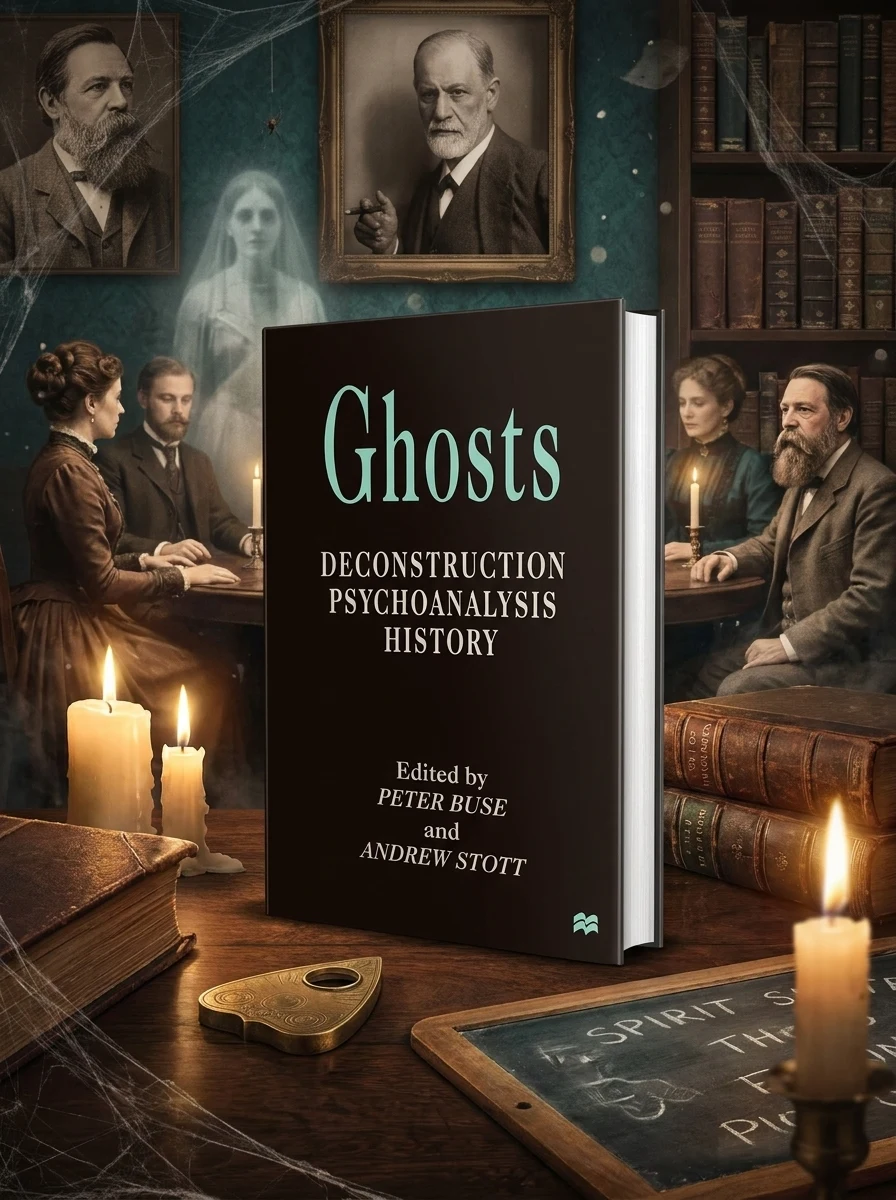

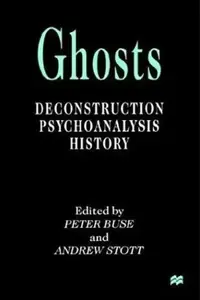
Ghosts: Deconstruction, Psychoanalysis, History (1999)
 82
82
 Editorial score
How we rate
Editorial score
How we rate
Stock reported in the catalog; fulfillment is confirmed with your request.
Haunting bridges the spectral and social, revealing how ghosts shape culture, psychoanalysis, and history.
This volume dismantles the boundary between the supernatural and the sociological, arguing that the concept of haunting is central to understanding modern thought. It examines how figures like Freud and Engels engaged with spiritualism, not as fringe hobbyists but as intellectuals grappling with the unseen. Through essays on Derrida, Adorno, and Benjamin, the text explores how ghosts operate as metaphors for collective trauma, memory, and anxiety. By analyzing gothic literature, postcolonial narratives, and cinema, the contributors demonstrate that spectral imagery is not merely aesthetic but a critical tool for decoding the lingering impacts of the past on present social structures.
This volume emerges from late-twentieth-century critical theory, specifically bridging psychoanalysis, postcolonial studies, and cultural history through the lens of Derridean spectrality. It challenges traditional boundaries between the supernatural and the sociological by positioning haunting as a central mechanism in modern intellectual thought.


📝 Description: Ghosts: Deconstruction, Psychoanalysis, History (1999)
💎 Expert review
📖 Why choose it
Why this book is worth reading
Scholars and critics interested in the intersection of trauma, memory, and culture will find this text invaluable. It offers a rigorous framework for understanding how ghosts function not as mere superstition but as critical metaphors for collective anxiety and historical residue. Readers engaged with postcolonial narratives or gothic literature will appreciate how the contributors decode the lingering impacts of the past on present social structures. By examining figures like Engels and Freud alongside literary and cinematic examples, the book provides a robust toolset for analyzing how the unseen shapes our contemporary reality, making it essential for those seeking depth in cultural theory.
⭐ Reader reviews
Reader rating
This academic collection is dense with theoretical heavy lifting, appealing primarily to specialists in critical theory, psychoanalysis, and cultural studies. Its rigorous deconstruction of haunting as a sociological tool may alienate casual readers or those seeking straightforward supernatural folklore. The text assumes familiarity with complex thinkers like Derrida and Benjamin, making it inaccessible without prior scholarly background. While intellectually stimulating for its target audience, it lacks narrative warmth or practical application for general occult enthusiasts. It is strictly for the academically inclined who wish to dissect the spectral as a metaphor for modern anxiety rather than those looking for magical practice or historical ghost stories.
❓ Frequently asked questions
📖 Who should read this
Readers fascinated by the intersection of literary theory, psychology, and sociology will find this essential. It appeals to those interested in how cultural anxieties manifest through supernatural metaphors in art and philosophy.
🎯 Key themes and symbolism
Spectral Theory
Psychoanalytic Spiritism
Cultural Memory
💬 Quotes from the book
“Ghosts are not just stories; they are the living presence of unresolved history within our current reality.”
“To understand Freud, one must understand the seance room.”
📜 Historical context
📚 Glossary
- Hauntology
- Spiritualism
- Deconstruction
📔 Questions to reflect on
- What unresolved historical or personal 'ghosts' do you feel are haunting your current community?
- How does the metaphor of haunting explain the way trauma is transmitted across generations?
- In what ways do modern digital technologies create new forms of 'spectral' presence for us today?
🏛 Books from this publisher Palgrave MacMillan
All books from this publisher →
You might also like
See more →
 91
91


 91
91