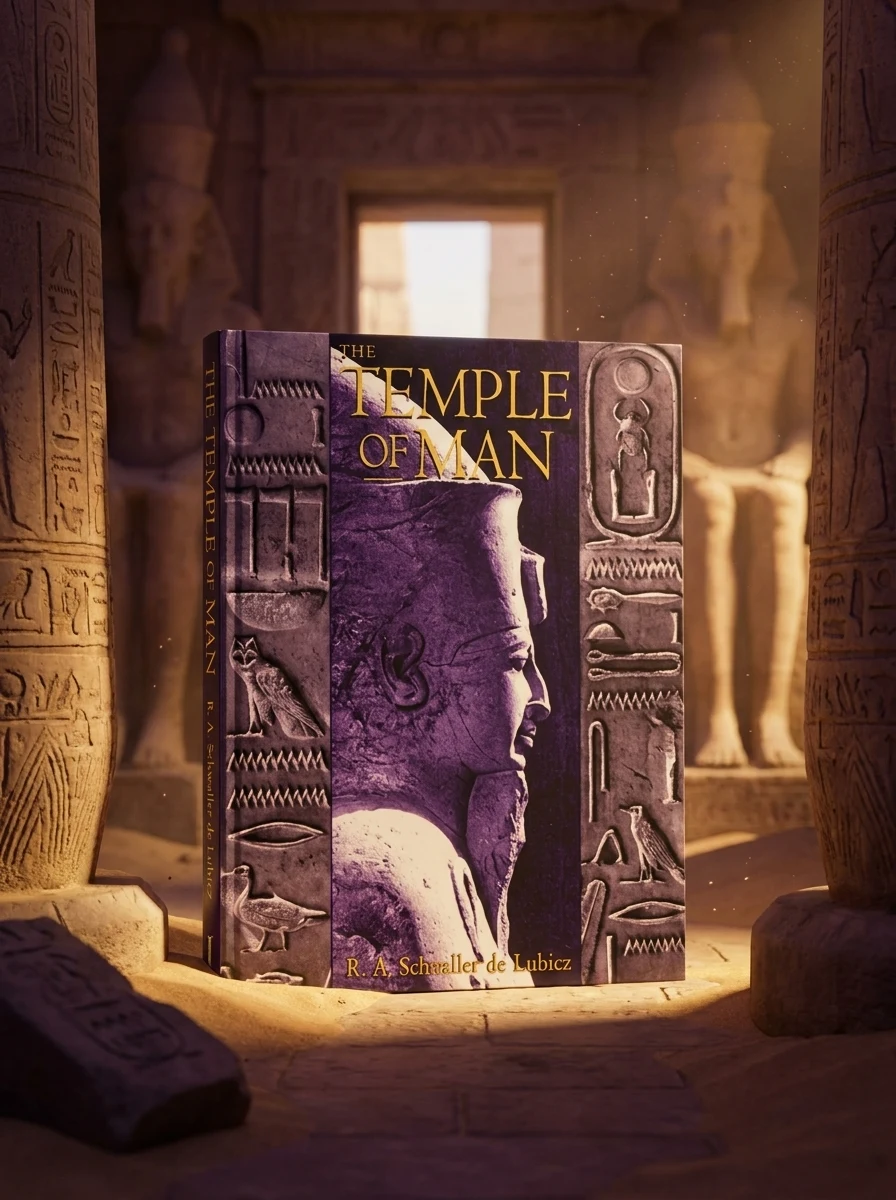
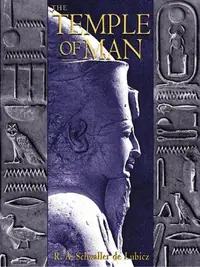
The Temple of Man
Schwaller De Lubicz, R A 86
86
 Editorial score
How we rate
Editorial score
How we rate
This edition can be ordered. No arrival date is confirmed.
Uncover the profound secrets of ancient Egypt, where architecture transcends stone to reveal cosmic wisdom.
This monumental work by R. A. Schwaller De Lubicz invites readers on an unparalleled journey into the esoteric philosophy embedded within ancient Egyptian civilization. Moving beyond conventional historical narratives, De Lubicz meticulously deciphers the sacred geometry and symbolic language of Egyptian temples, particularly Luxor. He argues that these structures are living embodiments of a profound cosmic understanding, reflecting a sophisticated spiritual science. Through his dedicated scholarship, the author unveils a vibrant universe where architectural form, human physiology, and divine principles are intricately interwoven, offering a gateway to a timeless wisdom that continues to resonate today.
This work stands as a pivotal text in the modern esoteric interpretation of ancient Egyptian spirituality, bridging historical architecture with living metaphysical philosophy. It challenges conventional Egyptology by presenting temples not merely as ruins but as active vessels of cosmic wisdom and sacred science.


📝 Description: The Temple of Man
💎 Expert review
📖 Why choose it
Why this book is worth reading
Readers seeking a profound shift in perspective regarding ancient wisdom will find this book transformative. It is ideal for those who feel that standard historical accounts lack spiritual depth and crave a synthesis of science, art, and mysticism. If you are drawn to the idea that human physiology mirrors cosmic structures, or if you wish to understand how sacred geometry encodes divine principles, this text offers a unique gateway. It appeals to seekers interested in the hidden meanings behind Luxor’s stones, providing a vibrant universe where form and spirit are inseparable. This book rewards patience with insights into a timeless wisdom that resonates deeply with contemporary spiritual science.
⭐ Reader reviews
Reader rating
Schwaller De Lubicz presents a monumental argument that Egyptian temples are living embodiments of cosmic understanding rather than mere stone monuments. While his scholarship is dedicated and the vision vibrant, this work demands significant intellectual engagement from its audience. It does NOT suit readers looking for straightforward historical facts or easy-to-digest travel guides. Those expecting conventional archaeological analysis may find the esoteric approach abstract and dense. However, for those willing to decipher symbolic language and sacred geometry, it offers an unparalleled journey into a sophisticated spiritual science. The text is rigorous, requiring a mind open to the interweaving of architecture, physiology, and divine principles without relying on traditional academic frameworks.
❓ Frequently asked questions
📖 Who should read this
If you are drawn to the profound mysteries of ancient civilizations, seek to understand the esoteric underpinnings of sacred architecture, or crave a deep dive into the spiritual science of Egypt, this monumental work offers an unparalleled intellectual and spiritual adventure.
🎯 Key themes and symbolism
Sacred Architecture Revealed
De Lubicz presents Egyptian temples not merely as buildings, but as living cosmic diagrams. He meticulously unpacks how their design, proportions, and orientation encode profound spiritual and scientific knowledge, revealing a complex symbolic language where every element, from a column to a carving, holds deep esoteric meaning.
Ancient Egyptian Metaphysics
This work plunges into the sophisticated worldview of the pharaonic era, positing that ancient Egyptians possessed an integrated understanding of the universe. It explores how their spiritual philosophy saw humanity and the cosmos as interconnected, reflecting a holistic "traditional wisdom" that informed every aspect of their civilization, from art to the very concept of time.
The Living Temple Concept
At its core, the book posits that the Egyptian temple, particularly Luxor, is a dynamic, "living" organism. De Lubicz contends that these structures are designed to resonate with universal principles and even human physiology, acting as an energetic conduit for cosmic forces. This perspective views architecture as a breathing manifestation of divine intelligence.
💬 Quotes from the book
“The very stones of Luxor do not merely stand, they speak a language of cosmic rhythm, a silent symphony of universal laws inscribed for eternity.”
“Humanity, in its truest form, is a micro-cosmic reflection of the grand Temple, mirroring the divine proportions and energetic flows of the cosmos itself.”
📜 Historical context
📚 Glossary
- Pharaonic
- Sacred Geometry
- Esoteric
📔 Questions to reflect on
- How might viewing modern architecture through the lens of sacred geometry change your perception of our built environment?
- Consider the idea of "traditional wisdom" as presented. What ancient principles do you believe are most vital for contemporary understanding?
- If the human body is a "temple," what does this metaphor suggest about personal growth, spiritual practice, and self-understanding?
✍️ More books by this author Schwaller De Lubicz, R A
All books by this author → 82
82
 89
89
🏛 Books from this publisher Inner Traditions International
All books from this publisher →




You might also like
See more →

 91
91