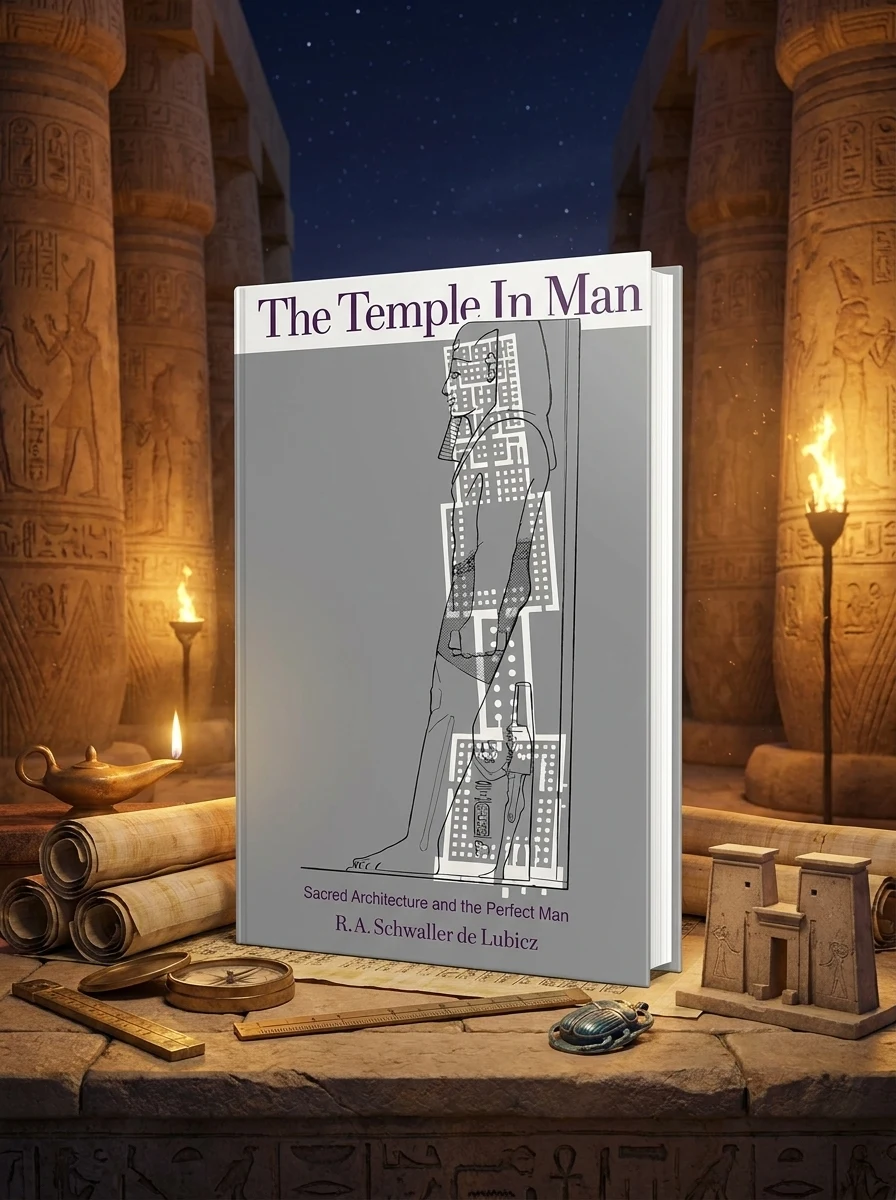
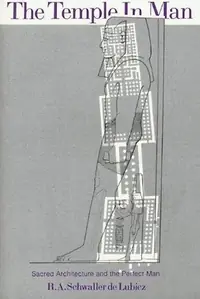
The Temple in Man: Sacred Architecture and the Perfect Man (Original)
Schwaller De Lubicz, R AStock reported in the catalog; fulfillment is confirmed with your request.
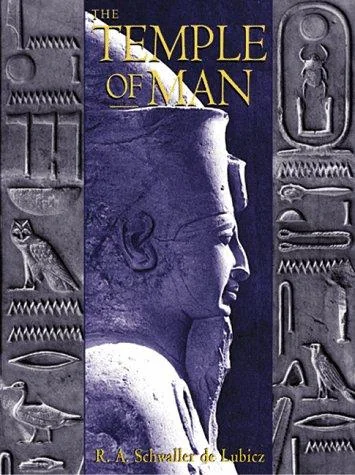
Luxor’s stones whisper the secret of human divinity through sacred geometry.
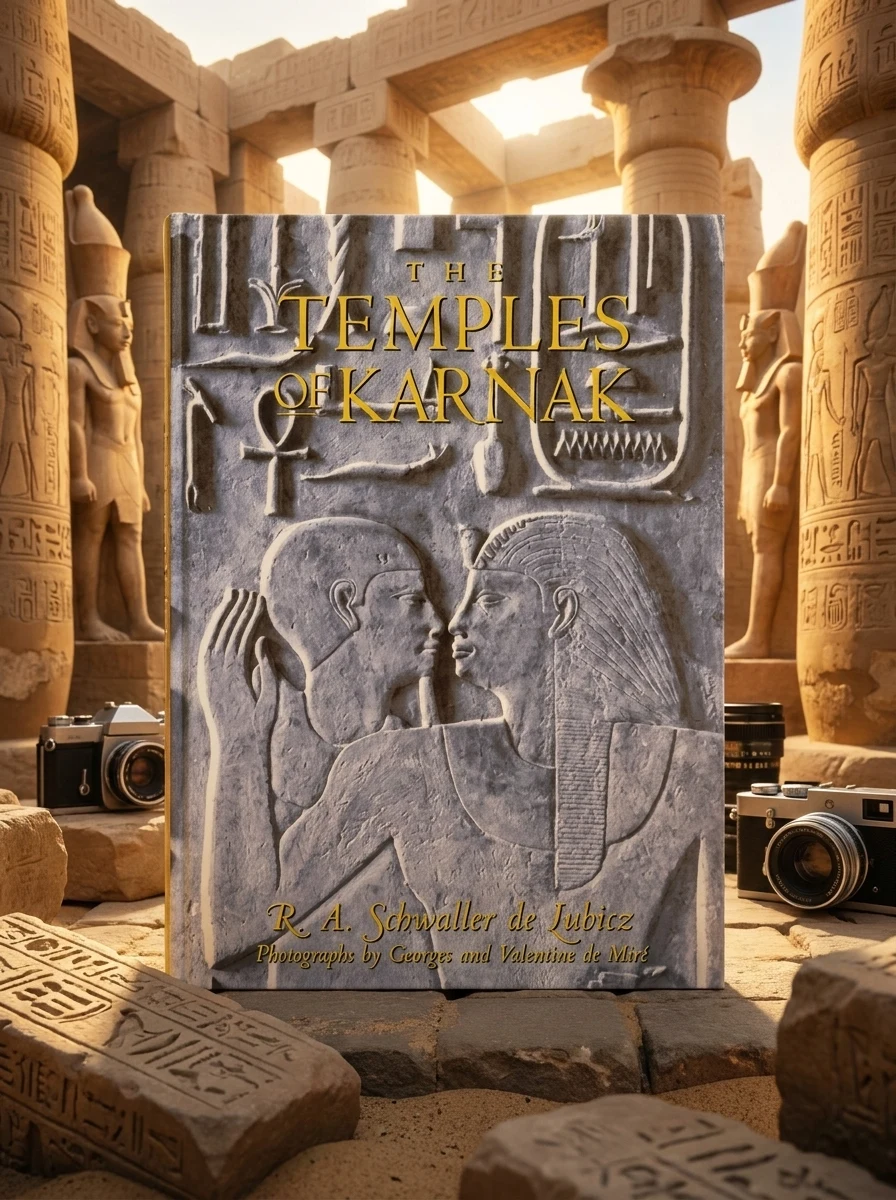
R.A. Schwaller de Lubicz spent twelve years immersed in the Karnak-Luxor complex, emerging with a radical thesis: the temple is not merely a place of worship but a physical representation of the human body and soul. He argues that Egyptian architecture encodes precise mathematical and symbolic laws governing spiritual evolution. By decoding these geometric relationships, readers can understand how the ancients viewed the perfect man as a microcosm of the universe, blending mind, body, and spirit into a unified sacred whole.
This work emerges from the esoteric interpretation of ancient Egyptian symbolism, bridging traditional Egyptology with Hermetic philosophy and sacred geometry. It sits firmly within the lineage of spiritual anthropology that views physical structures as encoded vessels for metaphysical truth.


📝 Description: The Temple in Man: Sacred Architecture and the Perfect Man (Original)
💎 Expert review
📖 Why choose it
Why this book is worth reading
Readers seeking a profound synthesis of architecture, biology, and spirituality will find this text indispensable. It appeals specifically to those who suspect that ancient temples were not mere tombs or shrines, but sophisticated instruments for human transformation. If you are drawn to the idea that geometry holds the key to unlocking divine consciousness within the human form, this book offers a rigorous, immersive path. It is ideal for scholars of sacred art and seekers interested in how spatial design influences inner evolution. The author’s twelve-year dedication provides a depth of insight that rewards patient readers with a unified vision of the perfect man as a microcosm of the universe.
⭐ Reader reviews
Reader rating
Grabbed this during a weekend order. Not a light read, but far more accessible than I feared. A few pages arrived with light corner wear, though nothing serious. Still worth having on the shelf.
I've read excerpts online before, but having the full text is different. The symbolism is layered and generous to patient readers. If you're drawn to this subject, don't hesitate.
First purchase from this shop. It's become a regular reference in my practice. The language takes some getting used to, but it becomes part of the charm. Still worth having on the shelf.
This edition finally does the material justice. The text itself is dense but rewarding — you get out what you put in. It's become a regular reference in my practice. My only quibble is the cover feels thinner than expected. Recommended with reservations.
Finally got around to ordering this. The print is clean and easy on the eyes for long sessions. Great value for what you get.
A friend in my study group recommended this one. Some sections stopped me cold in the best way. Some archaic spellings slow things down. Good, with the caveats above.
Schwaller de Lubicz presents a radical thesis that demands intellectual rigor and an open mind. While his decoding of Karnak’s geometric laws is compelling for those invested in sacred geometry, it may frustrate readers preferring conventional historical analysis or empirical archaeology. The text is dense with symbolic interpretation rather than factual recounting, making it unsuitable for those seeking straightforward historical narratives or scientific validation. It requires a willingness to accept metaphysical premises as foundational truths. Readers who dislike abstract philosophical speculation or who approach Egyptology from a strictly materialist perspective will likely find the content alienating and unconvincing despite its elegant internal logic.
❓ Frequently asked questions
📖 Who should read this
Seekers interested in the intersection of architecture, metaphysics, and ancient wisdom traditions who wish to explore how spatial design reflects inner spiritual states.
🎯 Key themes and symbolism
Sacred Geometry
Egyptian Mysticism
Anthropological Symbolism
💬 Quotes from the book
“The temple is the body of the god made visible.”
“Mathematics is the language in which God has written the universe.”
📜 Historical context
📚 Glossary
- Microcosm
- Sacred Geometry
- Luxor Complex
📔 Questions to reflect on
- How does the spatial arrangement of your personal sanctuary reflect your inner state?
- What mathematical patterns do you observe in nature that suggest hidden order?
- In what ways do you view your physical body as a vessel for spiritual expression?
✍️ More books by this author Schwaller De Lubicz, R A
All books by this author →
 89
89
 82
82
🏛 Books from this publisher Inner Traditions International
All books from this publisher →



You might also like
See more →