US shipping Secure card payment Occult and esoteric books

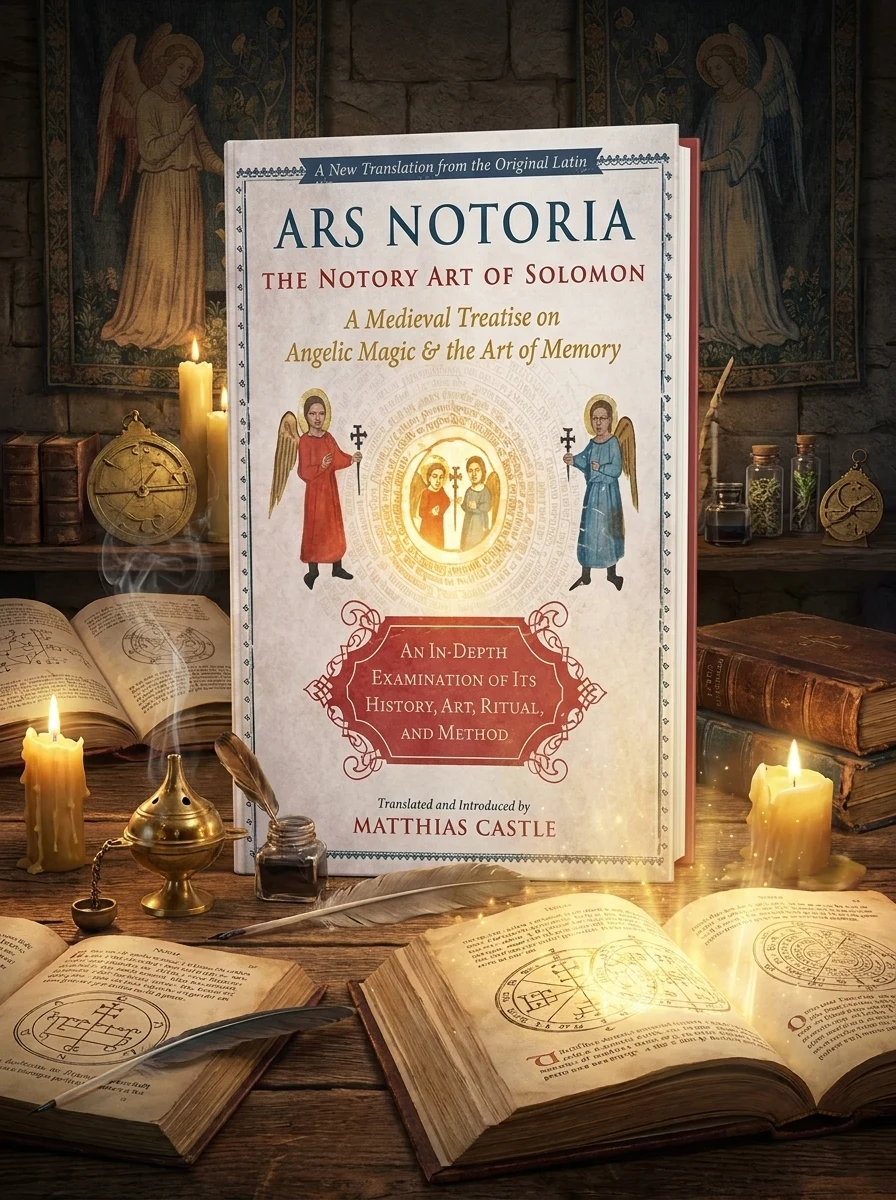
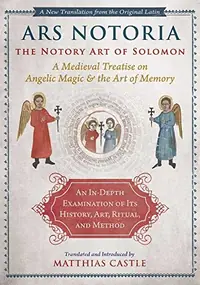
Ars Notoria: The Notory Art of Solomon: A Medieval Treatise on Angelic Magic and the Art of Memory

Castle, Matthias; , Castle, Matthias
Reader rating
4.5
(1 reviews) 174 sold
Availability to be confirmed

This edition can be ordered. No arrival date is confirmed.

📚 ABOUT THE BOOK

Unlock King Solomon's secret to divine wisdom through angelic magic and the art of memory.

This groundbreaking translation reveals the medieval grimoire, "Ars Notoria," detailing how King Solomon purportedly gained his legendary intellect. Delve into ancient rituals, prayers, and intricate figures designed to rapidly acquire scholastic knowledge through angelic communication. This comprehensive edition brings together various versions, including the short and long "Ars Notoria," along with "The Work of Works," "The Short Art," and "The Pauline Art." It meticulously presents all original ritual diagrams, offering unparalleled insight into a pivotal text of esoteric tradition.

Key themes
Angelic Magic Rituals Rapid Knowledge Acquisition Solomonic Esoteric Tradition
Historical context

This text belongs to the medieval esoteric tradition, specifically focusing on the intersection of angelic magic and the classical art of memory as practiced in Solomon's name. It represents a pivotal moment in occult history where scholarly acquisition was sought through supernatural means rather than mere study.


Difficulty
●●● Demanding
Fans will love it
Giordano Bruno · Heinrich Cornelius Agrippa · The Key of Solomon · Medieval Grimoires
🕯️ Occult Philosophy
🏛 Inner Traditions International 📅 2023 📖 896 pages 📔 Hardcover 📐 Hardcover ISBN: 9781644115275
Fun fact
This new translation of "Ars Notoria" is a monumental achievement, offering unprecedented access to a cornerstone of medieval magic. Matthias Castle's meticulous work presents not only the core text but also vital associated works and, crucially, all the original ritual figures. It will undoubtedly satisfy serious scholars and practitioners alike, providing deep insights into a complex magical tradition. However, those expecting a simple spellbook for instant results may find its scholarly depth and historical context demanding. It stands as an indispensable reference in the study of Solomonic magic and the history of esotericism.

📝 Description: Ars Notoria: The Notory Art of Solomon: A Medieval Treatise on Angelic Magic and the Art of Memory

A new translation of the classic magical text from the original Latin - Learn how medieval magicians conducted the rituals of angelic magic for quickly learning scholastic knowledge by means of prayers and figures - Provides a complete translation of Ars Notoria, both the short and long versions based on Julien Veronese's critical Latin edition - Includes the first translation of The Work of Works ( Opus Operum), The Short Art ( Ars Brevis), the abridged version attributed to Thomas of Toledo, and The Pauline Art ( Ars Paulina) - Presents all of the original figures ( notae), essential for inspection during ritual The magical treatise Ars Notoria offers a secret account of how King Solomon gained his famed wisdom and learning through sacred magic, revealed to him by the angel Pamphilius, thereby expanding upon the biblical narrative of Solomon's vision from God. Solomon's magical writings were transmitted to the first-century philosopher Apollonius of Tyana, who provided a commentary titled Flores Aurei (Golden Flowers) that is contained within Ars Notoria. Ars Notoria first appeared in the 13th century, when its prayers and techniques for rapidly acquiring the seven liberal arts--grammar, logic, rhetoric, arithmetic, music, geometry, and astronomy-- made it the earliest representation of European angel magic. The text presents a complete system of magic consisting of prayers addressed to angels, using figures called notae, for the purpose of gaining scholastic and heavenly knowledge. Due to its rising popularity among university students, the magical ritual was reworked time and again, producing five treatises dating from the 13th to 15th centuries-- Opus Operum (Work of Works), Liber Florum Celestis Doctrine (Book of Flowers of Heavenly Teaching) composed by John of Morigny, Ars Brevis (Short Art), Ars Abbreviata (an abridged version attributed to Thomas of Toledo), and Ars Paulina (Pauline Art [of the Seven Figures])--thereby establishing an entire notorial art tradition. In this new and complete translation of Ars Notoria, based on Julien Véronèse's critical Latin edition, translator Matthias Castle presents--for the first time in English--the complete classic magical text, both short and long versions, including four of the later treatises. Castle explains how these theurgic ritual practices were performed, giving special attention to all the original pictorial figures ( notae), and how the art of memory relates to angelic magic. Providing practical instruction, extensive commentary, and in-depth background research and annotations, Ars Notoria: The Notory Art of Solomon is an essential sourcebook on angelic magic for scholars and magicians alike.

💎 Expert review

💎
Esoterica Books editorial team
Occult literature desk
This translation is a significant contribution for those specifically researching medieval grimoires and angelic invocations. However, it may not suit casual readers of fantasy or modern self-help books seeking quick fixes without historical context. The dense nature of the rituals and the academic rigor required to understand the art of memory might alienate those expecting straightforward narrative or simple magical instructions. It is best approached by historians, serious occultists, or students of medieval philosophy who are prepared to engage with complex theological concepts and intricate ritual diagrams. For anyone looking for a light read or modern interpretations of magic, this scholarly compilation will likely feel too academic and structurally rigid.
✓ EDITOR'S REVIEW

📖 Why choose it

📖

Why this book is worth reading

Scholars of medieval history and practitioners of high magic will find this edition indispensable for its comprehensive approach to the Ars Notoria. By bringing together various versions, including the short and long texts alongside The Work of Works and The Pauline Art, it offers a rare, unified view of how angelic communication was utilized for intellectual enhancement. Readers interested in the mechanics of memory arts and the specific rituals designed to accelerate scholastic knowledge will appreciate the meticulous presentation of original diagrams. It serves as a vital resource for understanding how King Solomon’s legendary intellect was mythologically constructed through these intricate, divine procedures, providing unparalleled insight into a foundational esoteric text.

⭐ Reader reviews

The starting rating comes from the team Esoterica Books —
⭐ Esoterica editorial review Editorial rating 4.5/5
★★★★
If you are a serious student of medieval magic, grimoire traditions, or the esoteric pursuit of knowledge, this work offers profound insights. Those interested in the historical intersection of magic, religion, and the art of memory will find it invaluable.

Reader rating

4.5
Based on 1 reviews
5
0
4
1
3
0
2
0
1
0
E
Esoterica Books editorial team

This translation is a significant contribution for those specifically researching medieval grimoires and angelic invocations. However, it may not suit casual readers of fantasy or modern self-help books seeking quick fixes without historical context. The dense nature of the rituals and the academic rigor required to understand the art of memory might alienate those expecting straightforward narrative or simple magical instructions. It is best approached by historians, serious occultists, or students of medieval philosophy who are prepared to engage with complex theological concepts and intricate ritual diagrams. For anyone looking for a light read or modern interpretations of magic, this scholarly compilation will likely feel too academic and structurally rigid.

❓ Frequently asked questions

Its primary goal is to provide a magical system, through prayers and ritual figures, for the rapid acquisition of intellectual knowledge, particularly the seven liberal arts, by means of angelic communication.
This edition offers a comprehensive, new translation of both the short and long versions of "Ars Notoria," alongside other related texts like "The Work of Works." Crucially, it includes all the original ritual figures (notae), essential for the practice described.

📖 Who should read this

If you are a serious student of medieval magic, grimoire traditions, or the esoteric pursuit of knowledge, this work offers profound insights. Those interested in the historical intersection of magic, religion, and the art of memory will find it invaluable.

🎯 Key themes and symbolism

Angelic Magic Rituals

The book meticulously outlines specific prayers, invocations, and practices aimed at communicating with celestial entities. It details how medieval practitioners sought direct angelic assistance to impart profound intellectual understanding and memory, moving beyond conventional study methods into the realm of divine revelation.

Rapid Knowledge Acquisition

At its heart, "Ars Notoria" is a system designed for the swift and supernatural attainment of the seven liberal arts and other scholastic wisdom. It promises an accelerated path to erudition, suggesting that through its rites, one could bypass years of study, absorbing complex subjects almost instantly.

Solomonic Esoteric Tradition

This work positions itself firmly within the Solomonic magical corpus, claiming to reveal the method by which King Solomon acquired his famed wisdom, attributed to the angel Pamphilius. It expands upon biblical narratives, intertwining ancient Jewish mysticism with medieval Christian and pagan magical elements, forming a unique historical magical synthesis.

💬 Quotes from the book

“Let the seeker of truth prepare their spirit, for through these sacred invocations, the very fount of knowledge shall be unveiled.”

“Behold the sigils and forms, for in their precise contemplation lies the key to unlocking the mind's hidden chambers and angelic revelation.”

📜 Historical context

Originating in the 13th century, "Ars Notoria" emerged during a period of intense intellectual and spiritual ferment in Europe. It purports to transmit Solomon's wisdom through Apollonius of Tyana, linking biblical figures with classical esotericism. Its focus on acquiring scholastic knowledge reflects the scholasticism of its era, offering a magical shortcut to the coveted liberal arts.

📚 Glossary

Ars Notoria
Notae
Angel Pamphilius

📔 Questions to reflect on

  1. How does the concept of gaining knowledge through angelic intervention challenge or align with your own understanding of learning and wisdom?
  2. Consider the historical context of the 13th century. Why might a text promising rapid intellectual mastery have held such appeal during that period?
  3. If you were to adapt a modern 'Art of Memory' or 'Notory Art,' what elements would you incorporate to enhance learning and understanding in today's world?

🏛 Books from this publisher Inner Traditions International

All books from this publisher →
You might also like

See more →