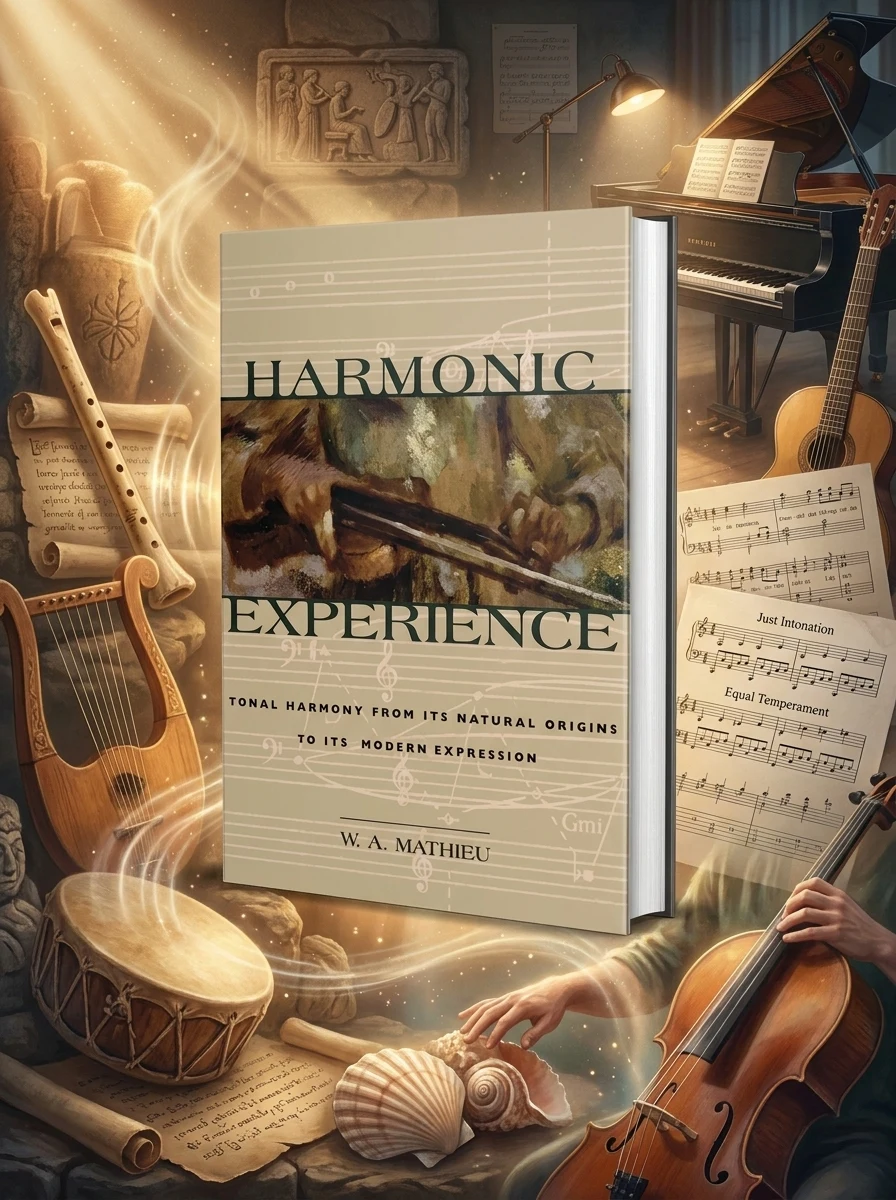
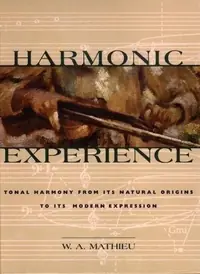
Harmonic Experience: Tonal Harmony from Its Natural Origins to Its Modern Expression
Stock reported in the catalog; fulfillment is confirmed with your request.
Music lives in the body’s resonance, not the mind’s abstraction.
This volume bridges the chasm between ancient just intonation and modern twelve-tone temperament, arguing that harmonic rules emerge from biological resonance rather than intellectual construction. Mathieu invites readers to feel the physics of sound, explaining why specific tonal combinations trigger deep emotional and spiritual responses. Through rhythmic prose and practical examples, the text guides musicians to reconnect with music’s primal origins, transforming theoretical study into a visceral, embodied experience that reveals the hidden spiritual architecture of harmony.
This work sits within the esoteric music theory tradition, exploring the metaphysical origins of tonal harmony through the lens of natural physics and biological resonance rather than conventional academic musicology.


📝 Description: Harmonic Experience: Tonal Harmony from Its Natural Origins to Its Modern Expression
💎 Expert review
📖 Why choose it
Why this book is worth reading
Musicians and spiritual seekers who feel disconnected from modern twelve-tone temperament will find profound solace in Mathieu’s invitation to reclaim music as a visceral, embodied experience. This book is ideal for those who sense that harmonic rules are not intellectual constructs but emerge from biological resonance and the body’s natural physics. By bridging ancient just intonation with contemporary expression, it offers a pathway to reconnect with music’s primal origins. Readers seeking to understand why specific tonal combinations trigger deep emotional responses will gain a new framework for viewing harmony as spiritual architecture. It transforms theoretical study into a felt practice, appealing to anyone wishing to feel the hidden architecture of sound rather than merely analyze it on paper.
⭐ Reader reviews
Reader rating
My third book from this store and this one might be the best. The language takes some getting used to, but it becomes part of the charm. Good, with the caveats above.
As someone who reads a lot in this field, I can be picky. The symbolism is layered and generous to patient readers. The print is clean and easy on the eyes for long sessions. The font runs small in the appendices. Recommended with reservations.
Added this to my reference shelf. You can tell why this work has endured. Five stars from me.
This edition finally does the material justice. The language takes some getting used to, but it becomes part of the charm. Happy enough with the purchase.
Came across this title in a footnote and had to track it down. Every rereading turns up something I missed. If you're drawn to this subject, don't hesitate.
Mathieu’s text is a compelling, if dense, exploration of tonal harmony’s natural origins. The rhythmic prose effectively guides musicians toward an embodied understanding of physics and spirit in sound. However, this volume does not suit readers seeking dry, traditional music theory or those who prefer strictly intellectual analysis over visceral experience. It assumes a willingness to engage with esoteric concepts of resonance as spiritual architecture. While the argument for biological basis is intriguing, it may feel abstract to those uninterested in the metaphysical implications of acoustics. It is best approached by open-minded practitioners ready to explore the chasm between ancient and modern tuning systems through feeling rather than just logic.
❓ Frequently asked questions
📖 Who should read this
If you feel disconnected from the emotional core of music, or if you seek a holistic understanding of harmony that honors both scientific accuracy and spiritual depth, this text offers the missing link between technique and transcendence.
🎯 Key themes and symbolism
Just Intonation
Embodied Resonance
Spiritual Harmony
💬 Quotes from the book
“The rules of music were not formed in our brains but in the resonance chambers of our bodies.”
“Saying that the way we think music is far from the way we do music.”
📜 Historical context
📚 Glossary
- Just Intonation
- Twelve-Tone Temperament
- Resonance Chambers
📔 Questions to reflect on
- When was the last time a chord made you feel physically present in your body rather than just analyzing its structure?
- How does your perception of 'rightness' in harmony shift when you consider acoustic physics over cultural conditioning?
- What emotions arise when you prioritize listening to the overtone series rather than the root note?
🏛 Books from this publisher Inner Traditions International
All books from this publisher →



You might also like
See more →

 91
91