
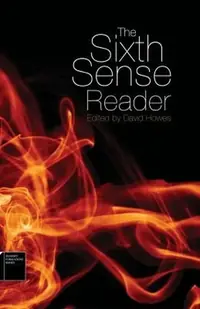
The Sixth Sense Reader Howes, David
 82
82
 Editorial score
How we rate
Editorial score
How we rate
Stock reported in the catalog; fulfillment is confirmed with your request.
Explore the cultural roots of extrasensory perception in this interdisciplinary tour of consciousness.
This volume dismantles the rigid boundaries of the five senses, inviting readers into a rigorous academic exploration of extrasensory phenomena. Scholars from anthropology, history, and biology converge to examine how culture shapes our understanding of clairvoyance, telepathy, and precognition. Rather than dismissing these experiences as mere myth, the text investigates the biological and social frameworks that allow individuals to report perceptions beyond the physical body. It challenges the reader to reconsider the very definition of reality and the potential for additional perceptual faculties that exist just beyond the ordinary threshold of human experience.
This volume sits at the intersection of academic anthropology and esoteric philosophy, bridging the gap between scientific inquiry and occult studies. It reflects a contemporary scholarly effort to legitimize extrasensory perception through rigorous interdisciplinary analysis rather than mystical dogma.


📝 Description: The Sixth Sense Reader Howes, David
💎 Expert review
📖 Why choose it
Why this book is worth reading
Readers with an intellectual curiosity about the boundaries of human perception will find this book profoundly stimulating. It is ideal for those who wish to explore extrasensory phenomena without abandoning critical thought or academic rigor. By examining how culture shapes our understanding of clairvoyance and telepathy, the text offers a unique framework for redefining reality. Scholars, philosophers, and serious occultists alike will appreciate its interdisciplinary approach, which validates these experiences through biological and social lenses rather than dismissing them as myth. It provides a sophisticated foundation for anyone seeking to understand the potential for additional perceptual faculties beyond the ordinary physical threshold.
⭐ Reader reviews
Reader rating
Added this to my reference shelf. The ideas are old but land with surprising force today. It assumes more background than a beginner might have.
Bought this as a gift for my sister and ended up ordering a second copy for myself. Some sections stopped me cold in the best way. The typesetting is comfortable for study, with good margins for notes. Delivery took a bit longer than quoted. Good, with the caveats above.
Honestly wasn't sure what to expect, but I'm impressed. It rewards patience more than any book I've bought this year. Some archaic spellings slow things down. Still worth having on the shelf.
This work is a dense, scholarly examination that may alienate casual readers seeking practical psychic training or mystical anecdotes. It is strictly for those willing to engage with complex anthropological and biological theories regarding consciousness. Readers expecting straightforward occult instructions or supernatural validation will likely find the tone too detached and academic. However, for those interested in the cultural roots of ESP and the societal frameworks that allow individuals to report non-physical perceptions, it offers a compelling, rigorous perspective. It does not suit skeptics looking for easy dismissal nor enthusiasts seeking immediate experiential results.
❓ Frequently asked questions
📖 Who should read this
Readers fascinated by the intersection of anthropology and the paranormal will find this essential. It suits those tired of superficial occult guides, preferring instead a scholarly, evidence-based inquiry into the history and biology of psychic phenomena.
🎯 Key themes and symbolism
Cultural Construction of ESP
The text argues that extrasensory perception is not a universal constant but a variable shaped by cultural narratives. It analyzes how different societies interpret and validate psychic experiences, revealing that what one culture sees as supernatural, another may view as a natural, albeit rare, extension of human sensory capacity.
Biology of the Sixth Sense
Moving beyond mysticism, this section grounds psychic reports in biological reality. It explores the physiological mechanisms that might allow for non-local awareness, questioning whether the brain can process information outside standard sensory inputs, thereby bridging the gap between neuroscience and the paranormal.
Borders of Consciousness
The work maps the liminal spaces of awareness, examining states like dreaming and trance as gateways to expanded perception. It treats these borderlands not as aberrations but as critical zones where the distinction between the self and the external world becomes porous, offering new avenues for understanding human cognition.
💬 Quotes from the book
“From the world beneath to the world beyond the five senses, every potential avenue of sensation is opened up for investigation.”
“The search for a supplementary sense has taken many directions and yielded numerous possibilities.”
📜 Historical context
📚 Glossary
- Extrasensory Perception
- Cultural Context
- Liminality
📔 Questions to reflect on
- When have you experienced a moment where your perception felt detached from your physical senses?
- How does your cultural background influence your belief in or skepticism of psychic phenomena?
- What biological or psychological state do you think is most conducive to expanded awareness?
🏛 Books from this publisher Routledge
All books from this publisher →
 89
89
You might also like
See more → 91
91
 91
91
 90
90
 90
90