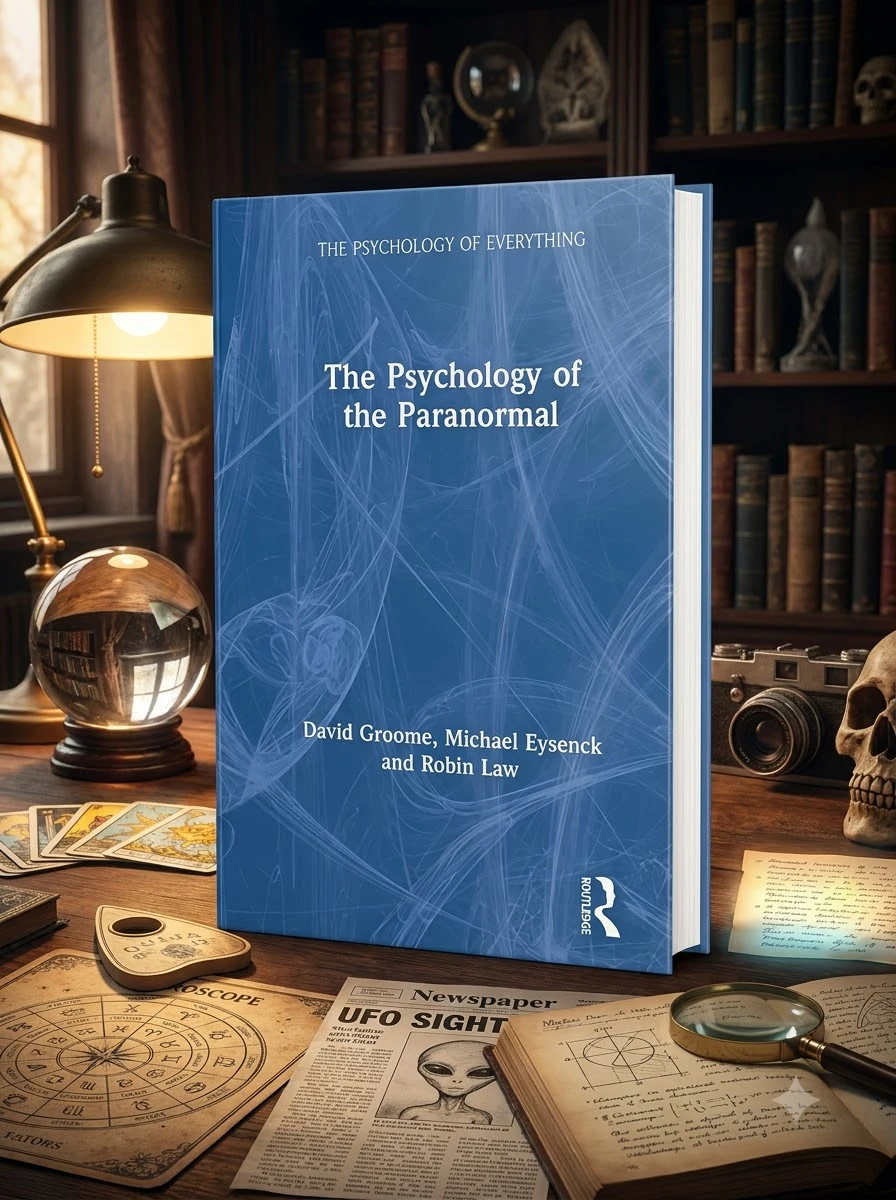
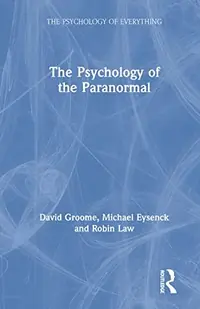
The Psychology of the Paranormal Groome, David
 90
90
 Editorial score
How we rate
Editorial score
How we rate
This edition can be ordered. No arrival date is confirmed.
Unravel the mind's mysteries: where belief in the impossible meets psychological exploration.
This insightful volume delves into the psychological underpinnings of why individuals embrace beliefs in phenomena that defy conventional scientific explanation. Authors Groome, Eysenck, and Law meticulously examine experiences like psychic communication, astrological influence, and purported alien encounters. Instead of simply dismissing these occurrences, the book explores how psychologists approach such claims through empirical investigation, shedding light on the fundamental mechanisms of human perception, memory, and cognitive biases. It’s a compelling journey into the mind's capacity for belief, revealing why the allure of the paranormal persists despite rational scrutiny.
This work sits at the intersection of contemporary cognitive psychology and esoteric studies, offering an empirical lens on long-standing occult interests. It reflects a modern scholarly trend that seeks to understand rather than merely debunk paranormal beliefs through rigorous psychological frameworks.


📝 Description: The Psychology of the Paranormal Groome, David
💎 Expert review
📖 Why choose it
Why this book is worth reading
Readers fascinated by the intersection of mind and mystery will find this volume deeply rewarding. It is ideal for those who have explored occult philosophies but seek a scientific grounding for their curiosity. By examining cognitive biases and perception, it offers validation for believers while providing rational explanations for skeptics. This book serves as a bridge, allowing enthusiasts to appreciate the psychological allure of the paranormal without abandoning critical thinking. It empowers readers to understand why they are drawn to phenomena like astrology or psychic communication, transforming vague fascination into informed self-awareness. For anyone who has ever wondered about the mechanics of belief itself, this text provides a compelling and accessible journey through the complexities of human cognition.
⭐ Reader reviews
Reader rating
Groome, Eysenck, and Law deliver a meticulous examination of paranormal belief that is both insightful and grounded in empirical investigation. The authors successfully avoid dismissal, instead exploring the fundamental mechanisms of memory and perception that fuel such convictions. However, readers seeking definitive proof of supernatural phenomena or those who prefer purely mystical narratives without scientific interference will likely find this text unsatisfying. It is strictly an academic exploration of why we believe, not a guide to practicing the occult. Those looking for esoteric instruction rather than psychological analysis may feel disconnected from the rigid focus on cognitive biases and rational scrutiny presented throughout.
❓ Frequently asked questions
📖 Who should read this
If you're fascinated by the intersection of the human mind and extraordinary claims, or if you seek a balanced, psychologically informed perspective on everything from ESP to alien encounters, this book is for you. It offers intellectual rigor without dismissing the power of belief.
🎯 Key themes and symbolism
Unpacking Psychic Experiences
This book meticulously analyzes claims of extra-sensory perception and psychic abilities. It doesn't just dismiss them, but explores the psychological experiments conducted to test these phenomena, offering insights into human perception, illusion, and the subtle ways our minds interpret ambiguous information, revealing the intricate dance between belief and empirical observation.
Astrology and Human Belief
Explore the deep-seated human need to find meaning and order in the cosmos, specifically through astrology. The authors delve into the psychological appeal of horoscopes and predestination, examining the cognitive biases and social factors that contribute to the widespread belief in celestial influence, even in the absence of scientific validation.
Explaining Extraordinary Claims
Addresses the powerful narratives surrounding alien abduction experiences, moving beyond simple skepticism. The text investigates the cognitive and psychological factors—such as memory distortions, sleep paralysis, and suggestibility—that can contribute to vivid, personally transformative, yet scientifically unverified accounts, offering a psychological lens on seemingly inexplicable events.
💬 Quotes from the book
“The enduring human fascination with the inexplicable is not merely a testament to credulity, but to the intricate workings of a mind constantly seeking patterns and meaning, even where none overtly exist.”
“Understanding the subjective experience of alien abduction requires a rigorous examination of memory, perception, and suggestibility, offering a framework beyond simple acceptance or rejection of the narrative.”
📜 Historical context
📚 Glossary
- Clairvoyance
- Cognitive Bias
- Extra-Sensory Perception (ESP)
📔 Questions to reflect on
- Reflect on a personal belief you hold that lacks scientific consensus. What psychological factors might contribute to its persistence for you?
- How might cognitive biases, discussed in the book, influence your interpretation of everyday 'coincidences' or seemingly anomalous events?
- Beyond the scientific explanations, what do you think is the deeper human need that phenomena like astrology or psychic readings fulfill?
🏛 Books from this publisher Routledge
All books from this publisher →
 89
89


You might also like
See more → 91
91
 91
91

 90
90
 90
90