US shipping Secure card payment Occult and esoteric books

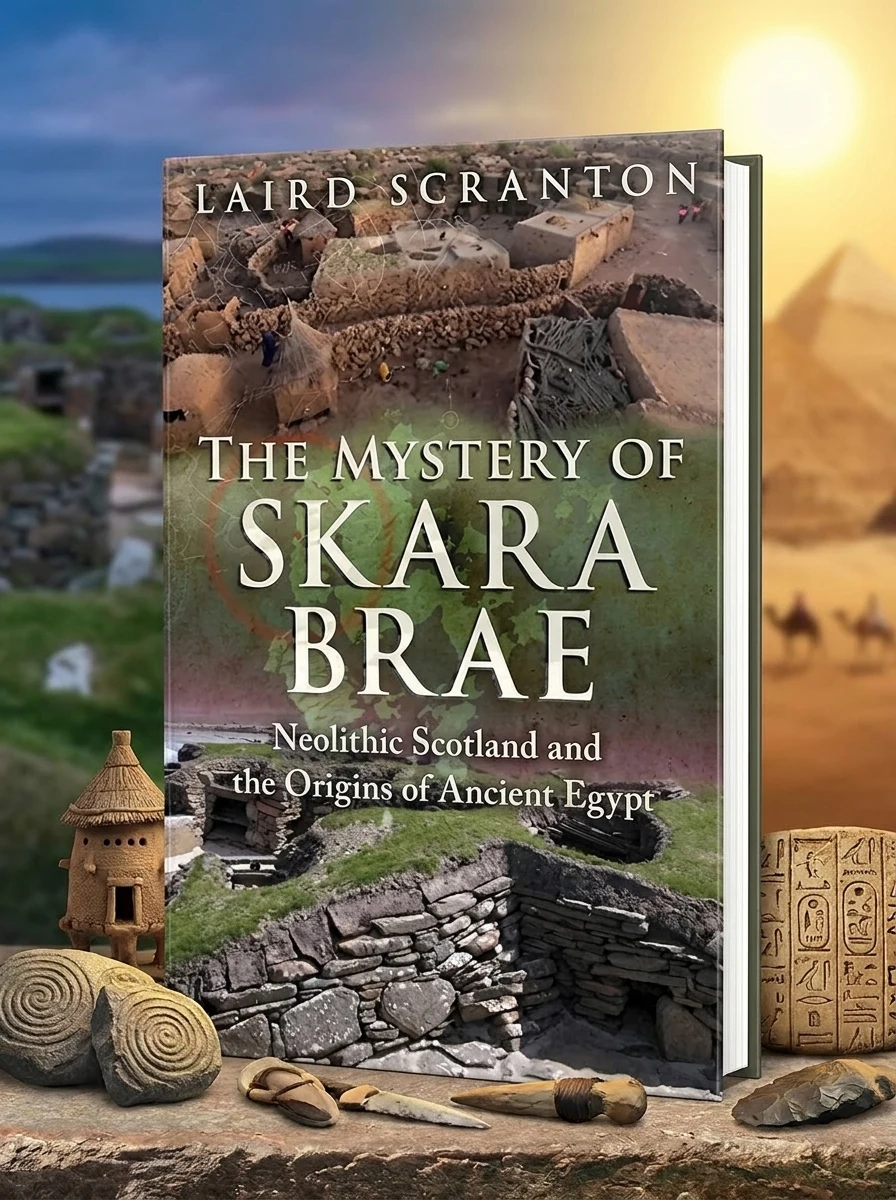
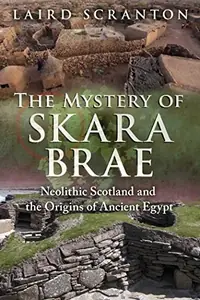
The Mystery of Skara Brae: Neolithic Scotland and the Origins of Ancient Egypt

Scranton, Laird
Reader rating
4.4
(1 reviews) 43 sold
Availability to be confirmed

This edition can be ordered. No arrival date is confirmed.

📚 ABOUT THE BOOK

Uncover the hidden links between Neolithic Scotland and the cosmic wisdom of ancient Egypt.

This book delves into the enigmatic Neolithic settlement of Skara Brae, a meticulously preserved village on Orkney Island, abandoned mysteriously around 2600 BC. Laird Scranton meticulously unearths astonishing parallels between Skara Brae’s architecture and the cosmology of ancient Egypt, as preserved by the Dogon people of Mali. He suggests these striking resemblances, including alignment with Dogon sacred knowledge, indicate a shared, ancient wisdom tradition. The work proposes Skara Brae may have functioned as a vital, secondary learning center, hinting at a global network of profound knowledge predating known civilizations and even echoing sites like Gobekli Tepe.

Key themes
Ancient Cosmological Connections Skara Brae's Enigma Global Knowledge Networks
Historical context

This work sits at the intersection of alternative archaeology and esoteric philosophy, exploring the concept of a unified ancient wisdom tradition that predates established civilizations. It challenges mainstream historical narratives by suggesting deep, mystical connections between distant Neolithic sites and later Egyptian cosmology.


Difficulty
●●● Demanding
Fans will love it
John Anthony West · Erik von Däniken · Graham Hancock
🕯️ Occult Philosophy
🏛 Inner Traditions International 📅 2016 📖 208 pages 📔 Paperback 📐 Paperback ISBN: 9781620555736
Fun fact
Scranton excels at weaving an intricate tapestry of comparative mythology, presenting compelling visual and linguistic parallels that suggest a profound, shared ancient wisdom. This book will captivate readers fascinated by alternative histories and the 'out-of-place artifact' phenomenon. However, traditional archaeologists seeking empirically verifiable proof will likely find its conclusions speculative. It firmly positions itself within the esoteric history genre, offering a bold reinterpretation of our ancient past.

📝 Description: The Mystery of Skara Brae: Neolithic Scotland and the Origins of Ancient Egypt

An investigation of the origins of the Neolithic farming village on Orkney Island - Reveals the striking similarities between Skara Brae and the traditions of pre-dynastic ancient Egypt as preserved by the Dogon people of Mali - Explains how megalithic stone sites near Skara Brae conform to Dogon cosmology - Examines the similarities between Skara Brae and Gobekli Tepe and how Skara Brae may have been a secondary center of learning for the ancient world In 3200 BC, Orkney Island off the coast of Northern Scotland was home to a small farming village called Skara Brae. For reasons unknown, after nearly six centuries of continuous habitation, the village was abandoned around 2600 BC and its stone structures covered over--perhaps deliberately, like the structures at Gobekli Tepe. Although now well-excavated, very little is known about the peaceful people who lived at Skara Brae or their origins. Who were they and where did they go? Drawing on his in-depth knowledge of the connections between the cosmology and linguistics of Egyptian, Dogon, Chinese, and Vedic traditions, Laird Scranton reveals the striking similarities between Skara Brae and the Dogon of Mali, who still practice the same cosmology and traditions they once shared with pre-dynastic Egypt. He shows how the earliest Skara Brae houses match the typical Dogon stone house as well as Schwaller de Lubicz's intrepretation of the Egyptian Temple of Man at Luxor. He explains how megalithic stone sites near Skara Brae conform to Dogon cosmology, each representing sequential stages of creation as described by Dogon priests, and he details how the houses at Skara Brae also represent a concept of creation. Citing a linguistic phenomenon known as "ultraconserved words," the author compares words of the Faroese language at Skara Brae, a language with no known origin, with important cosmological words from Dogon and ancient Egyptian traditions, finding obvious connections and similarities. Scranton shows how the cultivated field alongside the village of Skara Brae corresponds to the "heavenly field" symbolism pervasive throughout many ancient cultures, such as the Field of Reeds of the ancient Egyptians and the Elysian Fields of ancient Greece. He demonstrates how Greek and Egyptian geographic descriptions of these fields are a consistent match with Orkney Island. Examining the similarities between Skara Brae and Gobekli Tepe, Scranton reveals that Skara Brae may have been a secondary center of initiation and civilizing knowledge, a long-lost Egyptian mystery school set up millennia after Gobekli Tepe was ritually buried, and given the timing of the site, is possibly the source of the first pharaohs and priests of ancient Egypt.

💎 Expert review

💎
Esoterica Books editorial team
Occult literature desk
Scranton’s thesis is bold, linking Neolithic Orkney directly to Egyptian cosmology via Dogon traditions. While intellectually stimulating for those open to alternative histories, it will likely frustrate readers seeking rigorous, peer-reviewed archaeological consensus. Skeptics of pre-dynastic global networks may find the parallels speculative rather than conclusive. However, for enthusiasts of esoteric history and comparative mythology, it offers a rich tapestry of connections that challenge standard timelines. It does not suit those who demand strict materialist archaeology over symbolic interpretation.
✓ EDITOR'S REVIEW

📖 Why choose it

📖

Why this book is worth reading

Readers fascinated by the mysteries of ancient civilizations and the possibility of a shared, global esoteric heritage will find this book profoundly engaging. It offers a compelling narrative for those who feel that conventional history leaves gaps in our understanding of human spiritual development. If you are drawn to the idea that Neolithic Scotland and ancient Egypt were part of a single, sophisticated network of knowledge keepers, this text provides the architectural and cosmological evidence to support that view. It is ideal for seekers interested in Dogon sacred knowledge, the enigmatic nature of Skara Brae, and the broader implications of a global wisdom tradition that predates known empires.

⭐ Reader reviews

The starting rating comes from the team Esoterica Books —
⭐ Esoterica editorial review Editorial rating 4.5/5
★★★★
If you're drawn to unresolved historical puzzles, the esoteric roots of ancient cultures, or the possibility of interconnected global wisdom, this book offers a compelling alternative perspective. It challenges conventional narratives and invites you to reconsider the origins of civilization itself.

Reader rating

4.4
Based on 1 reviews
5
0
4
1
3
0
2
0
1
0
E
Esoterica Books editorial team

Scranton’s thesis is bold, linking Neolithic Orkney directly to Egyptian cosmology via Dogon traditions. While intellectually stimulating for those open to alternative histories, it will likely frustrate readers seeking rigorous, peer-reviewed archaeological consensus. Skeptics of pre-dynastic global networks may find the parallels speculative rather than conclusive. However, for enthusiasts of esoteric history and comparative mythology, it offers a rich tapestry of connections that challenge standard timelines. It does not suit those who demand strict materialist archaeology over symbolic interpretation.

❓ Frequently asked questions

No, the author explicitly challenges mainstream archaeological interpretations, suggesting deeper, esoteric connections and a more profound purpose for Skara Brae than generally acknowledged.
Scranton primarily highlights striking structural, symbolic, and cosmological parallels between the architectural layouts of Skara Brae and the preserved traditions of the Dogon people, which he links directly to pre-dynastic Egyptian knowledge.

📖 Who should read this

If you're drawn to unresolved historical puzzles, the esoteric roots of ancient cultures, or the possibility of interconnected global wisdom, this book offers a compelling alternative perspective. It challenges conventional narratives and invites you to reconsider the origins of civilization itself.

🎯 Key themes and symbolism

Ancient Cosmological Connections

Scranton meticulously highlights profound correspondences between Skara Brae’s structure and the sacred cosmology of the Dogon people, who maintain traditions linked to pre-dynastic Egypt. This exploration reveals an astonishingly coherent system of universal knowledge, suggesting a shared, global understanding of the cosmos that transcends geographical and chronological boundaries, hinting at a lost, unifying wisdom.

Skara Brae's Enigma

The book probes the mystery surrounding Skara Brae, a remarkably preserved Neolithic village in Orkney, abandoned abruptly around 2600 BC. Scranton investigates its purpose, the identity of its inhabitants, and the striking structural similarities to other ancient sites. He posits its potential role as a sophisticated center for esoteric learning, challenging conventional archaeological interpretations of its significance.

Global Knowledge Networks

This work proposes that Skara Brae, much like Gobekli Tepe, wasn't an isolated settlement but potentially a node in an ancient, interconnected network of knowledge. Scranton draws on linguistic and cosmological parallels across Egyptian, Dogon, Chinese, and Vedic traditions, suggesting a sophisticated, shared understanding of the universe that influenced multiple cultures long before recorded history, reshaping our view of ancient intellectual exchange.

💬 Quotes from the book

“The meticulous layout of Skara Brae, far from being a simple farming settlement, mirrors an intricate cosmological diagram, echoing the very fabric of the universe as understood by the most ancient initiates.”

“To ignore the uncanny resemblances between the megalithic designs of Orkney and the sacred narratives of the Dogon is to willfully overlook a profound, unifying thread woven through the tapestry of human antiquity.”

📜 Historical context

Scranton's work stands firmly within the tradition of 'ancient mysteries' authors who seek to reconcile archaeological anomalies with alternative historical narratives. Like Graham Hancock or Robert Bauval, he posits advanced, lost civilizations or knowledge systems influencing later cultures, using comparative mythology and symbolism to connect disparate ancient sites and traditions, pushing the boundaries of mainstream historical inquiry.

📚 Glossary

Skara Brae
Dogon Cosmology
Gobekli Tepe

📔 Questions to reflect on

  1. How might the reinterpretation of sites like Skara Brae alter our understanding of the timeline and capabilities of ancient human civilization?
  2. If ancient knowledge systems were globally interconnected, what implications does this have for modern science, spirituality, and our shared human heritage?
  3. Consider the concept of "deliberate covering" of ancient sites. What might be the motivations behind such actions, and what knowledge might have been intentionally concealed?

✍️ More books by this author Scranton, Laird

All books by this author →
🏛 Books from this publisher Inner Traditions International

All books from this publisher →
You might also like

See more →