US shipping Secure card payment Occult and esoteric books

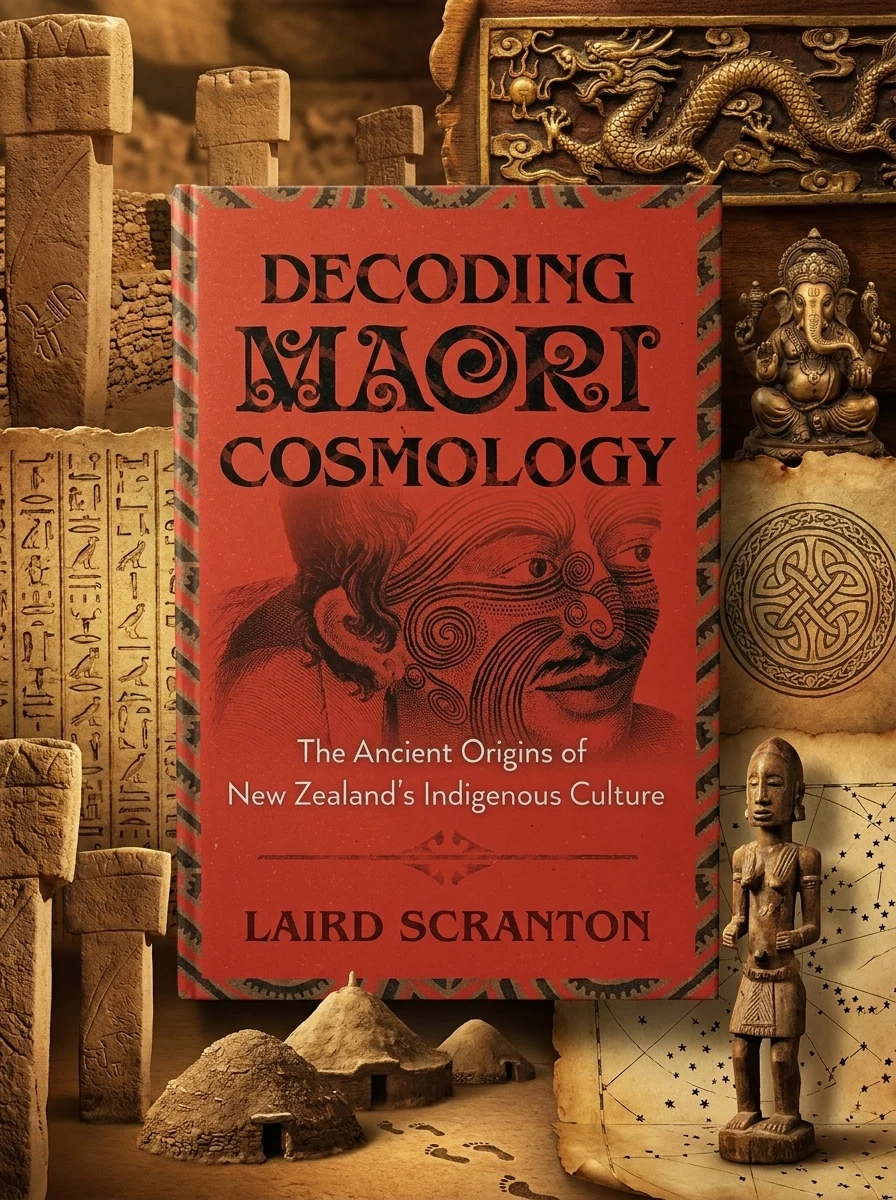
Decoding Maori Cosmology: The Ancient Origins of New Zealand's Indigenous Culture

Scranton, Laird
Reader rating
4.5
(1 reviews) 75 sold
Availability to be confirmed

This edition can be ordered. No arrival date is confirmed.

📚 ABOUT THE BOOK

Uncover astonishing links between Maori cosmology and global ancient civilizations, challenging accepted history.

Laird Scranton meticulously unveils a profound re-evaluation of Maori cosmology, tracing its intricate patterns not just to New Zealand's shores, but to a tapestry of global ancient symbolic traditions. This groundbreaking work posits that the myths, symbols, and linguistic structures of the Maori people echo motifs found in diverse cultures, from the enigmatic Göbekli Tepe to ancient Egypt and the Dogon of Mali. By drawing compelling parallels across continents and millennia, Scranton suggests a far more ancient and interconnected origin for Maori culture than conventionally understood, challenging established timelines and inviting readers to reconsider our shared human heritage.

Key themes
Re-evaluating Maori Origins Echoes of Pygmy Traditions
Historical context

This work sits firmly within the tradition of comparative mythology and esoteric anthropology, exploring the interconnectedness of ancient symbolic systems across diverse global cultures. It challenges conventional historical timelines by proposing deep, ancient links between indigenous traditions and other ancient civilizations.


Difficulty
●● Moderate
Fans will love it
Graham Hancock · Zecharia Sitchin · Rudolf Steiner
⚔️ Norse Magic
🏛 Inner Traditions International 📅 2018 📖 192 pages 📔 Paperback 📐 Paperback ISBN: 9781620557051
Fun fact
Laird Scranton's work is a fascinating, if audacious, intellectual journey. It excels at drawing intricate, often startling, connections between seemingly disparate ancient cultures, offering a compelling argument for a unified symbolic origin. While it will undoubtedly thrill those seeking to unravel ancient mysteries and embrace alternative histories, readers strictly adhering to mainstream academic consensus might find its speculative leaps challenging. This book firmly positions itself within the esoteric tradition of global diffusionism and ancient knowledge.

📝 Description: Decoding Maori Cosmology: The Ancient Origins of New Zealand's Indigenous Culture

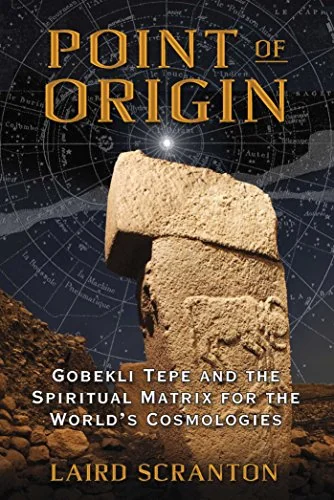
An exploration of New Zealand's Maori cosmology and how it relates to classic ancient symbolic traditions around the world - Shows how Maori myths, symbols, cosmological concepts, and words reflect symbolic elements found at Göbekli Tepe in Turkey - Demonstrates parallels between the Maori cosmological tradition and those of ancient Egypt, China, India, Scotland, and the Dogon of Mali in Africa - Explores the pygmy tradition associated with Maori cosmology, which shares elements of the Little People mythology of Ireland, including matching mound structures and common folk traditions It is generally accepted that the Maori people arrived in New Zealand quite recently, sometime after 1200 AD. However, new evidence suggests that their culture is most likely centuries older with roots that can be traced back to the archaic Göbekli Tepe site in Turkey, built around 10,000 BC. Extending his global cosmology comparisons to New Zealand, Laird Scranton shows how the same cosmological concepts and linguistic roots that began at Göbekli Tepe are also evident in Maori culture and language. These are the same elements that underlie Dogon, ancient Egyptian, and ancient Chinese cosmologies as well as the Sakti Cult of India (a precursor to Vedic, Buddhist, and Hindu traditions) and the Neolithic culture of Orkney Island in northern Scotland. While the cultural and linguistic roots of the Maori are distinctly Polynesian, the author shows how the cosmology in New Zealand was sheltered from outside influences and likely reflects ancient sources better than other Polynesian cultures. In addition to shared creation concepts, he details a multitude of strikingly similar word pronunciations and meanings, shared by Maori language and the Dogon and Egyptian languages, as well as likely connections to various Biblical terms and traditions. He discusses the Maori use of standing stones to denote spiritual spaces and sanctuaries and how their esoteric mystery schools are housed in structures architecturally similar to those commonly found in Ireland. He discusses the symbolism of the Seven Mythic Canoes of the Maori and uncovers symbolic aspects of the elephant-headed Hindu god Ganesha in Maori cosmology. The author also explores the outwardly similar pygmy traditions of Ireland and New Zealand, characterized by matching fairy mound constructions and mythic references in both regions. He reveals how the trail of a group of Little People who vanished from Orkney Island in ancient times might be traced first to Scotland, Ireland, and England and then on to New Zealand, accompanied by signature elements of the global cosmology first seen at Gobekli Tepe.

💎 Expert review

💎
Esoterica Books editorial team
Occult literature desk
Laird Scranton presents a bold re-evaluation of Maori cosmology, arguing for its deep ties to global ancient traditions like those of Egypt and the Dogon. While intellectually stimulating for those open to alternative historical frameworks, this book is not suited for skeptics demanding strict archaeological consensus or readers who prefer straightforward, non-controversial cultural histories. It requires an openness to speculative connections and a willingness to accept that linguistic and symbolic structures may reveal deeper truths than conventional timelines allow. Those seeking definitive proof rather than compelling comparative analysis may find the arguments too abstract.
✓ EDITOR'S REVIEW

📖 Why choose it

📖

Why this book is worth reading

Readers fascinated by the hidden threads connecting disparate ancient cultures will find this book a compelling journey. Those interested in Maori cosmology, comparative mythology, or the origins of symbolic thought will appreciate Scranton’s meticulous unraveling of complex patterns. It is ideal for seekers who enjoy questioning established historical narratives and exploring the possibility of a shared, ancient human heritage that transcends geographic boundaries. If you are drawn to the idea that modern indigenous wisdom preserves echoes of a much older, unified global tradition, this text offers a rigorous and thought-provoking exploration of those connections.

⭐ Reader reviews

The starting rating comes from the team Esoterica Books —
⭐ Esoterica editorial review Editorial rating 4.6/5
★★★★
If you're captivated by ancient mysteries, comparative mythology, or the interconnectedness of global cultures, this book is for you. Dive into a profound exploration that challenges historical paradigms and expands your understanding of humanity's shared symbolic heritage.

Reader rating

4.5
Based on 1 reviews
5
0
4
1
3
0
2
0
1
0
E
Esoterica Books editorial team

Laird Scranton presents a bold re-evaluation of Maori cosmology, arguing for its deep ties to global ancient traditions like those of Egypt and the Dogon. While intellectually stimulating for those open to alternative historical frameworks, this book is not suited for skeptics demanding strict archaeological consensus or readers who prefer straightforward, non-controversial cultural histories. It requires an openness to speculative connections and a willingness to accept that linguistic and symbolic structures may reveal deeper truths than conventional timelines allow. Those seeking definitive proof rather than compelling comparative analysis may find the arguments too abstract.

❓ Frequently asked questions

Yes, it directly challenges the widely accepted timeline of Maori arrival, suggesting a much earlier and globally connected origin for their culture, rooted in ancient sites predating their conventional settlement.
Scranton presents a meticulous comparative analysis of symbolic elements, linguistic roots, and cosmological concepts found in Maori culture, drawing parallels with archaeological sites and ancient traditions worldwide to support his theories.

📖 Who should read this

If you're captivated by ancient mysteries, comparative mythology, or the interconnectedness of global cultures, this book is for you. Dive into a profound exploration that challenges historical paradigms and expands your understanding of humanity's shared symbolic heritage.

🎯 Key themes and symbolism

Re-evaluating Maori Origins

Scranton critically examines the conventional timeline of Maori arrival in New Zealand, proposing a much older lineage. He presents evidence linking their cultural foundations to sites like Göbekli Tepe, pushing back their historical footprint by thousands of years and inviting a fresh perspective on indigenous history.

Echoes of Pygmy Traditions

The book delves into the pygmy tradition embedded within Maori cosmology, highlighting its unexpected connections to global "Little People" folklore. It explores how elements like matching mound structures and shared folk traditions resonate with Irish mythology, suggesting a widespread, ancient narrative thread.

💬 Quotes from the book

“The echoes of Göbekli Tepe reverberate not only across the Near East but find surprising and undeniable resonance in the sacred narratives woven into the very fabric of Maori existence.”

“To dismiss the 'Little People' tales as mere folklore is to overlook a profound, recurring motif that links Irish mound-dwellers with the elusive traditions embedded deep within Maori cosmology.”

📜 Historical context

This work stands within a tradition of scholarship that dares to question conventional historical narratives, much like the work of authors exploring ancient astronaut theories or global diffusionism. Scranton extends the comparative study of ancient cosmologies, echoing scholars who seek universal symbolic patterns, now applying this lens to the rich, often underestimated, heritage of the Maori people.

📚 Glossary

Göbekli Tepe
Dogon
Cosmology

📔 Questions to reflect on

  1. How might a shared global symbolic language influence our understanding of human migration and cultural development?
  2. If traditional timelines of indigenous cultures are incorrect, what implications does this have for archaeology and anthropology?
  3. Consider a myth or symbol from your own culture. Could it have deeper, more ancient, or global roots than you previously imagined?

✍️ More books by this author Scranton, Laird

All books by this author →
🏛 Books from this publisher Inner Traditions International

All books from this publisher →
You might also like

See more →