US shipping Secure card payment Occult and esoteric books

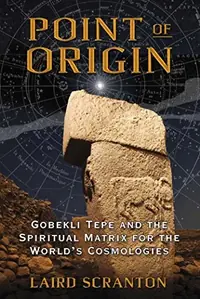
Point of Origin: Gobekli Tepe and the Spiritual Matrix for the World's Cosmologies

Scranton, Laird
Reader rating
4.5
(1 reviews) 173 sold
Availability to be confirmed

This edition can be ordered. No arrival date is confirmed.

📚 ABOUT THE BOOK

Uncover the ancient secret linking global creation myths to a single, enigmatic source.

Laird Scranton's "Point of Origin" delves into the profound mystery of shared cosmological narratives across disparate ancient cultures. This groundbreaking work posits Gobekli Tepe, the enigmatic Turkish site, as the foundational wellspring of esoteric knowledge and civilizing practices. Scranton meticulously traces symbolic connections from Gobekli Tepe to traditions in India, Africa, Egypt, Tibet, and China, revealing a forgotten primal culture that shaped the world's earliest spiritual matrices. The book illuminates how common myths, sacred symbols, and even early written language echo this ancient, sophisticated center, challenging conventional views of civilizational development.

Key themes
Gobekli Tepe's Genesis Role Universal Sacred Narratives Symbolic Origins of Language
Historical context

This work resides within the esoteric study of comparative mythology and ancient history, specifically focusing on the spiritual matrices that underpin global cosmologies. It bridges occult philosophy with archaeological inquiry to explore shared ancestral narratives.


Difficulty
●●● Demanding
Fans will love it
Ralph Ellis · Erich von Däniken · Zecharia Sitchin
🕯️ Occult Philosophy
🏛 Inner Traditions International 📅 2015 📖 224 pages 📔 Paperback 📐 Paperback ISBN: 9781620554449
Fun fact
Laird Scranton’s "Point of Origin" offers a breathtaking, audacious reinterpretation of ancient history, masterfully connecting disparate global myths to a single, profound source. It excels at drawing fascinating symbolic parallels and challenging accepted timelines, providing a rich tapestry for esoteric scholars and seekers of alternative narratives. However, readers strictly adhering to mainstream archaeological dogma or expecting purely materialist explanations may find its conclusions speculative. This book firmly establishes itself as a pivotal work within the realm of comparative mythology and the exploration of lost ancient wisdom.

📝 Description: Point of Origin: Gobekli Tepe and the Spiritual Matrix for the World's Cosmologies

Reveals Gobekli Tepe as a center of civilizing knowledge for the ancient world - Details how symbolic elements at Gobekli Tepe link a pre-Vedic cult in India to cosmological myths and traditions in Africa, Egypt, Tibet, and China - Discusses how carved animal images at Gobekli Tepe relate to stages of creation and provide an archaic foundation for symbolic written language - Defines how classical elements of ancient Egyptian myth and religion characterize an archaic cosmological tradition that links ancestrally back to Gobekli Tepe How could multiple ancient cultures, spanning both years and geography, have strikingly similar creation myths and cosmologies? Why do the Dogon of Africa and the civilizations of ancient Egypt, India, Tibet, and China share sacred words and symbols? Revealing the existence of a long-forgotten primal culture and the world's first center of higher learning, Laird Scranton shows how the sophisticated complex at Gobekli Tepe in Turkey is the definitive point of origin from which all the great civilizations of the past inherited their cosmology, esoteric teachings, and civilizing skills, such as agriculture, metallurgy, and stone masonry, fully developed. Scranton explains how the carved images on Gobekli Tepe's stone pillars were the precursors to the sacred symbols of the Dogon, Egyptians, Tibetans, and Chinese as well as the matriarchal Sakti cult of ancient Iran and India. He identifies Gobekli Tepe as a remote mountain sanctuary of higher knowledge alluded to in Sakti myth, named like an important temple in Egypt, and defined in ancient Buddhist tradition as Vulture Peak. Scranton reveals how Gobekli Tepe's enigmatic "H" carvings and animal symbolism, symbolic of stages of creation, was presented as a kind of prototype of written language accessible to the hunter-gathers who inhabited the region. He shows how the myths and deities of many ancient cultures are connected linguistically, extending even to the name of Gobekli Tepe and the Egyptian concept of Zep Tepi, the mythical age of the "First Time." Identifying Gobekli Tepe not only as the first university but also as the first temple, perhaps built as a civilizing exercise, Scranton definitively places this enigmatic archaeological site at the point of origin of civilization, religion, and ancient science.

💎 Expert review

💎
Esoterica Books editorial team
Occult literature desk
Scranton presents a bold thesis linking Gobekli Tepe to global creation myths, offering a fresh perspective on esoteric knowledge. While the connections are intriguing for those open to alternative historical frameworks, readers seeking strictly empirical archaeological evidence or conventional academic historiography may find the arguments speculative and unconvincing. The book is not for skeptics who demand hard data over symbolic interpretation. However, for enthusiasts of occult philosophy and comparative mythology, it serves as a valuable, thought-provoking exploration of shared cultural origins that challenges standard narratives of independent civilizational growth.
✓ EDITOR'S REVIEW

📖 Why choose it

📖

Why this book is worth reading

Readers fascinated by the deep roots of human spirituality and the interconnectedness of ancient wisdom traditions will find this book profoundly rewarding. Those intrigued by the possibility of a unified primal culture that seeded global cosmologies will appreciate Scranton’s meticulous tracing of symbolic links from Turkey to India, Egypt, Tibet, and China. It offers a compelling narrative for anyone seeking to understand how early written language and sacred symbols echo a forgotten center. If you are drawn to uncovering hidden histories and challenging conventional views of civilizational development, this text provides a unique lens through which to view the spiritual matrix of the world.

⭐ Reader reviews

The starting rating comes from the team Esoterica Books —
⭐ Esoterica editorial review Editorial rating 4.6/5
★★★★
If you're fascinated by ancient mysteries, the origins of civilization, or the interconnectedness of global spiritual traditions, this book is essential. It offers a compelling, meticulously researched journey into a forgotten past, challenging established historical paradigms and inviting a deeper…

Reader rating

4.5
Based on 1 reviews
5
0
4
1
3
0
2
0
1
0
E
Esoterica Books editorial team

Scranton presents a bold thesis linking Gobekli Tepe to global creation myths, offering a fresh perspective on esoteric knowledge. While the connections are intriguing for those open to alternative historical frameworks, readers seeking strictly empirical archaeological evidence or conventional academic historiography may find the arguments speculative and unconvincing. The book is not for skeptics who demand hard data over symbolic interpretation. However, for enthusiasts of occult philosophy and comparative mythology, it serves as a valuable, thought-provoking exploration of shared cultural origins that challenges standard narratives of independent civilizational growth.

❓ Frequently asked questions

Gobekli Tepe is an ancient archaeological site in Turkey, dating back over 12,000 years, predating agriculture and pottery. It features massive carved stone pillars arranged in circles, suggesting a sophisticated ritualistic center built by hunter-gatherers, challenging previous assumptions about early human capabilities.
Scranton argues that Gobekli Tepe was a central hub for a primal culture that disseminated advanced cosmological knowledge. He traces specific symbolic and linguistic parallels between Gobekli Tepe's carvings and the myths, symbols, and spiritual traditions of diverse ancient societies, including those in Africa, Egypt, India, Tibet, and China.

📖 Who should read this

If you're fascinated by ancient mysteries, the origins of civilization, or the interconnectedness of global spiritual traditions, this book is essential. It offers a compelling, meticulously researched journey into a forgotten past, challenging established historical paradigms and inviting a deeper understanding of humanity's shared heritage.

🎯 Key themes and symbolism

Gobekli Tepe's Genesis Role

This book argues that Gobekli Tepe served as the ancient world's premier educational and spiritual hub. It proposes that fundamental civilizing knowledge—from agricultural techniques to sophisticated stone masonry and profound esoteric wisdom—originated from this single, enigmatic site, subsequently disseminating across continents and shaping early human societies.

Universal Sacred Narratives

Scranton meticulously reveals how seemingly disparate ancient cultures, from pre-Vedic India to the Dogon of Africa, share striking commonalities in their creation myths and sacred symbology. The text highlights how these shared narratives suggest a singular, ancestral source of spiritual understanding, rooted in the teachings disseminated from Gobekli Tepe.

Symbolic Origins of Language

The intricate animal carvings found at Gobekli Tepe are interpreted not merely as art, but as foundational elements of a proto-written language. This ancient symbolic system, the book contends, encodes profound insights into the stages of creation, offering an archaic blueprint for later symbolic and written traditions across diverse cultures.

💬 Quotes from the book

“The striking congruence of symbols, from the spiral to the serpent, across continents and millennia, demands a unified explanation. These are not mere coincidences, but echoes of a shared, primeval language of creation.”

“Gobekli Tepe stands as a monumental Rosetta Stone, not for a language, but for a universal cosmology. Its stones whisper of an intelligence that seeded civilization and spiritual understanding long before our accepted timelines.”

📜 Historical context

This work sits firmly within the tradition of scholarship exploring pre-diluvian civilizations and the diffusion of ancient knowledge. It builds upon inquiries into unexplained similarities across ancient cultures, offering a bold new hypothesis centered on Gobekli Tepe. By positing a single point of origin for widespread cosmological systems, it challenges conventional archaeological timelines and historical narratives, much like other works that question mainstream accounts of civilizational development.

📚 Glossary

Gobekli Tepe
Cosmology
Pre-Vedic Cult

📔 Questions to reflect on

  1. How might acknowledging a single, ancient source for global cosmologies alter our understanding of human spiritual development and cultural diversity?
  2. If foundational knowledge like agriculture and metallurgy truly originated from a sophisticated spiritual center, what does this imply about the nature of "progress" in human history?
  3. Reflect on a symbol or myth from your own cultural background. Does Scranton's thesis make you reconsider its potential ancient, widespread origins?

✍️ More books by this author Scranton, Laird

All books by this author →
🏛 Books from this publisher Inner Traditions International

All books from this publisher →

You might also like

See more →