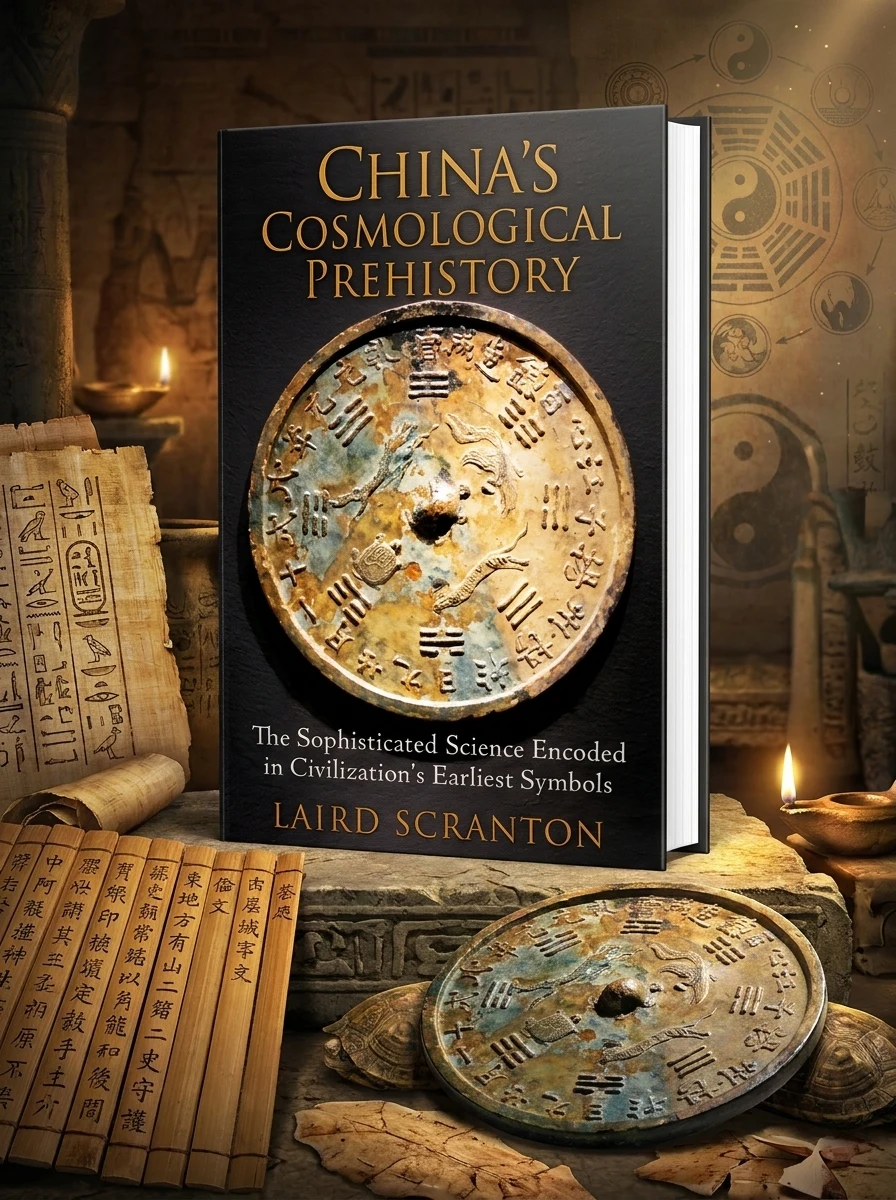
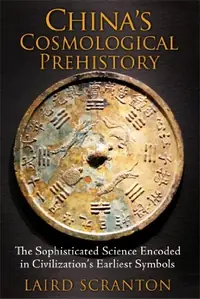
China's Cosmological Prehistory: The Sophisticated Science Encoded in Civilization's Earliest Symbols
Scranton, Laird

This edition can be ordered. No arrival date is confirmed.
Uncover the secret language linking ancient China to a lost, global wisdom.
Laird Scranton presents a compelling investigation into the profound similarities between ancient Chinese creation traditions and those found across other venerable cultures, including ancient Egypt. He meticulously dissects the shared symbolic language, phonetic structures, and cosmological concepts embedded within early Chinese thought, from the stages of Taoist creation to the origins of the I Ching and ancestor worship. Scranton argues these deep parallels offer further compelling evidence for a single, sophisticated source of knowledge that predates and informed all early civilizations, now lost to time.
This work sits at the intersection of comparative mythology and esoteric history, exploring the shared symbolic roots of early civilizations. It bridges the gap between traditional Chinese philosophical studies and global occult inquiries into lost wisdom traditions.


📝 Description: China's Cosmological Prehistory: The Sophisticated Science Encoded in Civilization's Earliest Symbols
💎 Expert review
📖 Why choose it
Why this book is worth reading
Readers fascinated by the hidden connections between ancient cultures will find this book a revelatory experience. If you have ever wondered if disparate civilizations shared a common intellectual ancestor, this text provides a meticulous argument for that possibility. It is ideal for those who enjoy decoding symbolic languages and tracing the lineage of ideas from Taoist creation myths to Egyptian iconography. The author’s detailed dissection of phonetic structures and cosmological concepts offers a fresh perspective on the origins of human knowledge. For anyone seeking evidence of a sophisticated, global wisdom tradition that predates recorded history, this book serves as both a puzzle solver and a philosophical guide, satisfying a deep curiosity about our shared esoteric heritage.
⭐ Reader reviews
Reader rating
Scranton’s investigation is dense with symbolic analysis, appealing primarily to those with a strong background in comparative religion or esoteric studies. Readers seeking a light, narrative-driven historical account may find the focus on phonetic structures and cosmological diagrams tedious and overly academic. The book assumes a willingness to engage with complex, abstract concepts rather than offering simple answers. It does not suit skeptics who demand empirical archaeological proof over symbolic correlation. However, for those open to the idea of a unified prehistoric wisdom tradition, it offers a compelling, if intellectually demanding, framework. It is best approached as a serious study in comparative symbolism rather than casual reading.
❓ Frequently asked questions
📖 Who should read this
If you're captivated by ancient mysteries, comparative mythology, or the search for a lost, universal wisdom, this book is for you. Readers interested in the esoteric underpinnings of early civilizations and the hidden connections between cultural symbols will find this a fascinating read.
🎯 Key themes and symbolism
Ancient Chinese Cosmology
Explore the foundational principles of early Chinese thought, including the eight stages of Taoist creation, the symbolic significance of the I Ching, and the roots of ancestor worship. Scranton illuminates how these concepts encode profound scientific and spiritual understandings, revealing a sophisticated worldview that shaped early Chinese civilization.
Cross-Cultural Echoes
Discover striking parallels between ancient Chinese symbols and language, such as early written characters, and those found in Egyptian hieroglyphs and other traditions. The book highlights shared phonetic structures and conceptual frameworks, suggesting a common intellectual heritage that transcends geographical and cultural divides, linking diverse peoples.
The Primordial Source
Delve into Scranton's overarching hypothesis that all ancient cosmologies, including China's, stem from a single, highly advanced, yet now vanished source of knowledge. He builds upon his previous research into various global traditions to reinforce this provocative theory, seeking to unify fragmented global myths and symbols.
💬 Quotes from the book
“The phonetic resonance between the earliest Chinese ideograms and the sacred sounds of Dogon tradition is not merely coincidence; it is a linguistic echo across forgotten millennia.”
“Every ancient culture, from the Nile to the Yangtze, appears to be recounting fragments of the same cosmic narrative, a grand design whispered from a singular, ancestral wellspring of wisdom.”
📜 Historical context
📚 Glossary
- Cosmology
- Glyph
- Taoism
📔 Questions to reflect on
- Reflect on how the idea of a shared, ancient cosmological source might change our understanding of human history and cultural development.
- Consider a symbol or concept from your own cultural background. Can you find parallels in other ancient traditions, and what might that signify?
- If a lost, sophisticated knowledge once existed, what implications does that have for humanity's current spiritual and scientific understanding?
✍️ More books by this author Scranton, Laird
All books by this author →
🏛 Books from this publisher Inner Traditions International
All books from this publisher →



You might also like
See more →