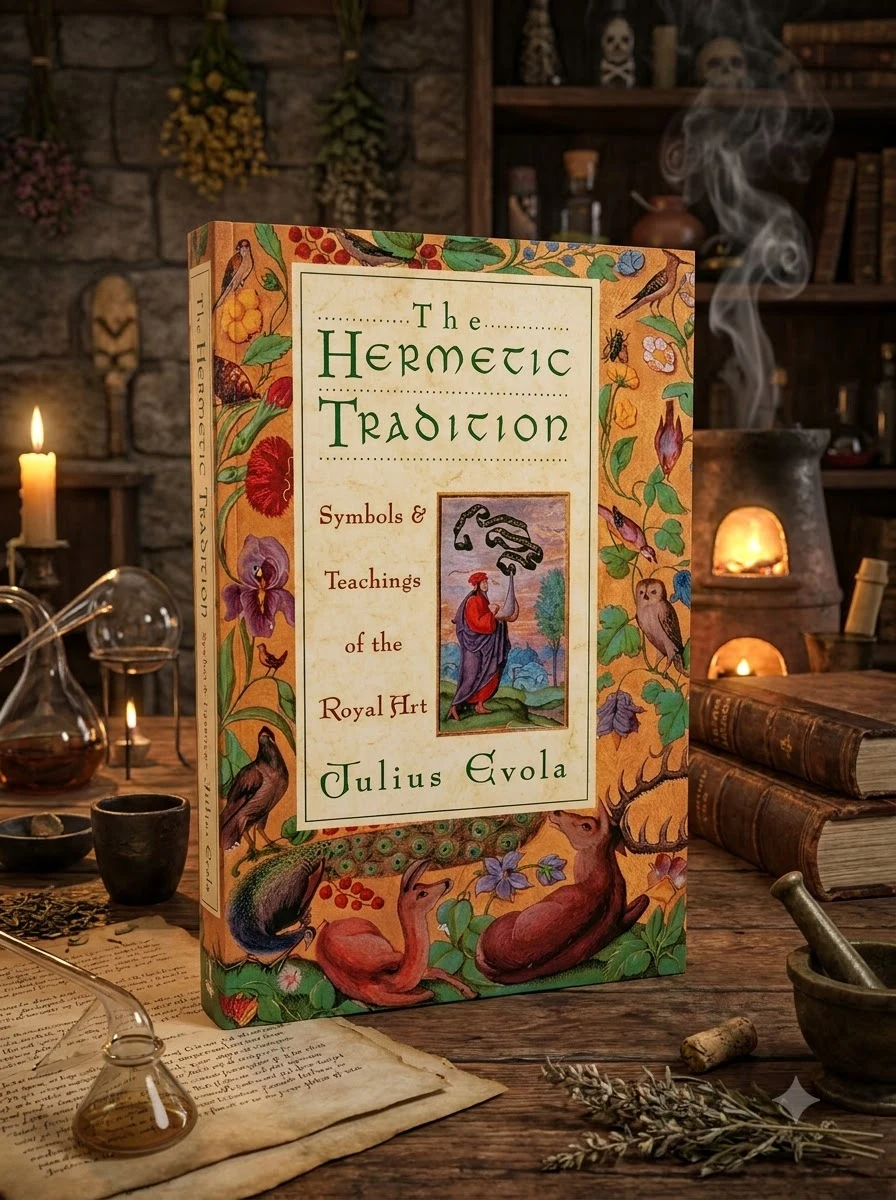
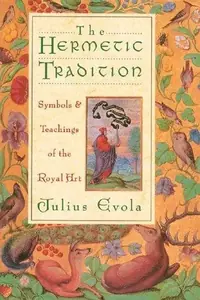
The Hermetic Tradition: Symbols and Teachings of the Royal Art (Original)
Evola, Julius

Stock reported in the catalog; fulfillment is confirmed with your request.
Uncover the ancient royal art of alchemy as a universal science of spiritual transformation, not mere chemistry.
Julius Evola’s seminal work dismantles the modern misconception of alchemy as primitive proto-chemistry or solely a psychological metaphor. Instead, he presents it as a rigorous, esoteric discipline aimed at the transmutation of the human spirit and the natural world. Drawing upon a vast array of neoplatonic, Arab, and medieval texts, Evola reveals the unified metaphysical core shared by adepts across centuries. This volume serves as a critical key to understanding the 'royal art' not as material experimentation, but as a profound path of ontological change and divine realization, offering a rare glimpse into the true scope of Hermetic practice.
This text anchors itself in the rigorous esoteric tradition of Hermeticism and alchemy, specifically countering modern secular interpretations by reaffirming the spiritual ontology of the 'Royal Art.' It bridges ancient Neoplatonic, Arab, and medieval metaphysical currents into a unified philosophical framework.


📝 Description: The Hermetic Tradition: Symbols and Teachings of the Royal Art (Original)
💎 Expert review
📖 Why choose it
Why this book is worth reading
Readers seeking a profound understanding of spiritual transformation beyond mere chemical symbolism will find immense value here. Evola offers a critical key to the true scope of Hermetic practice, dismantling misconceptions that reduce alchemy to psychology or proto-science. This book is essential for those ready to engage with a rigorous discipline aimed at the transmutation of the human spirit. It provides a rare glimpse into divine realization and ontological change, appealing to serious practitioners who desire a unified metaphysical core shared by adepts across centuries rather than superficial historical curiosity.
⭐ Reader reviews
Reader rating
This edition finally does the material justice. I found myself reading passages aloud just to sit with them. The typesetting is comfortable for study, with good margins for notes.
Ordered this after seeing it referenced in another book I was studying. It rewards patience more than any book I've bought this year.
Finally got around to ordering this. I appreciated how the argument builds steadily from first principles. Delivery took a bit longer than quoted. Happy enough with the purchase.
This edition finally does the material justice. The ideas are old but land with surprising force today. Some archaic spellings slow things down. Good, with the caveats above.
Not my usual area but wanted to branch out. Challenging in places, but never needlessly obscure. Glad I finally picked this up.
Evola’s seminal work stands as a vital corrective to modern alchemical misinterpretations, presenting the Royal Art as a profound path of spiritual discipline. While intellectually robust and historically grounded in Neoplatonic and medieval sources, it demands significant philosophical engagement. It does not suit readers seeking light reading, casual historical overviews, or those who prefer psychological metaphors over ontological realities. Those looking for practical laboratory instructions or simple self-help advice will find this text inaccessible and irrelevant. However, for the dedicated esoteric student, it remains an indispensable, albeit dense, exploration of spiritual transmutation.
❓ Frequently asked questions
📖 Who should read this
Readers seeking a rigorous, non-psychological interpretation of alchemy who wish to move beyond Jungian frameworks and engage with the traditional metaphysical foundations of the Western Hermetic path.
🎯 Key themes and symbolism
Ontological Transmutation
Esoteric Unity
Royal Art
💬 Quotes from the book
“Alchemy is not a primitive chemistry, but a universal secret science of human and natural transformation.”
“Behind the words of all adepts in all ages lies a singularity of subject matter.”
📜 Historical context
📚 Glossary
- Theurgy
- Royal Art
- Individuation
📔 Questions to reflect on
- How does viewing alchemy as a 'science of transformation' rather than a psychological metaphor change your understanding of personal growth?
- In what ways do you see the 'unity' of esoteric traditions reflected in your own study of different mystical systems?
- What assumptions about 'spiritual work' might be limiting if you adopted Evola’s view of alchemy as an objective reality rather than a subjective projection?
✍️ More books by this author Evola, Julius
All books by this author →
🏛 Books from this publisher Inner Traditions International
All books from this publisher →
You might also like
See more →