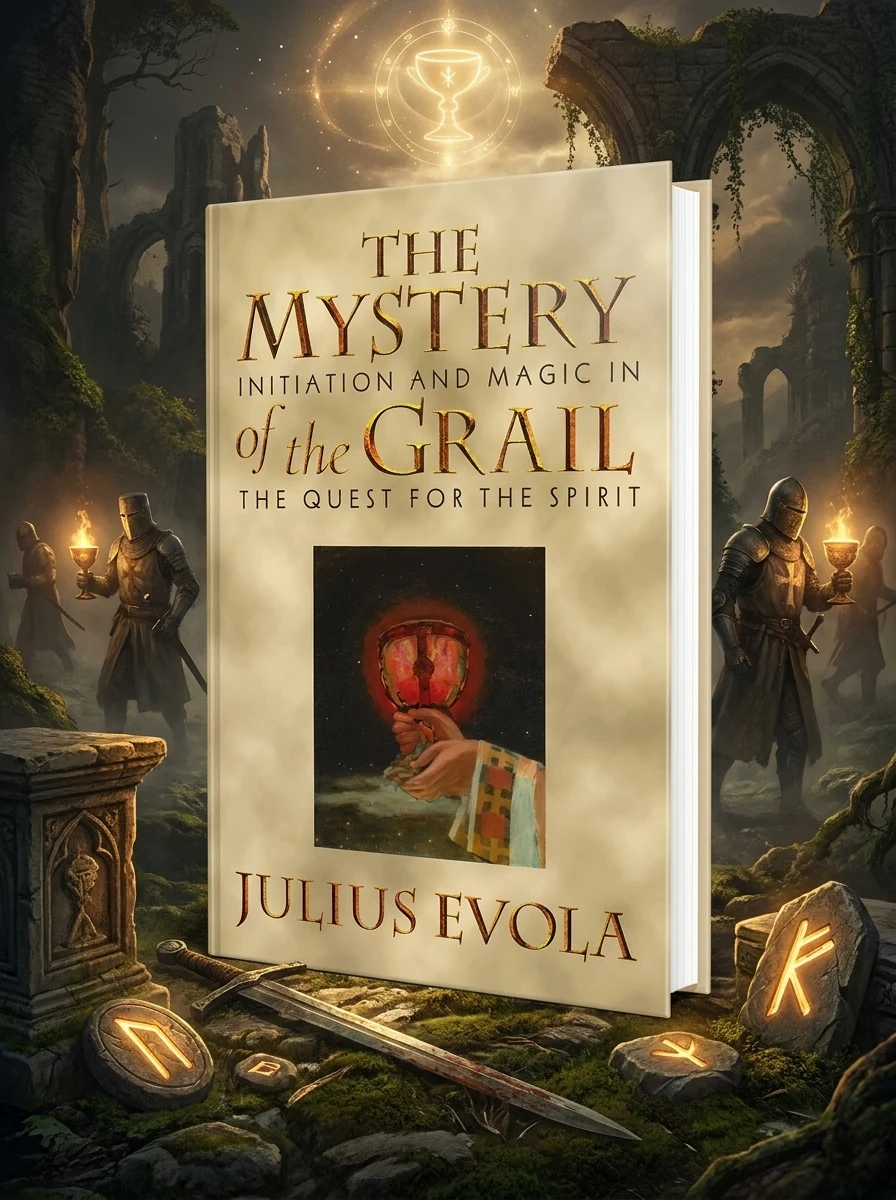
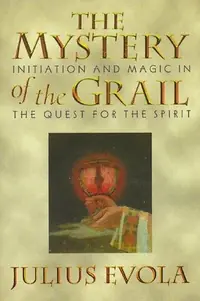
The Mystery of the Grail: Initiation and Magic in the Quest for the Spirit (Original)
Evola, Julius

Stock reported in the catalog; fulfillment is confirmed with your request.
Uncover the Grail's true meaning: an initiatory journey for the spirit, revealed by a controversial master.
Julius Evola peels back centuries of myth to expose the Grail's profound, esoteric core. He argues that this foundational Western legend is not merely a tale of chivalry but a symbolic blueprint for spiritual initiation, drawing parallels to ancient Nordic sagas. Evola meticulously deciphers the seemingly fantastical adventures of the Grail knights as intricate allegories for internal trials and transformations. His work extends to tracing the myth's historical threads through groups like the Templars and Cathars, revealing its enduring link to Rosicrucian, alchemical, and Masonic traditions, offering radical insights into its true nature.
This work situates the Grail legend within the framework of Western esotericism, specifically linking it to ancient Nordic sagas and historical secret societies like the Templars and Cathars. It serves as a bridge between medieval chivalric myth and later Rosicrucian, alchemical, and Masonic traditions.


📝 Description: The Mystery of the Grail: Initiation and Magic in the Quest for the Spirit (Original)
💎 Expert review
📖 Why choose it
Why this book is worth reading
Readers seeking a profound, esoteric interpretation of the Holy Grail will find this book indispensable. Julius Evola guides you beyond surface-level chivalric tales to reveal the legend as a symbolic blueprint for spiritual initiation and internal transformation. If you are drawn to the hidden connections between ancient Nordic sagas and later mystical traditions like Rosicrucianism, alchemy, or Freemasonry, this text offers radical insights into the Grail's true nature. It is ideal for those who view mythology not as mere fiction but as a serious allegory for the soul’s journey. By peeling back centuries of myth, Evola exposes the profound core that has influenced countless esoteric groups. This book rewards patient readers with a unique perspective on how foundational Western legends encode initiatory experiences, making it a vital resource for understanding the deeper spiritual currents beneath historical religious narratives.
⭐ Reader reviews
Reader rating
Evola’s work is a dense, intellectual excavation of the Grail myth, treating it as an initiatory manual rather than a romantic adventure. While his deciphering of internal trials and transformations is meticulous and offers unique links to groups like the Templars and Cathars, the text demands a high tolerance for abstract philosophical discourse. It does not suit readers looking for lighthearted fantasy or straightforward historical biography. Those expecting conventional Christian theology will be disappointed, as Evola focuses exclusively on esoteric parallels. However, scholars of Western occultism and comparative mythology will appreciate his bold synthesis of Nordic and Masonic threads. The book is intellectually rigorous but lacks narrative warmth, making it a specialized tool for serious students of the hidden history of spiritual quests rather than casual readers.
❓ Frequently asked questions
📖 Who should read this
If you seek a radical, non-conventional interpretation of Western mythology and esoteric traditions, particularly the Grail legend, this book is for you. Those interested in Julius Evola's unique philosophical perspective on spirituality, initiation, and the hidden currents of history will find it indispensable.
🎯 Key themes and symbolism
Grail as Initiation
Evola posits that the Holy Grail is not primarily a physical relic, but rather a powerful symbol of spiritual awakening and inner transformation. He interprets the quest itself as a rigorous initiatory path, designed to elevate the seeker beyond the mundane and toward a higher, sacred consciousness, mirroring ancient esoteric traditions.
Ancient Mythic Echoes
This work links the Grail legend to much older, pre-Christian mythologies, particularly the heroic cycles of Nordic cultures. Evola suggests that the core themes and structures of the Grail narratives resonate with these archaic traditions, indicating a shared, deeper symbolic language concerning heroism, sacrifice, and spiritual attainment, predating medieval Christian overlays.
Symbolism of Heroic Quests
The often surreal and challenging adventures undertaken by the Grail knights are deconstructed as profound symbolic narratives. Evola reveals these external trials—battles, enchantments, and moral dilemmas—as representations of internal struggles and tests that the spiritual aspirant must overcome on their path to self-mastery and ultimate realization of the Grail's essence.
💬 Quotes from the book
“The true Grail quest is not for a physical relic, but for the spiritual sovereignty within, a journey of inner transformation mirrored by the external adventures of the knights.”
“Every dragon slain, every enchanted forest traversed by the Arthurian heroes, signifies a conquest over an internal obstacle, a step closer to the realization of the sacred self.”
📜 Historical context
📚 Glossary
- Initiation
- Hermetism
- Rosicrucianism
📔 Questions to reflect on
- Consider a significant challenge you've faced. How might viewing it as an 'initiatory trial' change your perspective on its meaning and outcome?
- If the Grail represents a state of spiritual attainment, what 'knightly virtues' (e.g., courage, purity, perseverance) do you feel are most essential for your own inner journey?
- Reflect on how modern culture's understanding of heroism or 'quest' narratives might diverge from or echo the esoteric interpretation Evola presents.
✍️ More books by this author Evola, Julius
All books by this author →
🏛 Books from this publisher Inner Traditions International
All books from this publisher →



You might also like
See more →