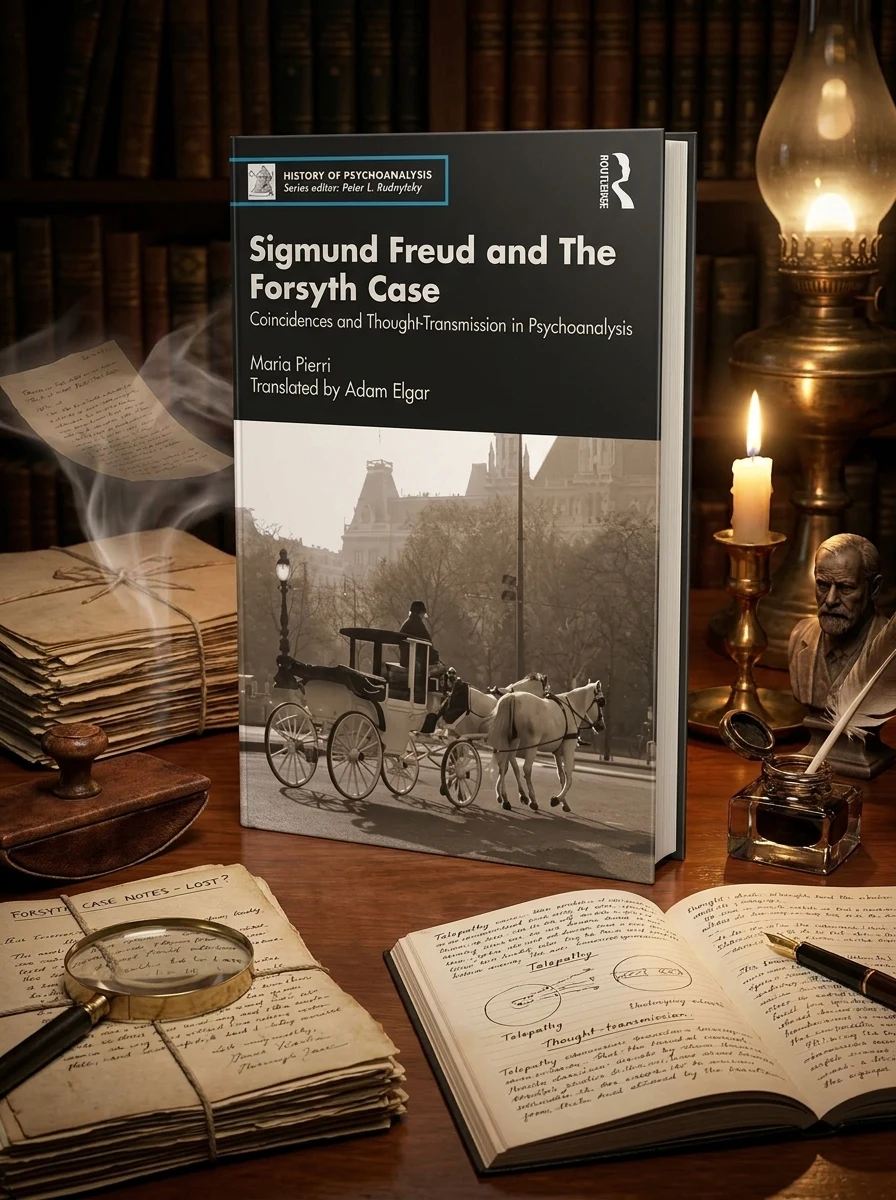
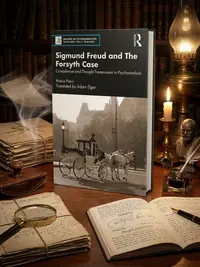

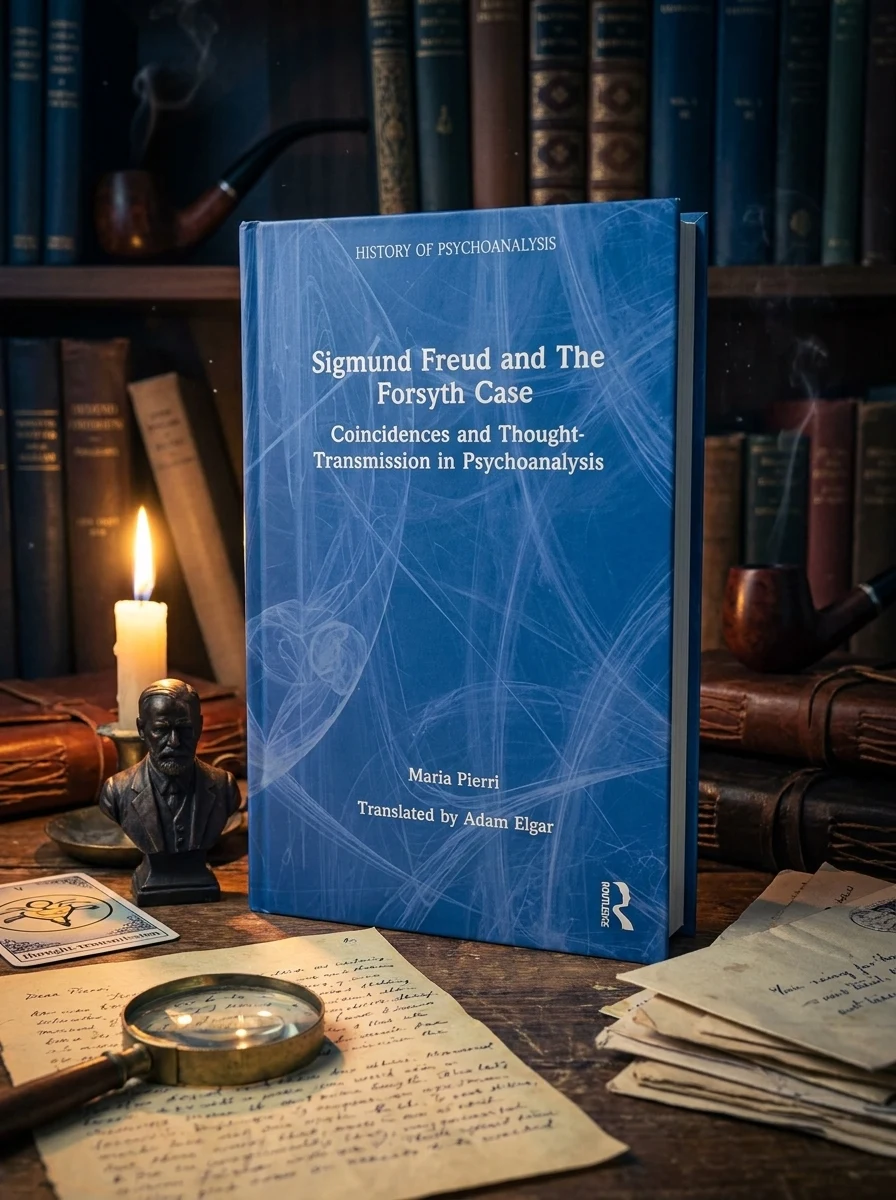
Sigmund Freud and the Forsyth Case: Coincidences and Thought-Transmission in Psychoanalysis Pierri, Maria
Pierri, Maria; , Elgar, AdamStock reported in the catalog; fulfillment is confirmed with your request.
Uncover Freud's secret encounters with the inexplicable, where science met the unseen.
Delve into a previously obscured chapter of Sigmund Freud's work with Maria Pierri's groundbreaking research on the "Forsyth Case." This volume unveils newly unearthed primary documents, including the original case notes, bringing to light Freud's enigmatic patient and illuminating his profound, yet often-downplayed, fascination with "thought-transmission" or telepathy. Pierri meticulously reconstructs the historical backdrop, offering a fresh psychoanalytic lens on the "magical" coincidences that colored the analytic setting, and placing this unique experience within the wider framework of Freud’s evolving theories on the mind's hidden depths.
This work sits at the intersection of psychoanalytic history and parapsychology, exploring how early 20th-century scientific figures navigated phenomena that blurred the lines between rational psychology and the occult. It contributes to the esoteric tradition by examining the hidden intellectual currents within mainstream academic history.


📝 Description: Sigmund Freud and the Forsyth Case: Coincidences and Thought-Transmission in Psychoanalysis Pierri, Maria
💎 Expert review
📖 Why choose it
Why this book is worth reading
Readers fascinated by the shadowy margins of psychoanalytic history will find this book essential. Maria Pierri’s meticulous reconstruction of the Forsyth Case offers a rare glimpse into Sigmund Freud’s private fascination with thought-transmission, a subject often downplayed in standard biographies. By analyzing newly unearthed primary documents, the author provides a fresh lens on how magical coincidences influenced the analytic setting. It is perfect for those who enjoy deep dives into historical research and want to understand the evolving theories of the mind's hidden depths. If you are intrigued by the tension between scientific rigor and the inexplicable, this volume illuminates a previously obscured chapter of Freud’s work with clarity and depth.
⭐ Reader reviews
Reader rating
Pierri delivers a scholarly yet accessible examination of Freud’s engagement with telepathy through the Forsyth Case. The use of original case notes adds significant weight to the argument, making it a valuable resource for serious students of psychoanalysis. However, readers seeking a narrative-driven biography or popular psychology advice will likely find this text too dense and academic. It is not suited for those expecting sensational claims or easy answers about the supernatural. Instead, it demands patience and an interest in historical reconstruction. While some may find the focus on theoretical evolution dry, the documentation is undeniably thorough.
❓ Frequently asked questions
📖 Who should read this
If you're a student of psychoanalysis, a devotee of occult history, or simply intrigued by the enigmatic corners of the human mind, this book offers a singular exploration. It's for those who ponder the inexplicable, even within the most rigorous scientific frameworks.
🎯 Key themes and symbolism
The Forsyth Enigma Unveiled
This book meticulously reconstructs one of Freud's most perplexing clinical encounters, known as the Forsyth Case. Through newly discovered primary documents and never-before-published case notes, Pierri peels back layers of obscurity to reveal the patient's identity and the intricate details of this mysterious psychoanalytic journey, offering unprecedented insight into a forgotten moment.
Freud's Telepathic Investigations
Explore Sigmund Freud's profound, yet often controversial, interest in "thought-transmission" or telepathy. Pierri traces how the Forsyth Case ignited and sustained his intellectual curiosity in psychic phenomena, detailing his further explorations, including discussions with his Secret Committee and his analytical work with his own daughter, Anna.
Coincidence as Psychic Mirror
The author provides a compelling psychoanalytic framework for understanding "magical" coincidences that emerged within the analytic setting. By reinterpreting elements of transference and countertransference, the book suggests how these seemingly random events might offer profound insights into the "psychopathology of everyday life" within the therapeutic dynamic itself.
💬 Quotes from the book
“The boundary between the known and the inexplicable often blurs when we truly listen to the whispers of the unconscious, especially when they seem to echo in another's mind.”
“What if the coincidences we dismiss as mere chance are, in fact, intricate pathways for unconscious communication, a language spoken without words?”
📜 Historical context
📚 Glossary
- Thought-Transmission
- Transference and Countertransference
- Psychopathology of Everyday Life
📔 Questions to reflect on
- How might the concept of "thought-transmission" challenge or expand your understanding of the unconscious mind?
- Reflect on a "magical coincidence" in your own life. How might a psychoanalytic lens, as discussed in this book, interpret its deeper meaning?
- If Freud, the father of psychoanalysis, openly explored telepathy, what does this imply about the limits of scientific inquiry in understanding the human psyche?
📖 From the series “History of Psychoanalysis”
All books in the series →


✍️ More books by this author Pierri, Maria; , Elgar, Adam
All books by this author →🏛 Books from this publisher Routledge
All books from this publisher →


 89
89


You might also like
See more →

 91
91
 91
91