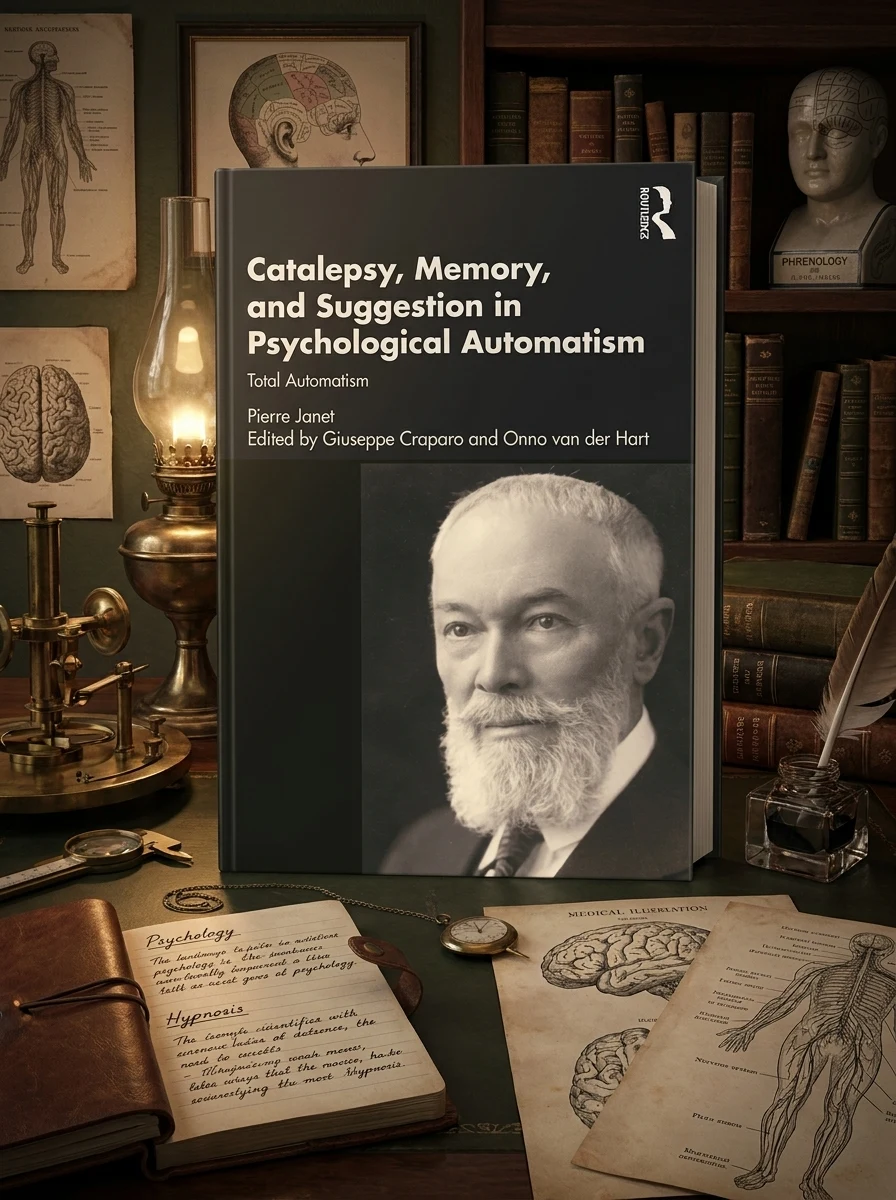
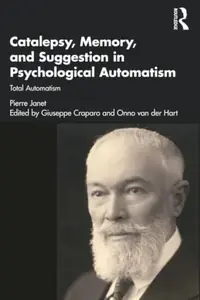
Catalepsy, Memory and Suggestion in Psychological Automatism: Total Automatism
Janet, Pierre; , Craparo, Giuseppe; , Crabtree, Adam; , Van Der Hart, Onno; , Osei-Bonsu, SarahStock reported in the catalog; fulfillment is confirmed with your request.
Uncover the origins of trauma theory through Janet's pioneering exploration of the fragmented mind.
This essential first volume of Pierre Janet's landmark 1889 study, now available in English for the first time, offers the earliest scientific investigations into trauma and dissociation. Janet meticulously dissects psychological automatism, beginning with a detailed analysis of catalepsy and its parallels with somnambulism. He then explores the intricate relationship between somnambulistic states, memory, and forgetting, before examining the powerful role of suggestion, amnesia, and distraction. This work stands as a monumental experimental inquiry into the foundational aspects of human consciousness, offering unparalleled insights into trauma-related experiences.
This volume anchors the intersection of late 19th-century experimental psychology and the foundational discourse on trauma theory. It serves as a critical bridge between early scientific inquiries into dissociation and later esoteric understandings of consciousness and automatism.


📝 Description: Catalepsy, Memory and Suggestion in Psychological Automatism: Total Automatism
💎 Expert review
📖 Why choose it
Why this book is worth reading
Scholars of psychological history and practitioners interested in the roots of trauma therapy will find this text indispensable. It offers a rare, direct engagement with Pierre Janet’s pioneering methodology, allowing readers to witness the genesis of ideas regarding fragmented consciousness and automatism. Those drawn to the intellectual lineage of occult psychology will appreciate how Janet scientifically dissected states often reserved for mystical experience. This book provides the empirical backbone for understanding how memory and suggestion shape identity, making it vital for anyone seeking to comprehend the scientific origins of dissociative phenomena in a rigorous, historically grounded manner.
⭐ Reader reviews
Reader rating
This is a dense, academic text that demands patience and a strong background in psychological theory. While it offers monumental insights into trauma-related experiences, it is NOT suited for casual readers or those expecting accessible, narrative-driven occultism. The rigorous experimental inquiry may feel dry to those seeking mystical revelation rather than clinical analysis. Readers looking for practical spiritual guidance will likely find the focus on catalepsy and somnambulism too abstract. It is strictly for the dedicated historian of ideas or the serious student of early psychological science who values precision over readability.
❓ Frequently asked questions
📖 Who should read this
If you're drawn to the genesis of psychological thought, particularly concerning trauma and dissociation, this foundational text is indispensable. Scholars of psychoanalysis, philosophy, and modernism, alongside psychotherapists grappling with complex trauma, will find Janet's original inquiries profoundly illuminating and historically vital.
🎯 Key themes and symbolism
Catalepsy & Altered States
Janet systematically examines the nature of catalepsy, comparing it to somnambulism and other trance-like conditions. He seeks to understand how these states reveal the underlying mechanisms of psychological automatism, demonstrating the mind's capacity for disembodied actions and altered awareness. His observations lay groundwork for understanding dissociated experiences.
Memory's Fragmented Landscape
The book critically analyzes how memory functions within states like somnambulism and automatism, and the processes of forgetting. Janet explores instances of amnesia linked to dissociated states, suggesting that certain experiences can become inaccessible to conscious recall, a concept pivotal for later trauma theory.
Suggestion & Unconscious Influence
Janet investigates the dynamics of suggestion, particularly its role in inducing or influencing automatistic behaviors and amnesia. He scrutinizes the characteristics of individuals more prone to suggestion, revealing how external influences can shape internal experience and contribute to fragmented consciousness.
💬 Quotes from the book
“The study of catalepsy reveals not merely a physical rigidity, but a profound division within the mental faculties, where action may proceed without conscious direction.”
“Memory, in its most fundamental aspect, is not a monolithic entity, but a collection of processes susceptible to disaggregation under conditions of heightened automatism or suggestion.”
📜 Historical context
📚 Glossary
- Catalepsy
- Somnambulism
- Psychological Automatism
📔 Questions to reflect on
- How might Janet's early observations on catalepsy and somnambulism inform our modern understanding of altered states of consciousness or even meditative practices?
- Consider the implications of Janet's work on suggestion. How does acknowledging the power of suggestion shape our views on therapeutic interventions or even daily social interactions?
- Reflect on the idea of psychological automatism. Can you identify instances in your own experience or observations where actions or thoughts seem to occur without conscious intent, and how might Janet interpret these?
✍️ More books by this author Janet, Pierre; , Craparo, Giuseppe; , Crabtree, Adam; , Van Der Hart, Onno; , Osei-Bonsu, Sarah
All books by this author →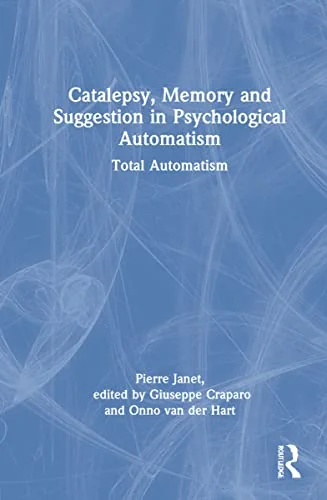
🏛 Books from this publisher Routledge
All books from this publisher →

 89
89


You might also like
See more →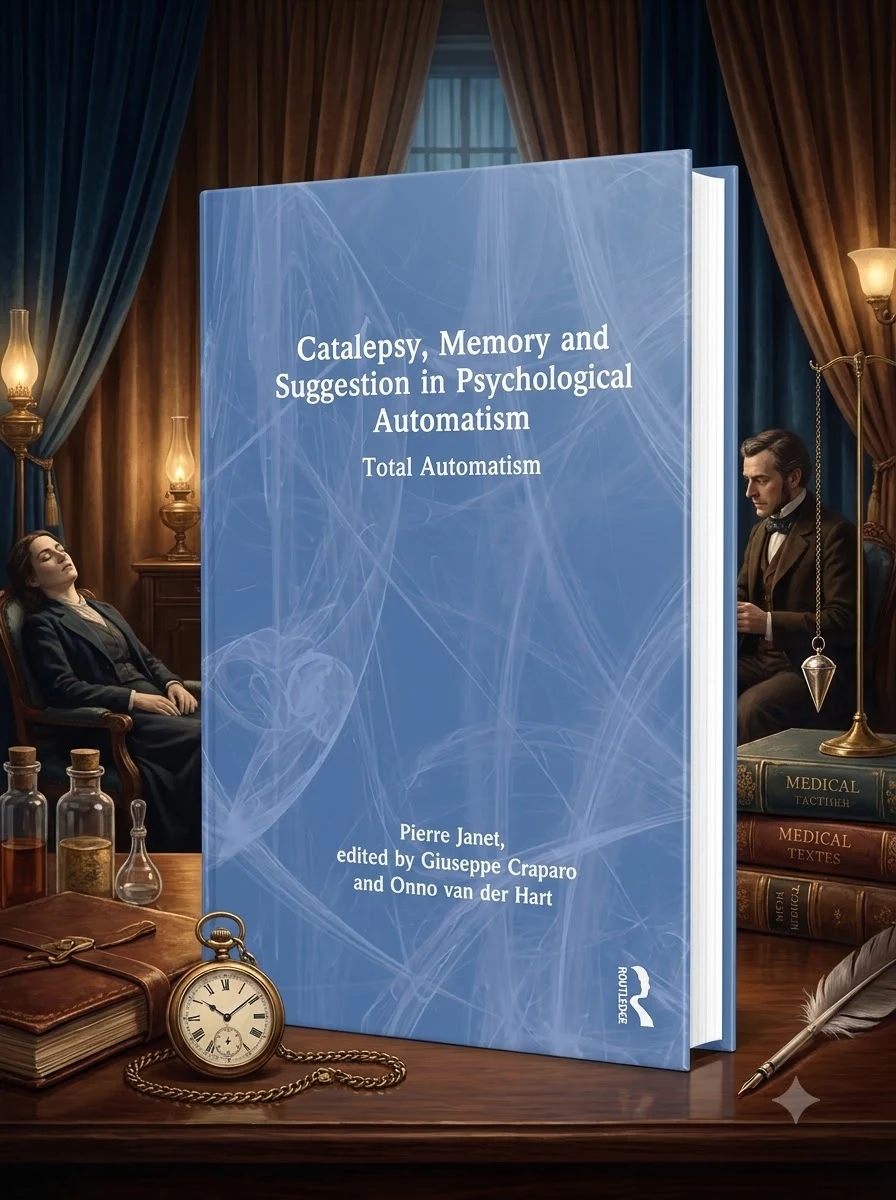

 91
91
 91
91