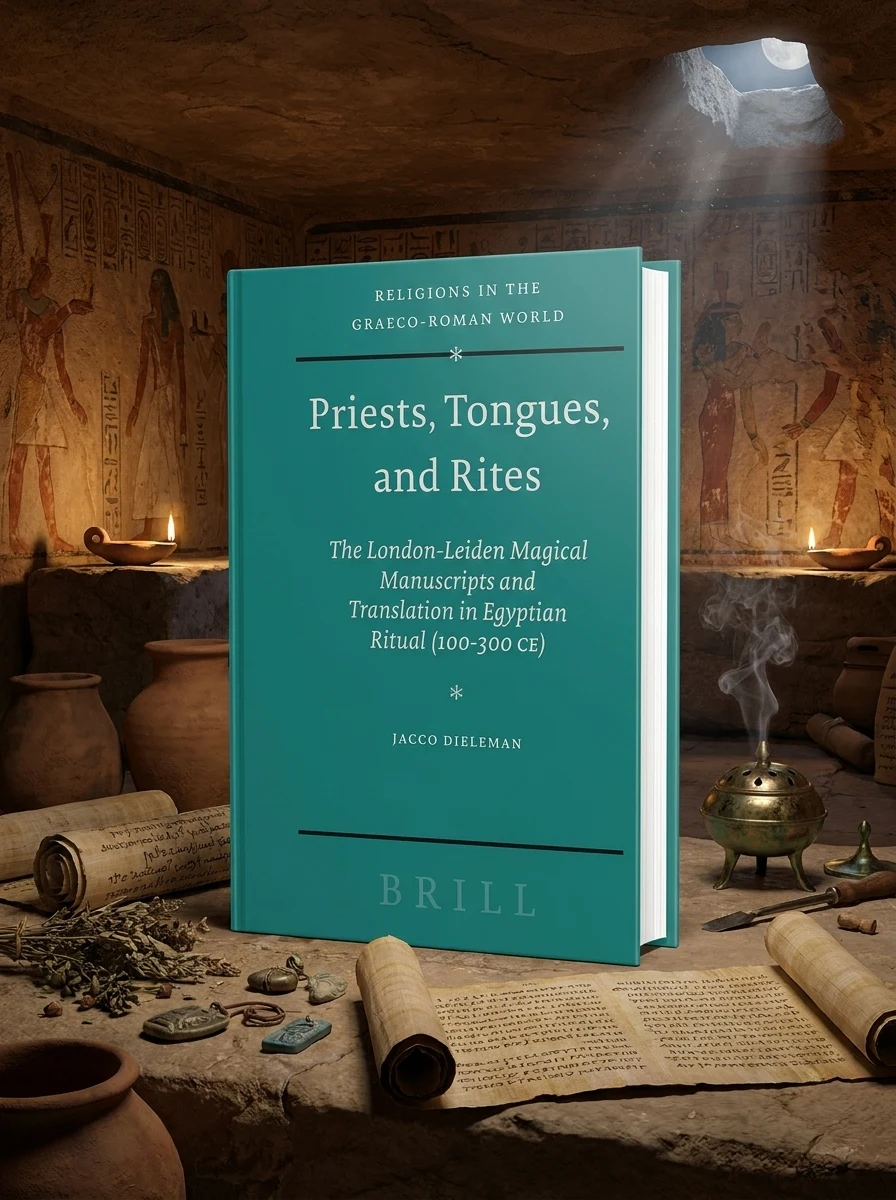
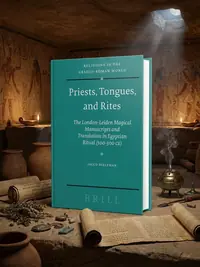
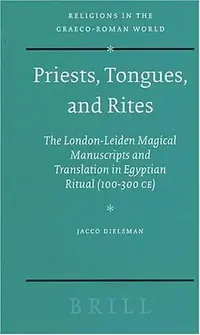
Priests, Tongues, and Rites: The London-Leiden Magical Manuscripts and Translation in Egyptian Ritual (100-300 Ce) - Ingram Academic Dieleman, Jacco
Dieleman, Jacco 89
89
 Editorial score
How we rate
Editorial score
How we rate
Stock reported in the catalog; fulfillment is confirmed with your request.
Uncover the bilingual spells of Roman Egypt's secret priests.
This study explores the Theban Magical Library, a cache of bilingual Demotic and Greek grimoires unearthed near Luxor in the nineteenth century. Jacco Dieleman dissects these Roman-era texts to reveal the complex social networks of their creators and users. By blending philology with cultural analysis, the work illuminates the lived reality of magical practitioners in Greco-Roman Egypt, offering a rare glimpse into the rituals and linguistic duality that defined their spiritual practice.
This work situates itself within the specialized field of Greco-Roman Egyptology and the study of ancient ritual magic, focusing on the intersection of linguistic duality and religious practice in Roman-era Thebes.


📝 Description: Priests, Tongues, and Rites: The London-Leiden Magical Manuscripts and Translation in Egyptian Ritual (100-300 Ce) - Ingram Academic Dieleman, Jacco
💎 Expert review
📖 Why choose it
Why this book is worth reading
Scholars and enthusiasts of ancient history will find profound value in this meticulous examination of the Theban Magical Library, which offers a rare window into the lived spiritual realities of Roman Egypt's secret priests. By dissecting bilingual Demotic and Greek grimoires, Dieleman reveals the intricate social networks and linguistic complexities that defined magical practitioners during this era. This book is essential for those seeking to understand how cultural identity and ritual efficacy intertwined in a multicultural society. It moves beyond simple spell collection to explore the human element behind the texts, making it a vital resource for anyone interested in the sociological and philological aspects of ancient esoteric traditions.
⭐ Reader reviews
Reader rating
I keep coming back to this one. The typesetting is comfortable for study, with good margins for notes. The symbolism is layered and generous to patient readers. A keeper.
As someone who reads a lot in this field, I can be picky. It connects ideas I'd only seen treated separately elsewhere. It assumes more background than a beginner might have. Still worth having on the shelf.
Bought this as a gift for my sister and ended up ordering a second copy for myself. It's become a regular reference in my practice. There's real depth here that reveals itself on a second reading. Some archaic spellings slow things down.
Dieleman’s scholarly dissection is rigorous and illuminating, successfully bridging philology with cultural analysis to expose the social dynamics of Roman-era magic. However, this text is strictly academic and will likely alienate casual readers seeking practical spellcraft or accessible introductory material on Egyptian mythology. It demands a strong background in ancient languages or historical methodology to fully appreciate its nuanced arguments regarding linguistic duality. Readers looking for immediate ritual application or narrative storytelling should look elsewhere, as this work prioritizes historical reconstruction over mystical experience.
❓ Frequently asked questions
📖 Who should read this
Scholars of ancient history, philologists, and serious practitioners of historical magic will find this essential. It is less suitable for casual readers seeking simple spell collections, as it demands academic rigor and an interest in linguistic nuance.
🎯 Key themes and symbolism
Bilingual Ritual Mechanics
The book analyzes how Demotic and Greek coexisted in magical formulas, revealing a sophisticated linguistic hybridity. It demonstrates that language choice was not arbitrary but strategic, serving specific ritual purposes and reflecting the cosmopolitan nature of Egyptian magical practice during the Roman occupation.
Theban Magical Library Context
Dieleman reconstructs the provenance and composition of the Luxor manuscripts, treating them as a unified corpus rather than isolated artifacts. This approach clarifies the relationship between the compilers and the broader community of practitioners, showing how these texts functioned as practical manuals for contemporary spiritual needs.
Social Milieu of Magi
Through sociolinguistic analysis, the author maps the cultural environment of the spellwriters. The text argues that magic was a professionalized activity embedded in daily life, requiring specific educational backgrounds and social connections, thereby challenging previous assumptions about the marginality of ancient Egyptian magicians.
💬 Quotes from the book
“Magic was not an escape from reality but a tool to navigate it.”
“The bilingual nature reveals a negotiated cultural identity.”
📜 Historical context
📚 Glossary
- Theban Magical Library
- Demotic
- Sociolinguistics
📔 Questions to reflect on
- How does the duality of language in these texts reflect your own spiritual identity?
- What modern rituals rely on specific linguistic codes to function effectively?
- How might the social status of the original magi influence the power dynamics of their spells?
✍️ More books by this author Dieleman, Jacco
All books by this author →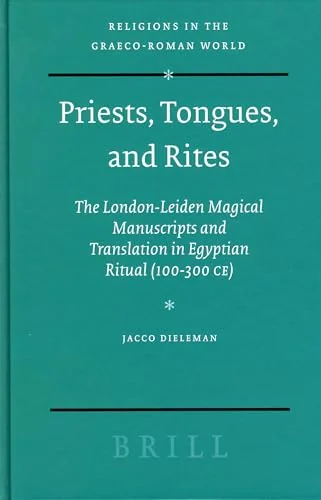
🏛 Books from this publisher Brill
All books from this publisher →
You might also like
See more →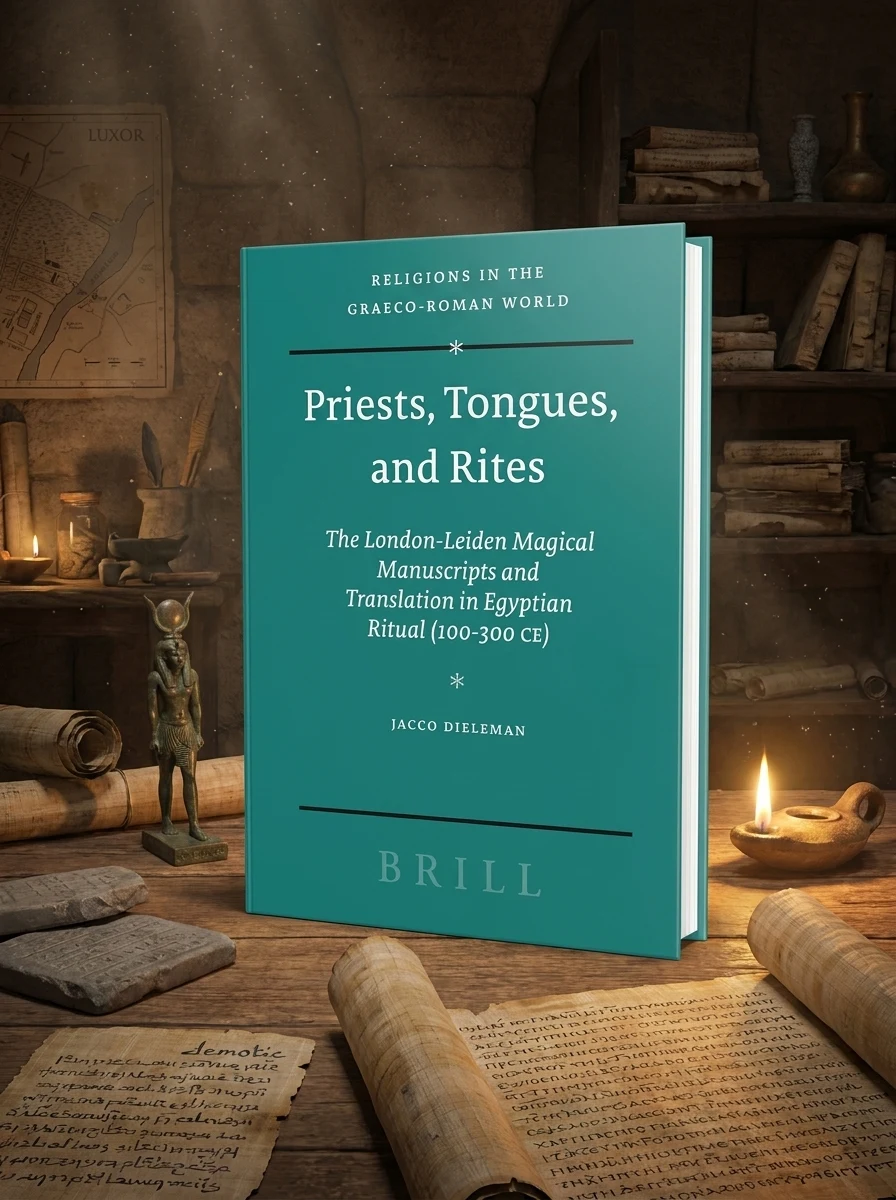
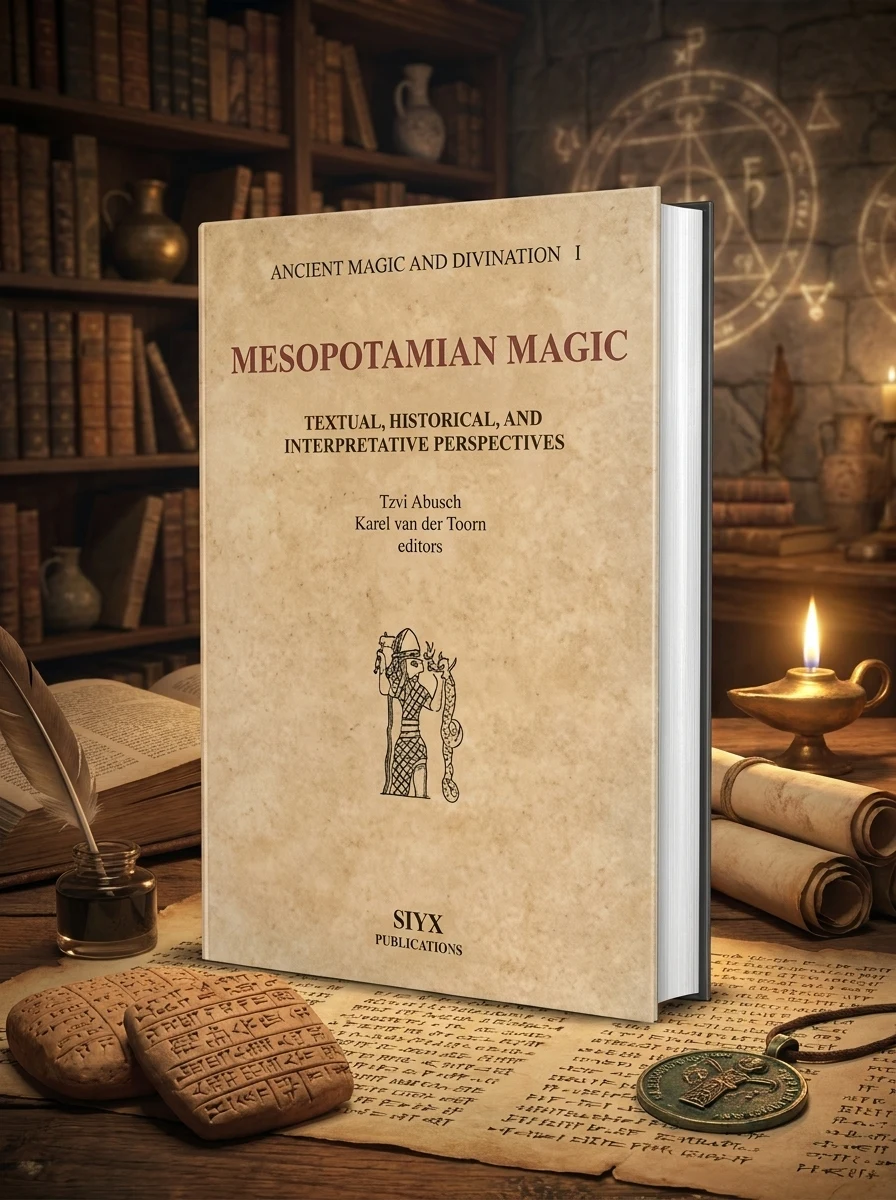
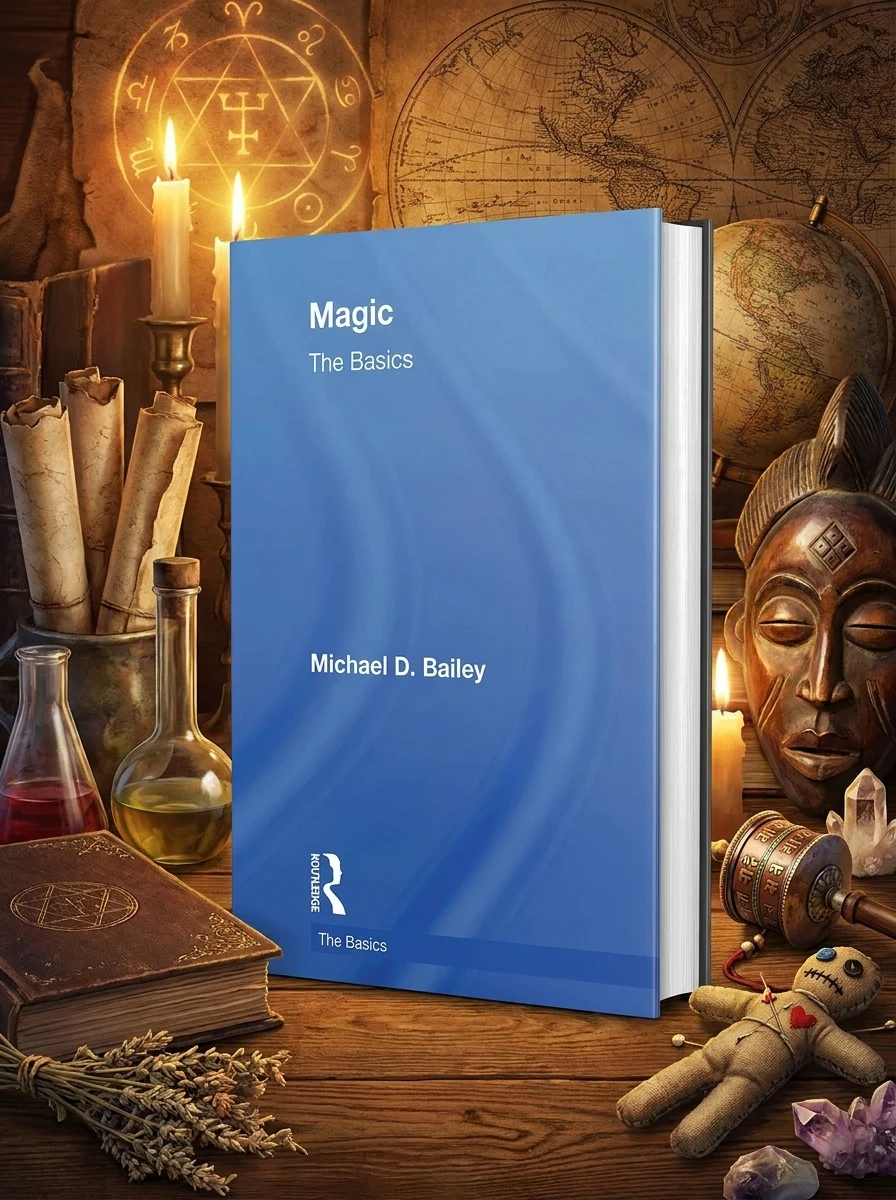 91
91